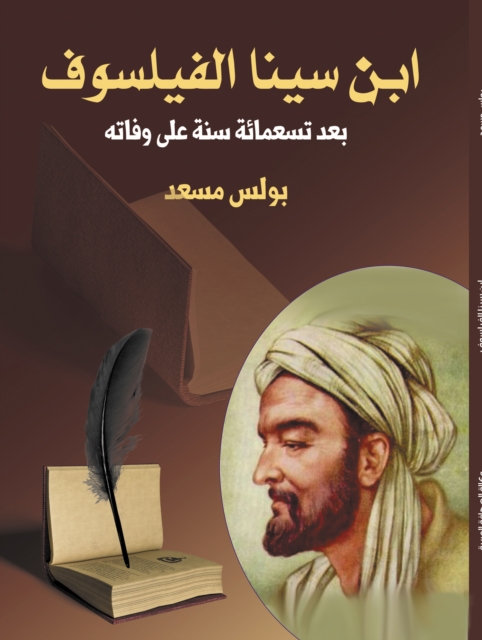
Paul Mas'ad wrote this book to mark the nine hundredth anniversary of the death of the scholar Ibn Sina (Avicenna), considered one of the most influential philosophers in the Islamic world and Europe.
Although Alasdair MacIntyre is best known today as the author of After Virtue (1981), he was, in the 1950s and 1960s, one of the most erudite members of Britain's Marxist Left: being a militant within, first, the Communist Party, then the New Left, and finally the heterodox Trotskyist International Socialism group.
In his classic work Anarchy, State and Utopia, Robert Nozick asked his readers to imagine being permanently plugged into a 'machine that would give you any experience you desired'.
THE TOP TEN SUNDAY TIMES BESTSELLER'Bristles with pure, crystalline intelligence, deep knowledge and human sympathy' Richard DawkinsIs modernity really failing?
In his classic work Anarchy, State and Utopia, Robert Nozick asked his readers to imagine being permanently plugged into a 'machine that would give you any experience you desired'.
Combining theory with practical perspectives from diverse disciplines, this volume provides a wide-ranging exploration of AI ethics across healthcare, education, military operations, and more.
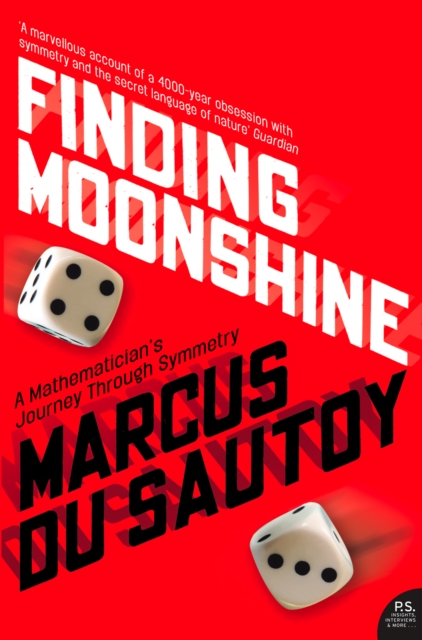
This new ebook from the author of 'The Music of the Primes' combines a personal insight into the mind of a working mathematician with the story of one of the biggest adventures in mathematics: the search for symmetry.
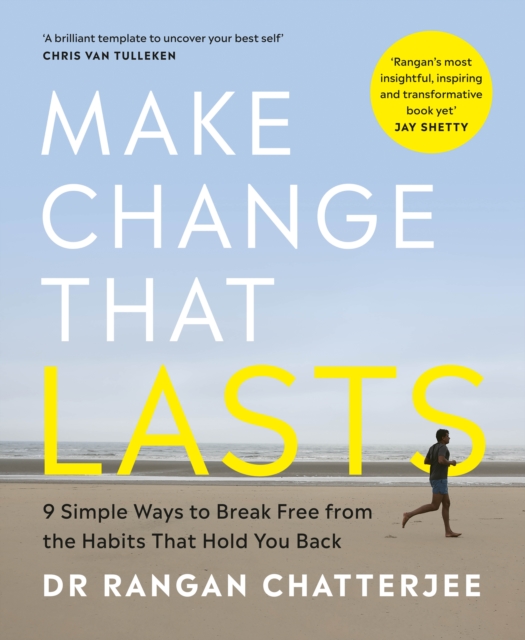
**As seen on Lorraine**Sunday Times bestselling author Dr Rangan Chatterjee reveals how to make positive change that actually lasts in his latest, most innovative book to date.
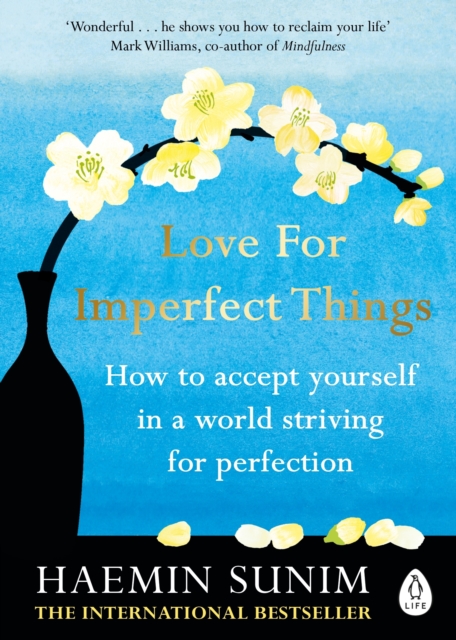
A beautiful guide for learning to love ourselves, from the author of the internationally bestselling The Things You Can See Only When You Slow DownNo one is perfect.
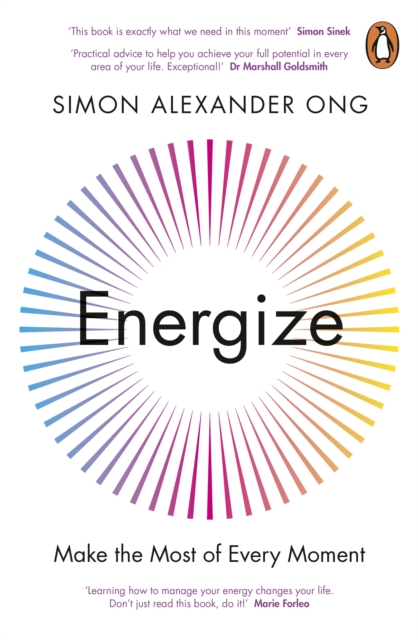
Winner of the 2023 Business Book Award for Wellness and Wellbeing'This book is exactly what we need in this moment' Simon Sinek, author of Start With Why'Learning how to manage your energy changes your life.
Combining theory with practical perspectives from diverse disciplines, this volume provides a wide-ranging exploration of AI ethics across healthcare, education, military operations, and more.
Placing pressure on what it means to "e;do"e; feminist philosophy, Feminist Making, Doing, and Sensing offers an innovative and critical rethinking of feminist philosophical practice and feminist philosophy as a disciplinary field of thought.
'Expertly crafted' AMELIA DIMOLDENBERG'A beautiful siren song to anyone who has ever felt ashamed of their own taste' SCARLETT CURTIS'An ode to both fearless critique and visceral fandom' BILLIE JD PORTERA deep dive into the joy and power of personal pleasures, quirks, obsessions and bad taste, from zine royalty, Ione Gamble.
For the first time, this volume brings together the writings, lectures, and correspondence of two of the most distinctive voices in twentieth-century French thought: Alexandre Koj ve (1902 1968) and Gaston Fessard (1897 1978).
In this intriguing literary experiment, Ian Marshall presents a collection of nearly three hundred haiku that he extracted from Henry David Thoreau's Walden and documents the underlying similarities between Thoreau's prose and the art of haiku.
The Philosophy of Theatre, Drama and Acting is the ideal collection for students and scholars of aesthetics, theatre studies and the philosophy of art.
In the wake of globalization, the humanities and social sciences have explored the existence and the possibilities of human community on a global scale.
In the wake of globalization, the humanities and social sciences have explored the existence and the possibilities of human community on a global scale.
The Philosophy of Theatre, Drama and Acting is the ideal collection for students and scholars of aesthetics, theatre studies and the philosophy of art.
THE PATTERN OF REALITY: Dynamic Cyclical Movement Across Scales Governed by Relational Balance is a large-scale philosophical and civilizational work exploring the deeper structural patterns governing existence, consciousness, ecological systems, civilization, psychology, science, and the future of humanity.
Cognitivity Sculpting: Foundations of Human-AI Cognitive Development introduces a new conceptual framework for understanding how human and artificial cognition can develop together without collapse, coercion, or fragmentation.
Die Möglichkeiten von Wissenschaft und ErkenntnisEinsteins Klassiker von 1936 bietet nicht nur eine prägnante Auseinandersetzung mit seinem eigenen Werk wie der Relativitätstheorie und seiner Sichtweise der Quantentheorie, sondern auch der Geschichte der Physik insgesamt.
ANTI TRANSHUMANISM: Adversus Transhumanismum (Introducing Parahumanism) 1st EditionA bold philosophical critique of the transhumanist movement, Adversus Transhumanismum exposes how the promises of human enhancement, immortality, and post-biological evolution remain inaccessible to most—especially in developing nations where basic needs are still unmet.
Lord Jagannath, residing in the sacred Nilaachala of Puri, is not just a deity; He is a living symbol of equality, love, devotion, and selfless service.
OVERTOP: Building A Top-Level Human is a grounded psychological framework for navigating uncertainty, pressure, emotion, discipline, recovery, and growth in real time.