Inspired by the philosophical framework of Deleuze and Guattari in relation to affect, Affective Connections disavows the dominant oppositional discourse around representation to offer an affirmative approach to perception, cognition and experience.
This book describes the reception of the Nietzschean Death of God within the Italian philosophical debate, an ambit traditionally concerned with emphasising the practical-political meaning of philosophical thinking.
Navigating between society's moral panics about the influence of violent videogames and philosophical texts about self-cultivation in the martial arts, The Virtual Ninja Manifesto asks whether the figure of the 'virtual ninja' can emerge as an aspirational figure in the twenty-first century.
This important volume brings together scientific, cultural, literary, historical, and philosophical perspectives to offer new understandings of the critical issues of our ecological present and new models for the creation of alternative ecological futures.
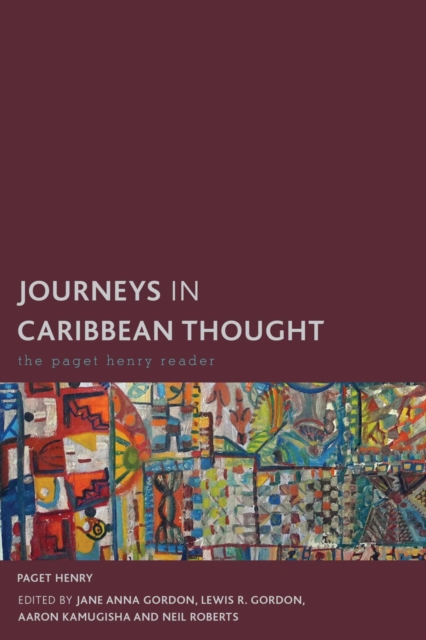
For the past 30 years, Paget Henry has been one of the most articulate and creative voices in Caribbean scholarship, making seminal contributions to the study of Caribbean political economy, C.
In Moral Desert, Howard Simmons notes that the idea that we deserve to be praised or rewarded for good behavior and blamed or punished when we act badly seems central to everyone's moral deliberation and practices.
In this volume, the Association for Core Texts and Courses has gathered essays of literary and philosophical accounts that explain who we are simply as persons.
An Archaeology of Disbelief traces the origin of secular philosophy to pre-Socratic Greek philosophers who proposed a physical universe without supernatural intervention.
How is it that sounds from the mouth or marks on a page-which by themselves are nothing like things or events in the world-can be world-disclosive in an automatic manner?
In Aesthetic Genesis, the author argues for a reversal of the most fundamental tenet of phenomenology-namely, that all consciousness is intentional (that is, directed toward an object).
The Logical Foundations of Social Theory describes Gert Mueller's argument that physical, biological, social, moral, and cultural reality form an asymmetrical hierarchy of founding and controlling relationships that condition social reality rather than mechanically determining it.
Wolfgang Ernst has demonstrated that the knowledge of time-giving ('chrono-poetical') media and their temporal essence enriches the tradition of philosophical inquiry into the nature of 'time'.
Dispositions as Habits of Mind provides opportunities for candidates in teacher education programs, which focus on nurturing and assessing dispositions, to see the habits of mind for making professional conduct more intelligent, practice them, and receive feedback about their performance.
Capitalism Unbound: An Incontestable Moral Case for Individual Rights is a concise explanation of capitalism's moral and economic superiority to all forms of socialism, including America's current mixed-economy welfare state.
In this third edition of The Triadic Structure of the Mind, Francesco Belfiore begins from the basic ontological conception of the structure and functioning of the "e;mind"e; or "e;spirit"e; as an evolving, conscious triad composed of intellect, sensitiveness, and power, each exerting a selfish and a moral activity.
Beyond its elucidation and critique of traditional 'notation-centric' musicology, this book's primary emphasis is on the negotiation and construction of meaning within the extended musical multimedia works of the classic British group Pink Floyd.
The essays in this book range broadly over different aspects of value theory and include contributions by Nicholas Rescher, Frances Kamm, Barry Smith, and Jan Narveson.
Habermas's Public Sphere: A Critique analyzes the evolution of Juergen Habermas's social and political theory from the 1950s to the present by focusing on the explicit and on the tacit changes in his thinking about The Structural Transformation of the Public Sphere, his global academic bestseller, which has been translated into 30 languages.
Rhetoric and the Familiar examines the writing and oratory of Francis Bacon and John Donne from the perspective of the faculty psychology they both inherited.
Sovereign Power and the Enlightenment examines the role of the novelists and historians of the eighteenth century in developing a vision of political modernity that questions traditional narratives about the rise of liberalism and the decline of sovereign power.
The contributors to this collection come from disparate fields such as theology, literature studies, political science, and communication studies and are guided by a commitment to consider what we can learn from Camus as opposed to where he was wrong or misguided in his life and writing.
Literary Knowing in Neoclassical France analyzes the work of several literary critics in France and England, at the end of the seventeenth and beginning of the eighteenth centuries, who were inspired by the idea that literature - especially the literary sublime - might offer us the deepest kind of knowledge.
Freud's Other Theory of Psychoanalysis: The Replacement for the Indelible Theory of Catharsis argues that Freud's familiar theory of psychoanalysis is an elaboration of his catharsis theory.
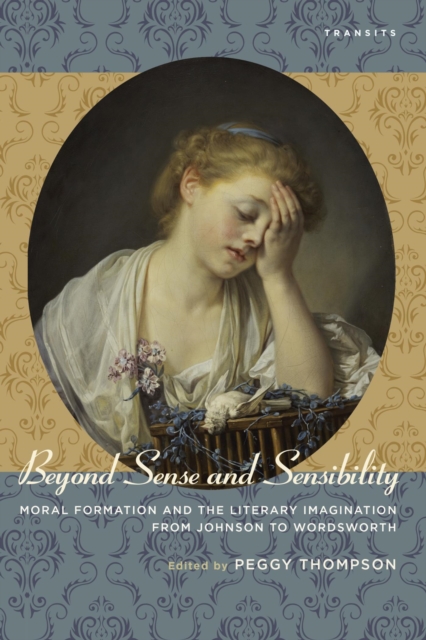
During the last half of the eighteenth century, sensibility and its less celebrated corollary sense were subject to constant variation, critique, and contestation in ways that raise profound questions about the formation of moral identities and communities.
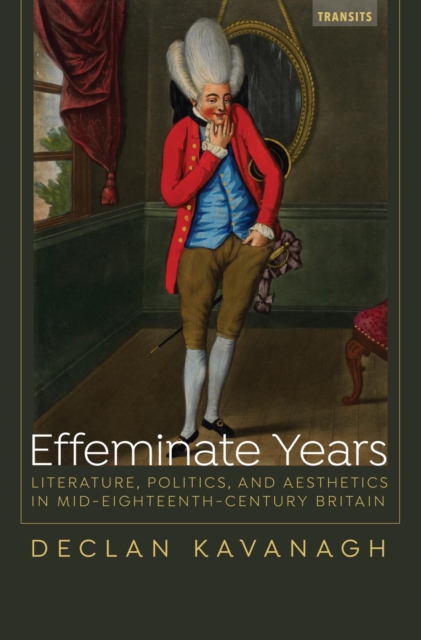
Effeminate Years: Literature, Politics, and Aesthetics in Mid-Eighteenth-Century Britain investigates the gendered, eroticized, and xenophobic ways in which the controversies in the 1760s surrounding the political figure John Wilkes (1725-97) legitimated some men as political subjects, while forcefully excluding others on the basis of their perceived effeminacy or foreignness.