In response to the contemporary crisis of democracy as a way of life, in particular, the anxieties of inclusion, this important new book explores the contemporary significance of American philosophy (the pragmatism and American transcendentalism of Emerson and Thoreau) and tries to present new ways of cultivating political emotions and political citizens.
Collectivity: Ontology, Ethics, and Social Justice brings new voices and new approaches to under-developed areas in the philosophical literature on collectives and collective action.
Adorno's writings are often the starting point for the teaching of popular music studies, usually passing swiftly on, after concluding that 'he didn't listen to the right jazz' or 'he was a snob'.
The volume is inspired by Gilles Deleuze's philosophical project, which builds on the critique of European Humanism and opens up inspiring new perspectives for the renewal of the field.
This book introduces narrative justice, a new theory of aesthetic education - the thesis that the cultivation of aesthetic or artistic sensibility can both improve moral character and achieve political justice.
The Birth of Physics represents a foundational work in the development of chaos theory from one of the world's most influential living theorists, Michel Serres.
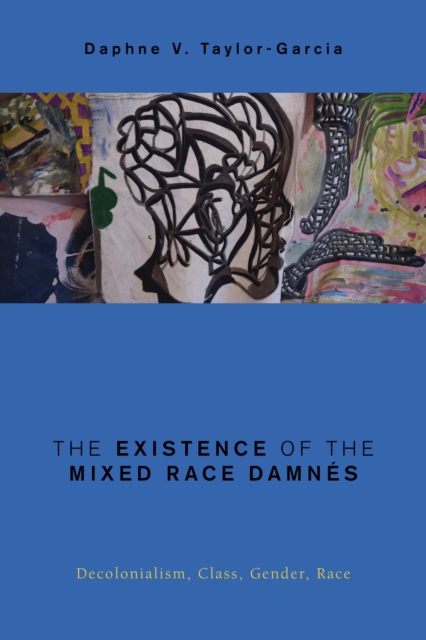
The Existence of the Mixed Race Damnes is an interdisciplinary and intersectional study of the mixed-race subject in the Americas and the rise of oppositional consciousness with a consideration of not only race, but also colonialism.
Philosophical debates, many of them involving the appropriation of modern Western philosophical doctrines, are a crucial element shaping the intellectual and practical behaviour of many thinkers in the Islamicate world and their audiences.
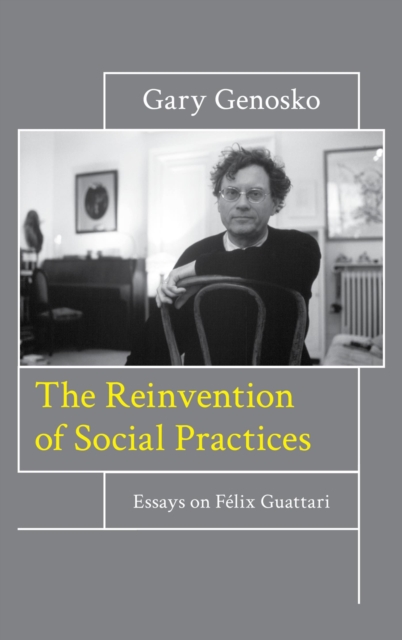
The Reinvention of Social Practices shows the relevance of Felix Guattari's thought for the analysis of contemporary social and cultural encounters, ranging across an alternative 'skateboard' school, informatic subjugations, urban ecological dilemmas, drug subcultures, and countercultures.
Once a prophet of critical, "e;other"e; thought, Heidegger has now for many become the epitome of the unthinkable, in the light of the Black Notebooks controversy.
This volume critically explore and extend Hayek's Nobel Prize-winning work on knowledge and social interconnectedness from the disciplines of law, economics, philosophy, anthropology, political science, and history.
The post humanist movement which currently traverses various disciplines in the arts and humanities, as well as the role that the thought of Deleuze and Guattari has had in the course of this movement, has given rise to new practices in architecture and urban theory.
In its early modern form, philosophy gave a decisive impetus to the science and technology that have transformed the planet and brought on the so-called Anthropocene.
This book examines the philosophical and political relevance of perversion in the works of three key representatives of contemporary philosophy and psychoanalysis: Gilles Deleuze, Giorgio Agamben and Jacques Lacan.
It has been 25 years since Dominique Janicaud derisively proclaimed the "e;theological turn"e; in French phenomenology due to the return of God to philosophy through the influence of "e;religious"e; thinkers such as Levinas, Ricoeur, and Marion.
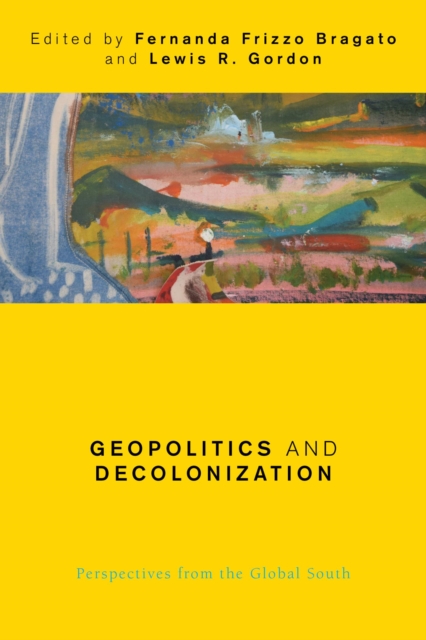
Gathering researchers from or towards Global South epistemologies, this book enriches the debate on crucial questions for liberation in the South and the improvement of South relations.
Recent discussions around limit-problems, namely the questions concerning what can appear in phenomenological reflection, as well as what phenomenology as philosophical reflection can handle, call for a concerted treatment of the problem of limit-phenomena.
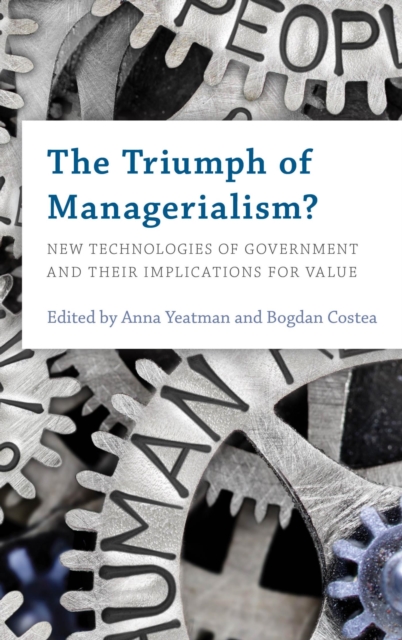
This collection presents a critical dialogue on managerialist forms of government between philosophy, political thought, organisational and management theory.
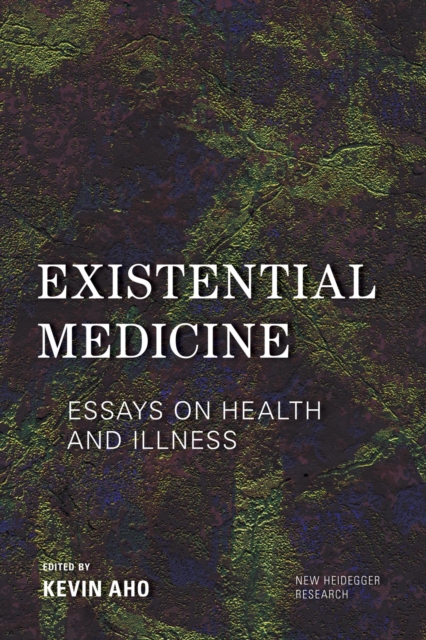
Existential Medicine explores the recent impact that the philosophies of existentialism, phenomenology, and hermeneutics have had on the health care professions.
Can critical theory diagnose ideological delusion and false consciousness from above, or does it have to follow the practices of critique ordinary agents engage in?
The question of the limits of the political permeates the history of western political thought and has been at the forefront of debates in contemporary political philosophy, especially in French and Italian contexts.
This book sets out the most influential theories of democracy (liberal-egalitarian, deliberative, and cosmopolitan) and argues that they fail to adequately comprehend the cause of politically meaningful inequality on the one hand and the security state on the other.
Although the concept of productive imagination plays a fundamental role in Kant, German Idealism, Romanticism, Phenomenology and Hermeneutics, the meaning of this central concept remains largely undetermined.
The significant changes that have dominated the social and the scientific world over the last thirty years have brought about upheavals and critical re-appraisals that have proved quite positive in fostering 21st century thought.
Walter Benjamin and the Post-Kantian Tradition engages with Benjamin as a theorist of a historical and philosophical problematic of modernity: a problematic that he finds manifested, in different philosophical guises, within scientific empiricism, neo-Kantianism and German Romanticism.
Although feminist phenomenology is traditionally rooted in philosophy, the issues with which it engages sit at the margins of philosophy and a number of other disciplines within the humanities and social sciences.
THE NEW YORK TIMES BESTSELLERIn this book, that combines cutting edge science with real world applications, Chopra and Kafatos redefine our nature of reality and what is possible.
The 'end of the world' opens up philosophical questions concerning the very notion of the world, which is a fundamental element of all existential, phenomenological and hermeneutical philosophy.
This important new book identifies the distinctive characteristics of the ideological terrain in contemporary (South) Korean politics and reexamines the political thought of Park Chung-hee (1917-1979), the most revered, albeit the most controversial, former president in the history of South Korea, in light of those characteristics.