In contemporary India, new Hindu religious movements are reshaping spiritual landscapes and challenging traditional boundaries of faith, identity, and social practice.
Animal-Human Telepathic Connections is a bold and groundbreaking exploration of the profound, instinctive and telepathic bonds between humans and animals.
Animal-Human Telepathic Connections is a bold and groundbreaking exploration of the profound, instinctive and telepathic bonds between humans and animals.
This compelling reference work introduces the religions of Voodoo, a onetime faith of the Mississippi River Valley, and Vodou, a Haitian faith with millions of adherents today.
Here is the flagship edition of the most popular occult work of the past century, now published with a groundbreaking historical introduction that establishes its authentic authorship and a "lost" bonus work by the original author.
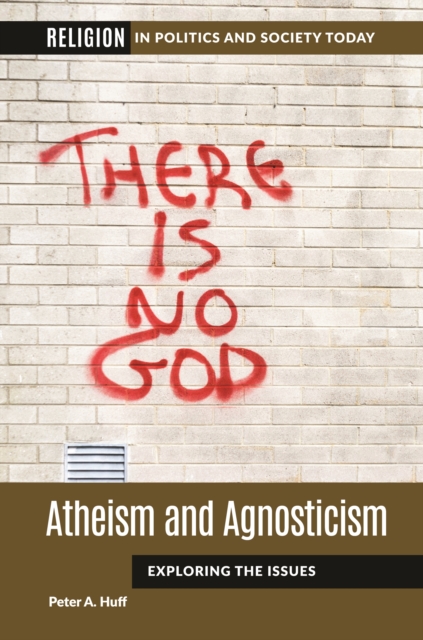
"e;Few are agnostic about atheism and agnosticism; this eloquent, wide-ranging volume should appeal to many, as well as supporting recent academic interest in its subject.
This compelling reference work introduces the religions of Voodoo, a onetime faith of the Mississippi River Valley, and Vodou, a Haitian faith with millions of adherents today.
"e;Few are agnostic about atheism and agnosticism; this eloquent, wide-ranging volume should appeal to many, as well as supporting recent academic interest in its subject.
Publicado en Paris en 1926, El Misterio de las Catedrales esta dedicado a descifrar el lenguaje secreto de la alquimia, oculto en las esculturas, relieves y ornamentos de las catedrales goticas de Francia, en especial la de Notre-Dame de Paris.
In the tradition of God Is Not Great and The End of Faith, Life = Death offers an accessible philosophical examination of one of humanity's most persistent ideas: that death is not truly the end.
This fascinating new book is an exploration of the Andean codes, first introduced by the Incan civilization in relation to psychoanalytic theory, woven together with concepts from fractal dynamics and quantum theory to provide a more comprehensive method in psychoanalytic practice.
This fascinating new book is an exploration of the Andean codes, first introduced by the Incan civilization in relation to psychoanalytic theory, woven together with concepts from fractal dynamics and quantum theory to provide a more comprehensive method in psychoanalytic practice.