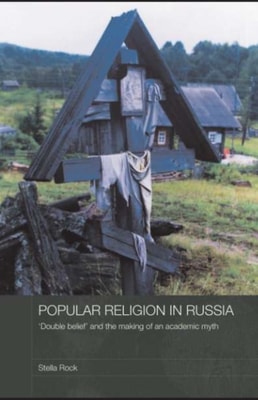
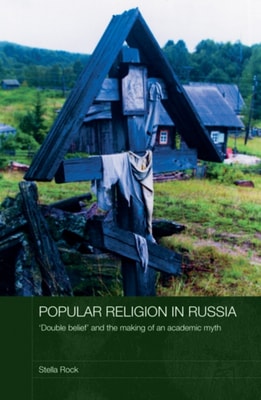
This book dispels the widely-held view that paganism survived in Russia alongside Orthodox Christianity, demonstrating that 'double belief', dvoeverie, is in fact an academic myth.
This book dispels the widely-held view that paganism survived in Russia alongside Orthodox Christianity, demonstrating that 'double belief', dvoeverie, is in fact an academic myth.
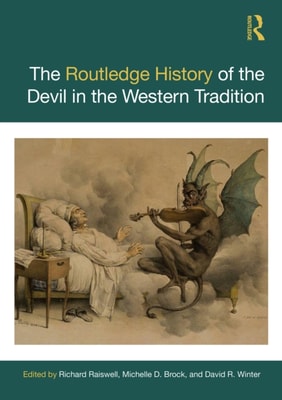
Covering a period of 2000 years, this book offers an interdisciplinary exploration of the devil's role in the Western tradition and draws from history, religion, art, literature, media studies, and anthropology to provide a multifaceted view of the devil over time.
In this volume, Khaled Anatolios presents a comprehensive study of Saint Athanasius, one of the most influential figures in the development of Christian doctrine.
In this volume, Khaled Anatolios presents a comprehensive study of Saint Athanasius, one of the most influential figures in the development of Christian doctrine.
Through the close study of texts, Roman Imperial Identities in the Early Christian Era examines the overlapping emphases and themes of two cosmopolitan and multiethnic cultural identities emerging in the early centuries CE - a trans-empire alliance of the Elite and the "e;Christians.
Through the close study of texts, Roman Imperial Identities in the Early Christian Era examines the overlapping emphases and themes of two cosmopolitan and multiethnic cultural identities emerging in the early centuries CE - a trans-empire alliance of the Elite and the "e;Christians.
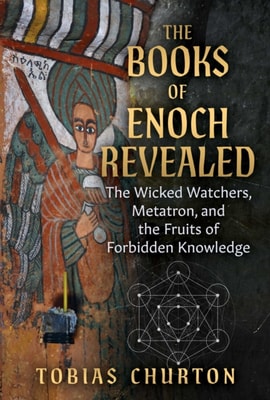
*; Examines in depth Enoch's full story of the Watchers, the fallen angels who came to Earth and shared corrupting forbidden knowledge*; Explores how Enoch was a vital component of Second Temple messianic Judaism, speculative Jewish mysticism, the Kabbalah, and Gnostic mythology*; Investigates the entire history of the Book of Enoch and its important esoteric offshoots, including the later 2 Enoch (the Slavonic ';Book of the Secrets of Enoch') and the so-called Hebrew ';Book of Enoch' (3 Enoch)Said to have been written by the prophet Enoch, the great-grandfather of Noah, the Book of Enoch disappeared for many centuries, except for one place: the Bible of the Ethiopian Orthodox Church, which held the book as canonical.
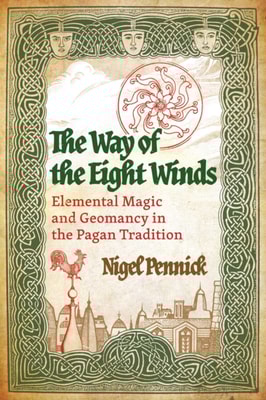
*; Examines the Eight Directions and the powers of their Winds, the Tides of the Day, and the eightfold year of modern Pagan practice*; Explores geomancy practices, how to work with spirits of place, and the power of mountains, rivers, caves, standing stones, and crossroads*; Shares spiritual exercises, including runic practices and divination techniques, as well as how to craft your own magical toolsIn this guide to the Way of the Eight Winds, Nigel Pennick explores the history and practice of traditional European Pagan spirituality, a path that recognizes and celebrates our relationship with the Cosmos and the creativity of Nature.
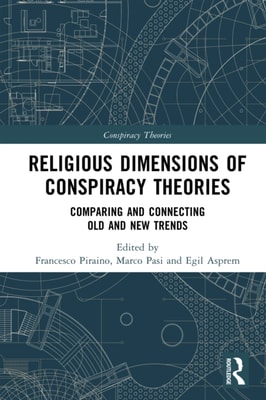
Religious Dimensions of Conspiracy Theories contributes to the study of conspiracy culture by analysing the religious and esoteric dimensions of conspiracy theories.
Religious Dimensions of Conspiracy Theories contributes to the study of conspiracy culture by analysing the religious and esoteric dimensions of conspiracy theories.
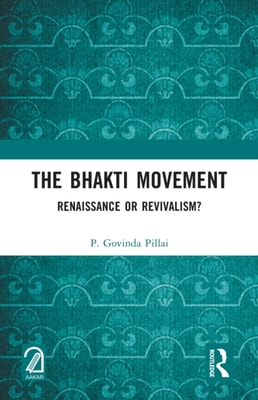
This is a Comprehensive Survey of the Bhakti Movement as it sprang in South India to spread across the subcontinent in independent and multifarious manifestations yet marked with amazing commonalities.
This is a Comprehensive Survey of the Bhakti Movement as it sprang in South India to spread across the subcontinent in independent and multifarious manifestations yet marked with amazing commonalities.
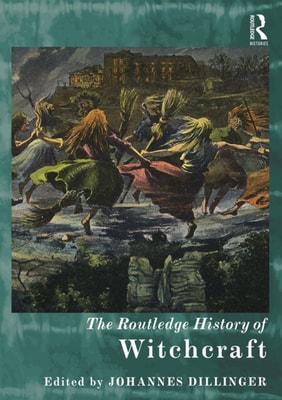
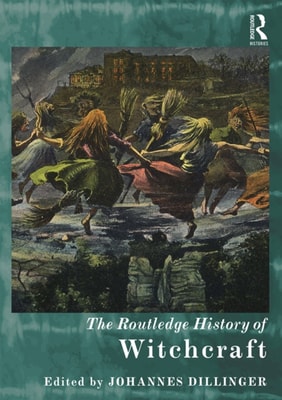
The Routledge History of Witchcraft is a comprehensive and interdisciplinary study of the belief in witches from antiquity to the present day, providing both an introduction to the subject of witchcraft and an overview of the on-going debates.
The Routledge History of Witchcraft is a comprehensive and interdisciplinary study of the belief in witches from antiquity to the present day, providing both an introduction to the subject of witchcraft and an overview of the on-going debates.
This book explores local cultural discourses and practices relating to manifestations and experiences of the demonic, the spectral and the uncanny, probing into their effects on people's domestic and intimate spheres of life.
This book explores local cultural discourses and practices relating to manifestations and experiences of the demonic, the spectral and the uncanny, probing into their effects on people's domestic and intimate spheres of life.
Sigmund Freud and The Forsyth Case uses newly discovered primary sources to investigate one of Sigmund Freud's most mysterious clinical experiences, the Forsyth case.
Sigmund Freud and The Forsyth Case uses newly discovered primary sources to investigate one of Sigmund Freud's most mysterious clinical experiences, the Forsyth case.
A comparative analysis of both secular and religious communal groups in contemporary America, this study, originally published in 1978, shows that contemporary communalists stand in relation to collectivism much the same as early Protestants stood in relation to individualism - as the self-proclaimed pioneers of the new age.
A comparative analysis of both secular and religious communal groups in contemporary America, this study, originally published in 1978, shows that contemporary communalists stand in relation to collectivism much the same as early Protestants stood in relation to individualism - as the self-proclaimed pioneers of the new age.
In Freud's Early Psychoanalysis, Witch Trials and the Inquisitorial Method: The Harsh Therapy, author Kathleen Duffy asks why Freud compared his 'hysterical' patients to the accused women in the witch trials, and his 'psychoanalytical' treatment to the inquisitorial method of their judges.
In Freud's Early Psychoanalysis, Witch Trials and the Inquisitorial Method: The Harsh Therapy, author Kathleen Duffy asks why Freud compared his 'hysterical' patients to the accused women in the witch trials, and his 'psychoanalytical' treatment to the inquisitorial method of their judges.
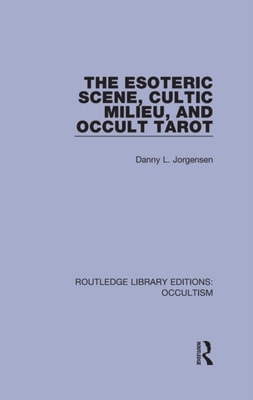
Originally published in 1992, The Esoteric Scene, Cultic Milieu, and Occult Tarot examines beliefs, practices, and activities described as mystical, psychical, magical, spiritual, metaphysical, theophysical, esoteric, occult, and/or pagan, among other possible labels, by their American disciplines.
Originally published in 1978, The Occult Sourcebook has been compiled primarily for the many people who are for the first time becoming engrossed by the numerous and often confusing possibilities underlying the occult sciences.
Originally published in 1982, The Shaman and the Magician draws on the author's wide experience of occultism, western magic and anthropological knowledge of shamanism, to explore the interesting parallels between traditional shamanism and the more visionary aspects of magic in modern western society.
Originally published in 1992, The Esoteric Scene, Cultic Milieu, and Occult Tarot examines beliefs, practices, and activities described as mystical, psychical, magical, spiritual, metaphysical, theophysical, esoteric, occult, and/or pagan, among other possible labels, by their American disciplines.
Originally published in 1978, The Occult Sourcebook has been compiled primarily for the many people who are for the first time becoming engrossed by the numerous and often confusing possibilities underlying the occult sciences.
Originally published in 1982, The Shaman and the Magician draws on the author's wide experience of occultism, western magic and anthropological knowledge of shamanism, to explore the interesting parallels between traditional shamanism and the more visionary aspects of magic in modern western society.
This book explores the cross- and trans-cultural dialectic between Tantra and intersecting 'magical' and 'shamanic' practices associated with vernacular religions across Monsoon Asia.