In Mystics and Messiahs--the first full account of cults and anti-cult scares in American history--Philip Jenkins shows that, contrary to popular belief, cults were by no means an invention of the 1960s.
During his 2009 inaugural speech, President Obama described the United States as a nation of "e;Christians and Muslims, Jews and Hindus--and nonbelievers.
In the nineteenth and early twentieth century, a controversial school of Russian religious and scientific thinkers emerged, united in the conviction that humanity was entering a new stage of evolution and must assume a new, active, managerial role in the cosmos.
Western esotericism has now emerged as an academic study in its own right, combining spirituality with an empirical observation of the natural world while also relating the humanity to the universe through a harmonious celestial order.
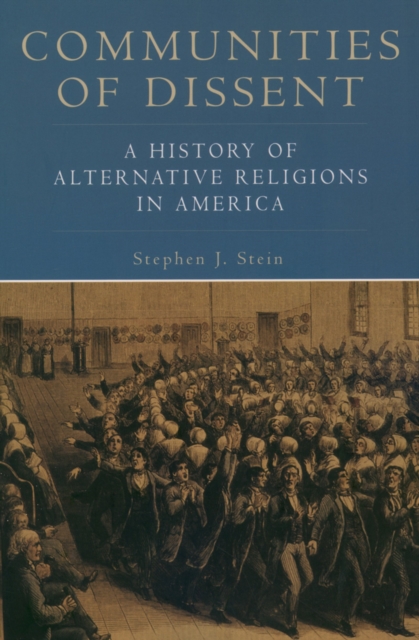
Alternative religious groups have had a profound influence on American history-they have challenged the old and opened up new ways of thinking about healing, modes of meaning, religious texts and liturgies, the social and political order, and the relationships between religion and race, class, gender, and region.
In the ancient Greco-Roman world, it was common practice to curse or bind an enemy or rival by writing an incantation on a tablet and dedicating it to a god or spirit.
During his 2009 inaugural speech, President Obama described the United States as a nation of "e;Christians and Muslims, Jews and Hindus--and nonbelievers.
The relationship between new religious movements (NRMs) and violence has long been a topic of intense public interest--an interest heavily fueled by multiple incidents of mass violence involving certain groups.
The relationship between new religious movements (NRMs) and violence has long been a topic of intense public interest--an interest heavily fueled by multiple incidents of mass violence involving certain groups.
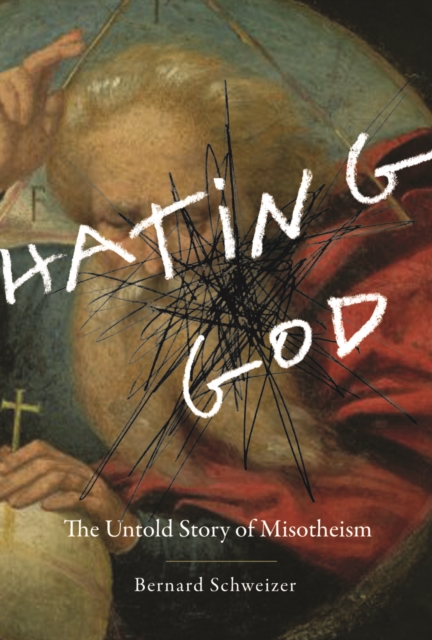
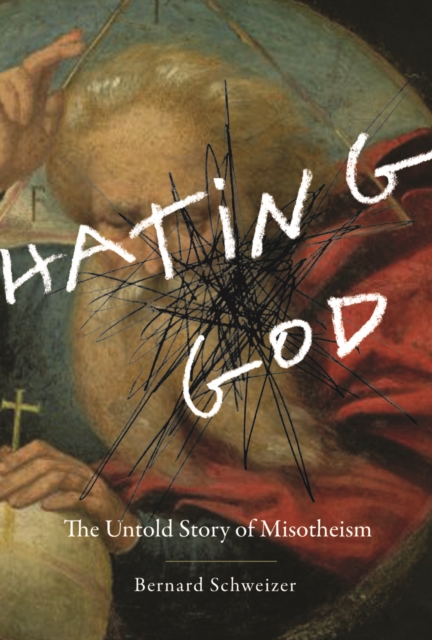
While atheists such as Richard Dawkins have now become public figures, there is another and perhaps darker strain of religious rebellion that has remained out of sight--people who hate God.
While atheists such as Richard Dawkins have now become public figures, there is another and perhaps darker strain of religious rebellion that has remained out of sight--people who hate God.
Alternative religious groups have had a profound influence on American history-they have challenged the old and opened up new ways of thinking about healing, modes of meaning, religious texts and liturgies, the social and political order, and the relationships between religion and race, class, gender, and region.
Western esotericism has now emerged as an academic study in its own right, combining spirituality with an empirical observation of the natural world while also relating the humanity to the universe through a harmonious celestial order.
Daughters of Hecate unites for the first time research on the problem of gender and magic in three ancient Mediterranean societies: early Judaism, Christianity, and Graeco-Roman culture.
To the dismay of religious leaders, study after study has shown a steady decline in affiliation and identification with traditional religions in America.
To the dismay of religious leaders, study after study has shown a steady decline in affiliation and identification with traditional religions in America.
Beatriz Caiuby Labate and Clancy Cavnar offer an in-depth exploration of how Amerindian epistemology and ontology concerning indigenous shamanic rituals of the Amazon have spread to Western societies, and of how indigenous, mestizo, and cosmopolitan cultures have engaged with and transformed these forest traditions.
Over the last decade, "e;New Atheists"e; such as Sam Harris, Richard Dawkins, and Christopher Hitchens have pushed the issue of atheism to the forefront of public discussion.
Over the last decade, "e;New Atheists"e; such as Sam Harris, Richard Dawkins, and Christopher Hitchens have pushed the issue of atheism to the forefront of public discussion.
The cognitive science of religion has made a persuasive case for the view that a number of different psychological systems are involved in the construction and transmission of notions of extranatural agency such as deities and spirits.