An Intertextual Commentary on Romans is an exhaustive treatment of the hundreds of Old Testament citations, allusions, and echoes embedded in Paul's most famous epistle.
Like the first two books in this series (WealthWatch and WealthWarn), this volume attempts to do two things: (a) examine the primary socioeconomic motifs in the Bible from a comparative intertextual perspective, and (b) trace the trajectory formed by these motifs through Tanak into early Jewish and Nazarene texts.
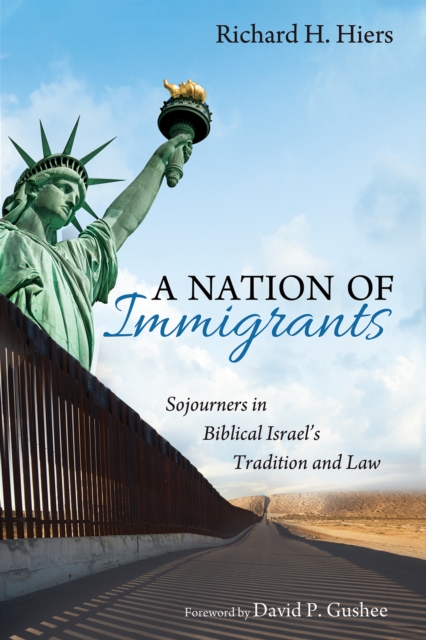
Biblical Israelites were sojourners--immigrants, refugees, and resident aliens in lands other than their own--for the greater part of two thousand years.
Hirschfeld's publications include a critical edition of the Arabic text and the Hebrew translation by Judah ibn Tibbon (1887); Arabic Chrestomathy in Hebrew Characters (1892); An Ethiopic-Falasi Glosary (1921); and Commentary on Deuteronomy (1925).
The Journal of Biblical and Theological Studies (JBTS) is an academic journal focused on the fields of Bible and Theology from an inter-denominational point of view.
This book, written for college and seminary age students, is the distillation of reflection on the life and career of Jesus of Nazareth for over three decades.
This groundbreaking study poses a solution to what one scholar has called "e;one of the most difficult research problems in the history of ideas"e;--the Synoptic problem.
As form criticism arose, the French anthropologist Marcel Jousse developed a hermeneutical paradigm, global in scope and prescient in its vision but opposed to the philological paradigm of biblical studies.
This book takes the established fields of orality, performance, and first-century Christian healthcare studies further by combining analogues of praise performances to Apollo, Asclepius, and those from the Dondo people of South Eastern Zimbabwe to propose that Jesus's healing stories in Mark's Gospel are praise-giving narratives to Jesus as the best folk healer within the region of Capernaum.
The early Christian Church and the men who were most influential during the formative years have a profound relevance to the contemporary structure of the Church.