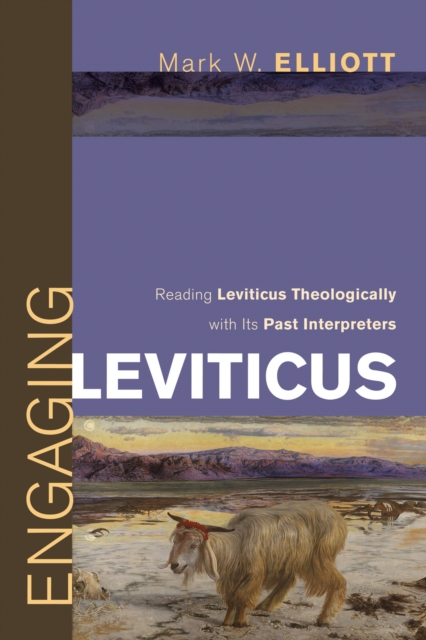
This commentary weaves together the interpretations of Christian exegetes, spanning the past two thousand years, who have concerned themselves with that most mysterious of texts, the book of Leviticus.
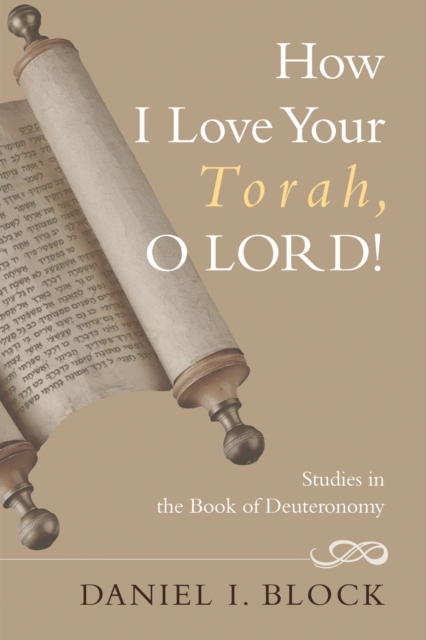
Like the book of Romans in the New Testament, the book of Deuteronomy provides the most systematic and sustained presentation of theology in the Old Testament.
Providing a comprehensive study of "e;oral tradition"e; in Israel, this volume unpacks the nature of oral tradition, the form it would have taken in ancient Israel, and the remains of it in the narrative books of the Hebrew Bible.
In this refreshingly unique book, Bruce Longenecker demonstrates that reading Luke's narrative is richly enhanced through attentiveness to what is tantalizingly left out of the Lukan narrative.
The story of Adam is the story of Israel writ smallIn this text-centered interpretation of Genesis 1-3, Seth Postell contends that the opening chapters of the Bible, when interpreted as a strategic literary introduction to the Torah and to the Tanakh, intentionally foreshadows Israel's failure to keep the Sinai Covenant and their exile from the Promised Land, in order to point the reader to a future work of God, whereby a king will come in "e;the last days"e; to fulfill Adam's original mandate to conquer the land (Gen 1:28).
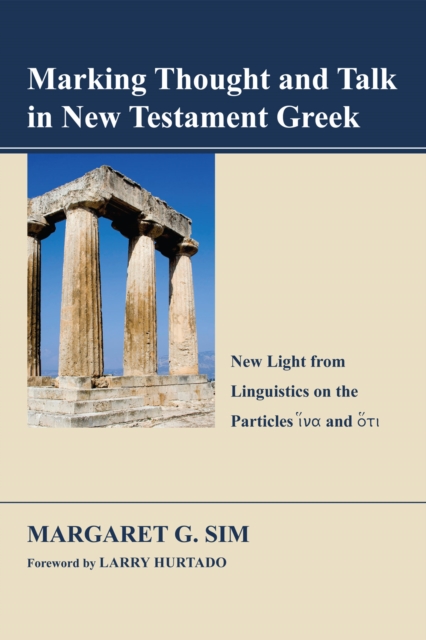
This book uses insights from a modern theory of communication, Relevance Theory, to examine the function of the particle i(/na [SET IN SpIonic] in New Testament Greek.
The Jewish sages taught that when we study the Torah we should continuously turn it and turn it, like a gem with countless facets, looking for new and deeper meanings.
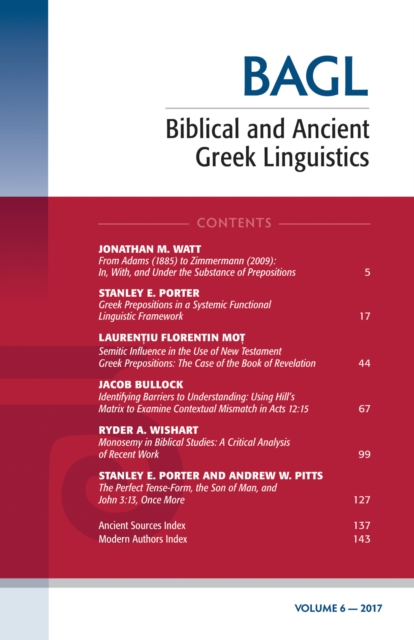
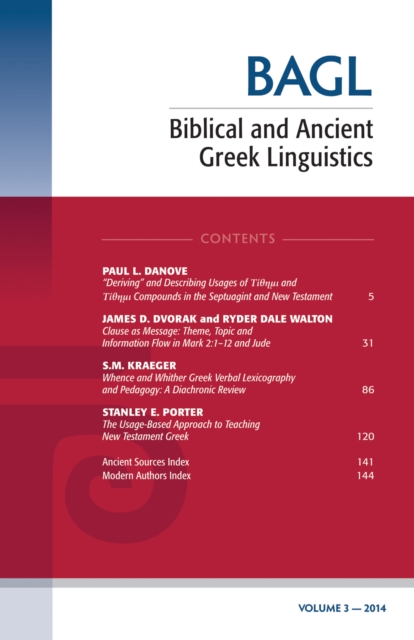
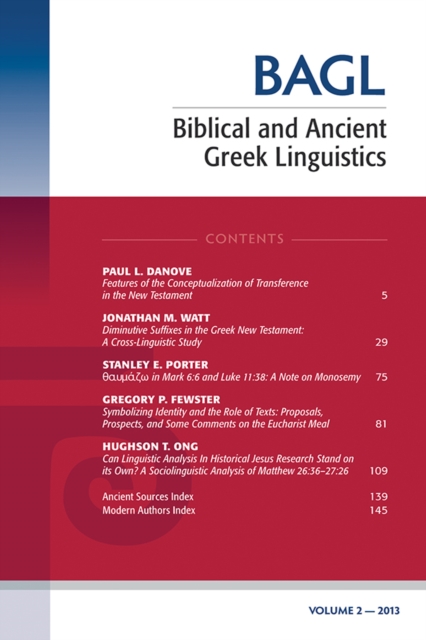
Biblical and Ancient Greek Linguistics (BAGL) is an international journal that exists to further the application of modern linguistics to the study of Ancient and Biblical Greek, with a particular focus on the analysis of texts, including but not restricted to the Greek New Testament.
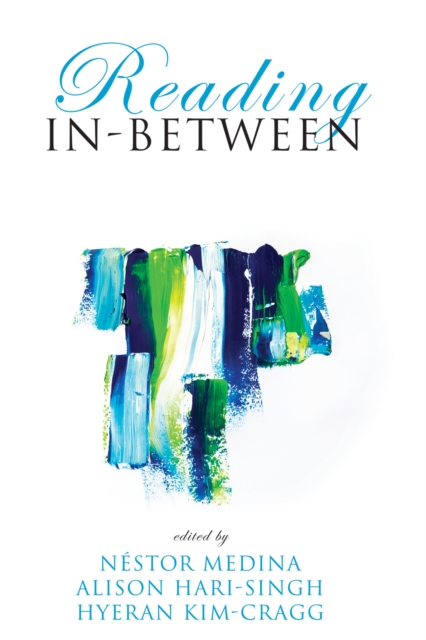
This volume presents a tapestry of narratives in which the lived experiences of eight racially minoritized theologians and biblical scholars are woven together to present an interdisciplinary exploration of the direct impact that ethnocultural traditions have in shaping the way people read and interpret the biblical text.
Biblical and Ancient Greek Linguistics (BAGL) is an international journal that exists to further the application of modern linguistics to the study of Ancient and Biblical Greek, with a particular focus on the analysis of texts, including but not restricted to the Greek New Testament.
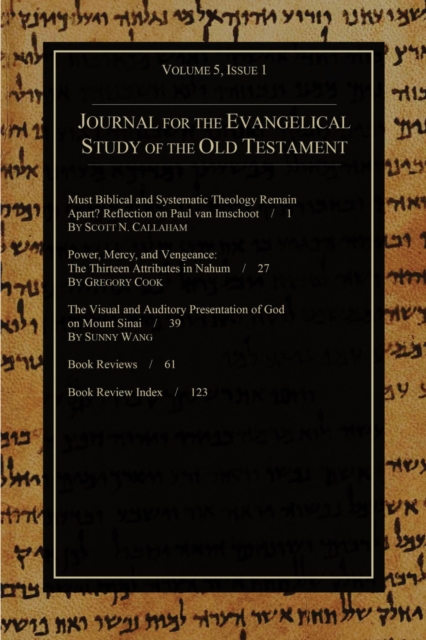
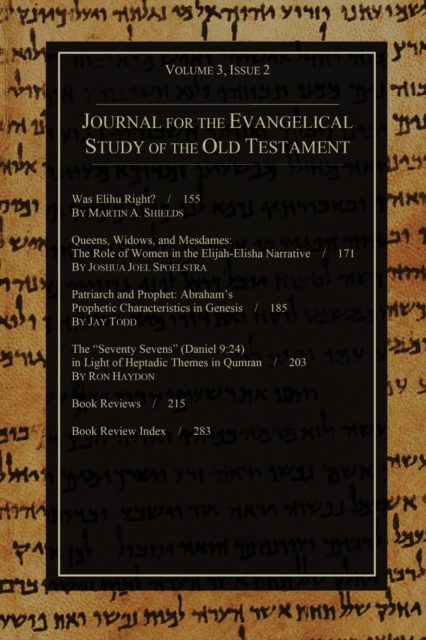
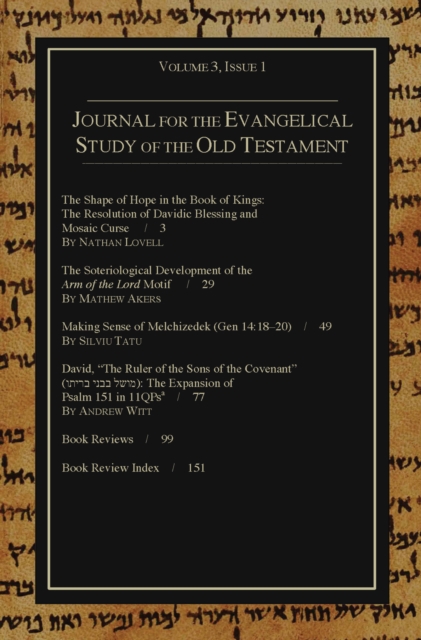
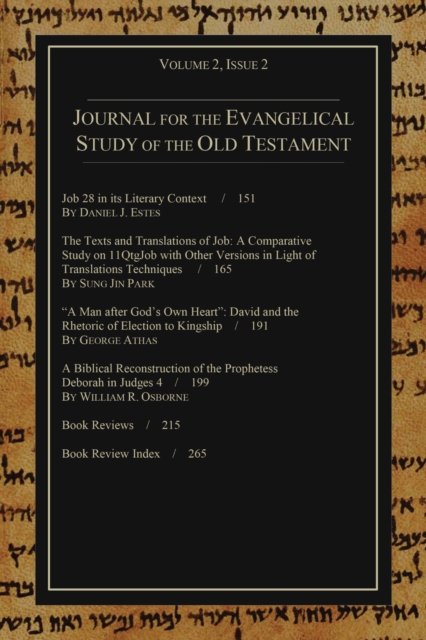
Journal for the Evangelical Study of the Old Testament (JESOT) is a peer-reviewed journal devoted to the academic and evangelical study of the Old Testament.
Biblical and Ancient Greek Linguistics (BAGL) is an international journal that exists to further the application of modern linguistics to the study of Ancient and Biblical Greek, with a particular focus on the analysis of texts, including but not restricted to the Greek New Testament.
Journal for the Evangelical Study of the Old Testament (JESOT) is a peer-reviewed journal devoted to the academic and evangelical study of the Old Testament.
Journal for the Evangelical Study of the Old Testament (JESOT) is a peer-reviewed journal devoted to the academic and evangelical study of the Old Testament.
Biblical and Ancient Greek Linguistics (BAGL) is an international journal that exists to further the application of modern linguistics to the study of Ancient and Biblical Greek, with a particular focus on the analysis of texts, including but not restricted to the Greek New Testament.
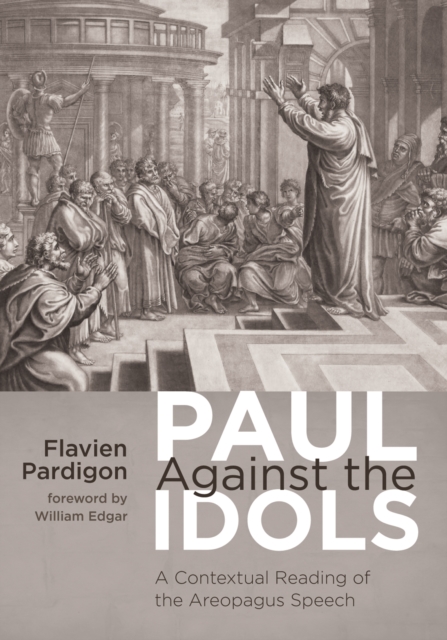
The story of Paul's visit to the city of Athens with its speech delivered before the Areopagus council is one of the best-known and most-celebrated passages of the Acts of the Apostles.
Journal for the Evangelical Study of the Old Testament (JESOT) is a peer-reviewed journal devoted to the academic and evangelical study of the Old Testament.
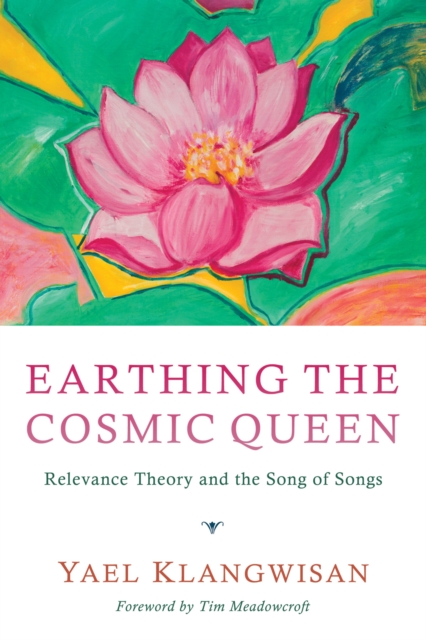
Earthing the Cosmic Queen explores the connection of poet, world, and text in the Song of Songs based on the process of reading as understood by Relevance Theory.
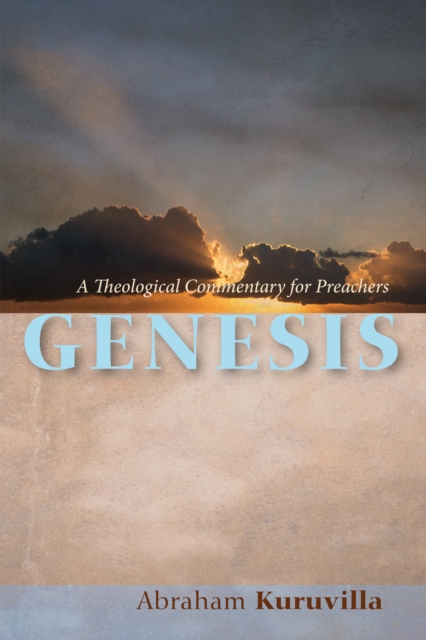
Genesis: A Theological Commentary for Preachers engages hermeneutics for preaching, employing theological exegesis that enables the preacher to utilize all the narrative units of the book to craft effective sermons.
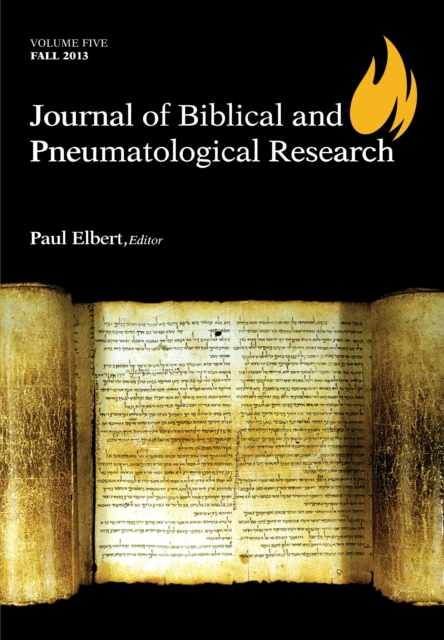
Journal of Biblical and Pneumatological ResearchVOLUME FIVE FALL 2013The Journal of Biblical and Pneumatological Research (JBPR) is a new international peer-reviewed academic serial dedicated to narratively and rhetorically minded exegesis of biblical and related texts.
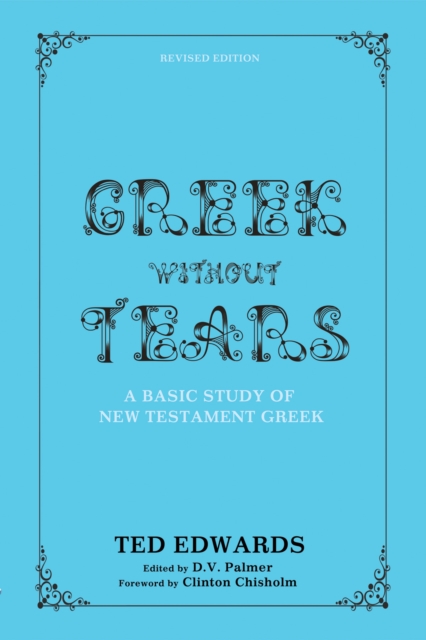
The book assumes that in learning to translate the Greek New Testament, it is necessary to know (a) the Greek letters, (b) the alterations to the roots, (c) the rules of agreement, and (d) the vocabulary.
In the first century, endemic food shortages left 25 percent of the population below subsistence level and another 30 percent at risk of slipping below subsistence.
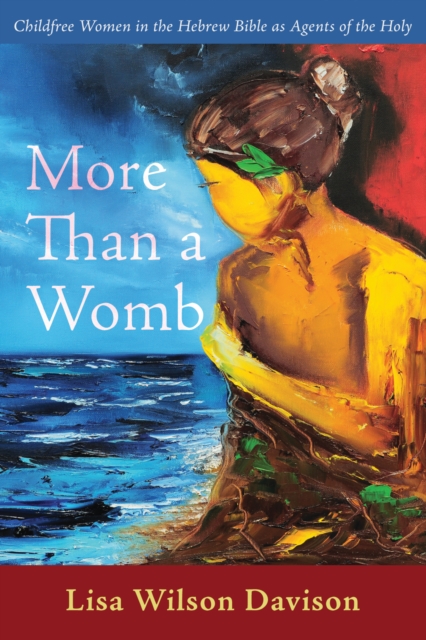
This book lifts up women of the Hebrew Bible who, working with the Divine, play amazing roles in the stories of Israel--prophet, judge, worship leader, warrior, scholar, scribe.
A Journey to Bong Mines: Home Is a Place Best Known to You is a thought-provoking, non-fictional, and easy-to-read masterpiece which reveals the undeniable struggles of four brothers who risk their lives and all they had to reach a place to call home, in spite of the atrocities they had to undergo.