The publication of these essays in one volume--essays published separately and in diverse contexts over a period of thirty years--is something of an event.
The student of Hebrew need master a vocabulary of less than 800 words to have learned all the verbs occurring twenty-five times or more and all other words used more than fifty times in the Hebrew Old Testament.
"e;Our subject is the lost sayings of our Lord, or--to give them their Greek name--the "e;the agrapha,"e; which means literally the "e;unwritten sayings,"e; saying which are not recorded in the four Gospels.
Many aspects of the thought of the Fathers are strange to us, and as a result we tend to value their writings for their spiritual rather than their intellectual content.
"e;The problem of the way in which patristic exegetes viewed the New Testament, and indeed the whole Bible, has concerned scholars a good deal in recent years, especially since it has been discovered that many of the Fathers' methods were analogous to our own.
This book is the first full-length literary study of the book of Judges in its finished form as a narrative work with its own distinctive structure and themes.
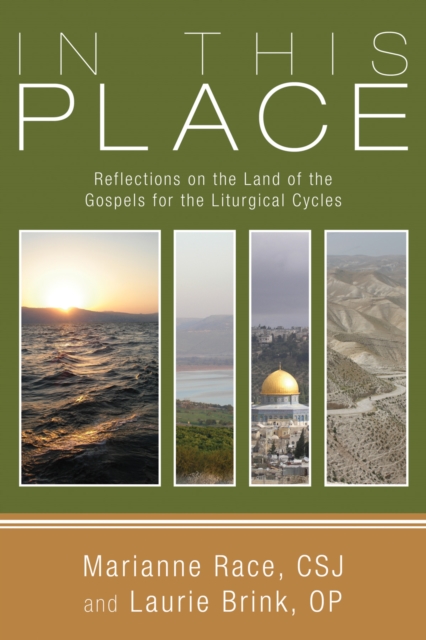
The landscape photographed and the reflections on the sites of the Sunday Gospels paint a geography little changed since the time of Jesus and his followers.
After his definitive The Historical Jesus, John Dominic Crossan delivered Jesus: A Revolutionary Biography--a popularized, bestselling account of what we can know about the life of Jesus.
In this revolutionary work, John Dominic Crossan reveals that the Passion and Resurrection Narratives in the four canonical Gospels are radical revisions of an earlier Gospel account.
The scholars who have contributed to this volume of essays are Jewish and Christian thinkers who, without melding their different religious traditions and scholarly methods, have developed complementary responses to what they believe is wrong with contemporary biblical scholarship in Judaism and Christianity.
When John Dominic Crossan's book, In Parables: The Challenge of the Historical Jesus, was published in 1973, it was heralded as a major development in research both on the parables and on the historical Jesus.
Supreme Authority is a book whose author's Commentary on the Gospel of Luke has been called by many Bible scholars the best modern commentary on the third gospel.
The intention of Ancient Texts and Translations (ATT) is to make available a variety of ancient documents and document collections to a broad range of readers.