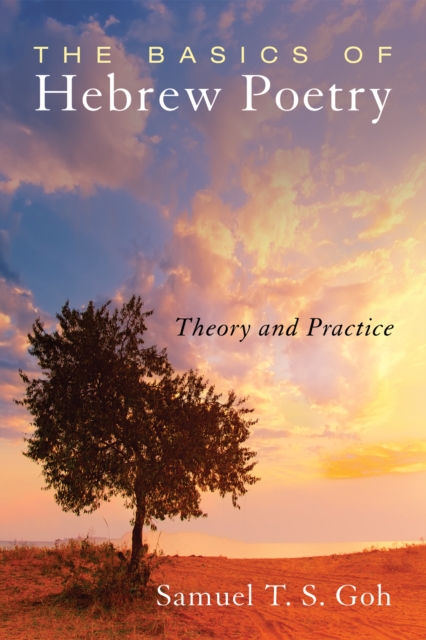
Almost 75 percent of the Old Testament is made up of poetic passages, yet for many readers (lay Christians, even seminary students and pastors), biblical poetic passages remain the greatest challenge.
The Gospel of John: Theological-Ecumenical Readings brings together leading Catholic, Orthodox, and Evangelical theologians to read and interpret John's Gospel from within their ecclesial tradition, while simultaneously engaging one another in critical dialogue.
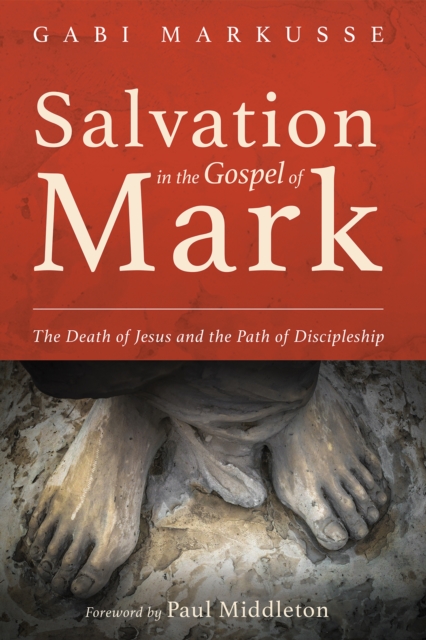
For close to two thousand years, Christian theology has been captivated by a sacrificial rendering of the Gospel that renders God as retributive, arbitrary, and Janus-faced.
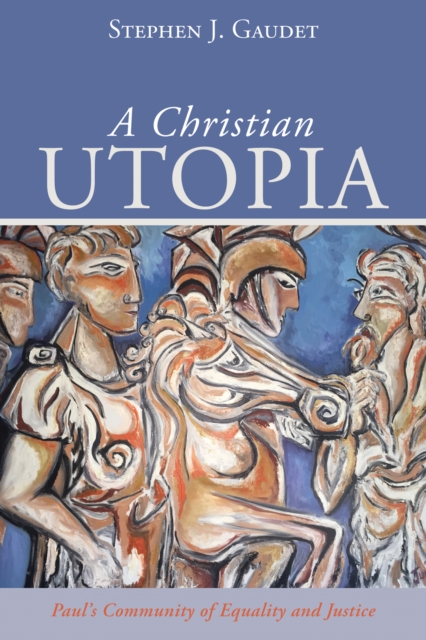
Collecting essays from prominent scholars who span the globe and academic disciplines, Practicing with Paul speaks into the life of the church in ways that inspire and edify followers and ministers of Jesus Christ.
The Evil Eye is mentioned repeatedly throughout the Old Testament, Israel's parabiblical writings, and New Testament, with a variety of terms and expressions.
In the first century, the Thessalonian church grieved deaths in their community, endured harsh persecution, and struggled with questions about the future.
Eli Washington Caruthers's unpublished manuscript, American Slavery and the Immediate Duty of Southern Slaveholders, is the arresting and authentic alternative to the nineteenth-century hermeneutics that supported slavery.
Eli Washington Caruthers's unpublished manuscript, American Slavery and the Immediate Duty of Southern Slaveholders, is the arresting and authentic alternative to the nineteenth-century hermeneutics that supported slavery.
New Testament scholars routinely claim that verbal agreement among parallel Synoptic pericopae is a reliable indicator of literary borrowing by the Synoptic Evangelists.
Sociologist Anthony Blasi analyzes early Christianity using multiple social scientific theories, including those of Max Weber, Georg Simmel, Karl Marx, Antonio Gramsci, Max Scheler, Alfred Schutz, and contemporary theorists.
This book can be summarized in one sentence: that culture plays a determinant role in the way people perceive, interpret, and, therefore, respond to reality around them--ideas, events, people, and literature, including sacred literature.
Second-century Christians had a significant role in shaping the import of the literary sources that they inherited from the first century through their editorial revisions and the church traditions that they appended to them.
Pivoting upon her ten-year stay as a missionary in Rwanda, in this memoir McAllister reflects deeply on her experiences of redemption and transformation.
María Magdalena es una figura central en la tradición cristiana, recordada como discípula cercana de Jesús, testigo de su muerte y la primera en presenciar su resurrección.
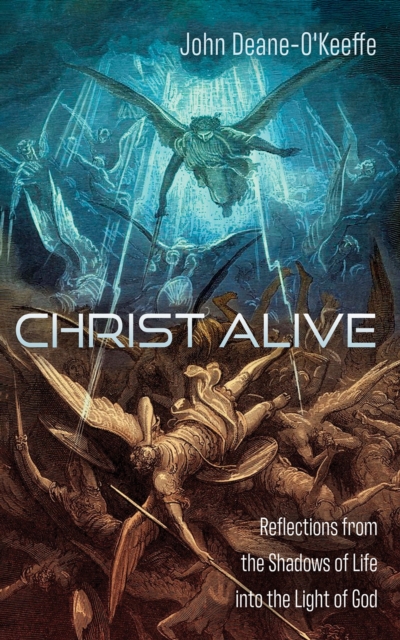
Christ Alive is a book of fifty-two lessons for every week of the year that takes the reader on a clever, humorous, roller-coaster voyage of discovery, where Christ is consistently found in places where we might least expect or want.
The Book of Jubilees, or, as it is sometimes called, "e;the little Genesis,"e; purports to be a revelation given by God to Moses through the medium of an angel, and containing a history, divided up into jubilee-periods of forty-nine years, from the creation to the coming of Moses.
The New Jerusalem and its Heavenly Doctrine is a wonderful introduction to the beliefs of the New Church and an overview of its theological foundations.
Men would never be superstitious, if they could govern all their circumstances by set rules, or if they were always favoured by fortune: but being frequently driven into straits where rules are useless, and being often kept fluctuating pitiably between hope and fear by the uncertainty of fortune's greedily coveted favours, they are consequently, for the most part, very prone to credulity.
The Father in heaven asks, and requires, and actually expects, that every child of His yield Him whole-hearted and entire obedience, day by day, and all the day.
Volume 1 of the 'Conflict of the Ages' book series, ';Patriarchs and Prophets' covers the Biblical history of the world from the rebellion of Satan in heaven to King David.
Volume 2 of the 'Conflict of the Ages' book series, 'The Story of Prophets and Kings,' covers the Biblical history of the world from King Solomon to Malachi.