Among the numerous sets of conferences that Thomas Merton presented to young prospective monks during his decade (1955-1965) as novice master at the Cistercian Abbey of Gethsemani is a wide-ranging introduction to biblical studies, made available for the first time in the present volume.
Author Mark Wingfield combines his theological training as a pastor and his skills as a journalist in this exploration of truth and faithful truth-telling.
In the new Hermeneia volume, the Jonah translation and commentary, renowned biblical scholar Susan Niditch encourages the reader to investigate challenging questions about ancient conceptions of personal religious identity.
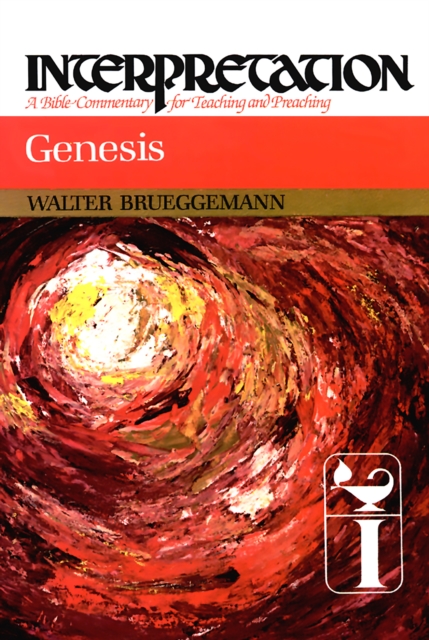
In Ancient Echoes, Walter Brueggemann -- one of our most influential biblical scholars -- responds to eight "e;truth claims"e; made by the radical right in US politics.
For Brueggemann, the Old Testament is an invitation to explore the rich pluralism and diversity of Israel's testimony of faith in Yahweh, the central figure of the Old Testament.
The white privilege phenomenon arguably began when European countries started to colonize Africa, the Americas, Asia, Australia, New Zealand, and the Pacific Islands.
Race, Racism, and the Biblical Narratives is a critical essay from Stony the Road We Trod: African American Biblical Interpretation written by the project's editor, Cain Hope Felder, now in a concise stand-alone book.
Chloe and Her People offers an Africana Womanist reading of First Corinthians that privileges the knowledge, experiences, histories, traditions, voices, and artifacts of Black women and the Black community that challenge or dissent from Paul's rhetorical epistemic constructions.
In this engaging volume, Capetz argues that Protestants have largely ignored Luther's heritage when it comes to thinking about biblical authority and instead have followed Calvin's biblicism, leading to many intellectual and moral problems in the face of a fully historical-critical understanding of the Bible in our time.
Peter reads the messages originally addressed by God to sojourners in the Old Testament as the same messages God had for the sojourning believers of Peter's generation.
Das leitende Thema dieses Bandes ist die in den 1970er Jahren in der Bibelwissenschaft einsetzende soziale und kulturelle Wende (social and cultural turn).
For many people, the third book of the Bible--Leviticus--is often the place where their yearly Bible reading plan gets interrupted as they look for more familiar material.
Race, Racism, and the Biblical Narratives is a critical essay from Stony the Road We Trod: African American Biblical Interpretation written by the project's editor, Cain Hope Felder, now in a concise stand-alone book.
Biblical utterance, in contrast to the sounds of power and certitude, offers imaginative probes into the mystery of God's creation and into the hidden complexities of human hurt and human hope.
The New Testament writers use spatial language and imagery to portray our relationship with God, speaking both about God or Christ in us and us in them.
This book offers new interpretative insight into the Gospel of John, applying a combination of critical discourse analysis, conceptual metaphor theory, and anthropological theories of ritual.
Charles Haddon Spurgeon war ein englischer Baptistenprediger und ist nach wie vor sehr einflussreich unter Christen verschiedener Konfessionen, von denen einige ihn als "Fürsten der Prediger" bezeichnen.
How the King James Bible has influenced the style of the American novel from Melville to Cormac McCarthyThe simple yet grand language of the King James Bible has pervaded American culture from the beginning-and its powerful eloquence continues to be felt even today.
This book offers new interpretative insight into the Gospel of John, applying a combination of critical discourse analysis, conceptual metaphor theory, and anthropological theories of ritual.
The author does not aim to defend Luther's and Calvin's reading of Galatians against modern biblical scholarship but to read and hear them in their own contexts.
For New Testament biblical scholars, this book constitutes a vital summary of contemporary, theoretically-sound interpretations of the linguistic functions of the Post-Classical (Koine) Greek article in a way that will inform exegesis of the text, especially in the field of larger discourse units.