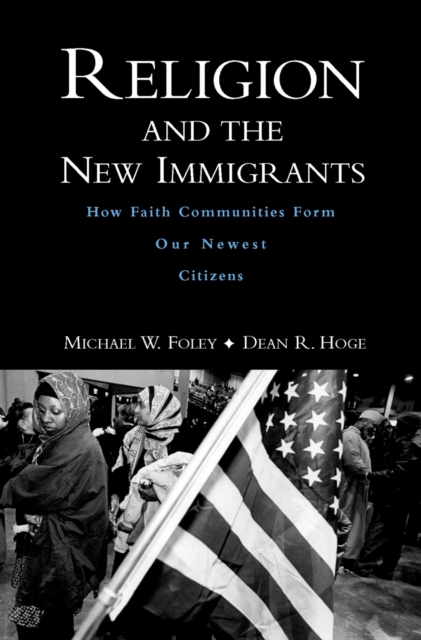
The explosive growth of the immigrant population since the 1960s has raised concerns about its impact on public life, but only recently have scholars begun to ask how religion affects the immigrant experience in our society.
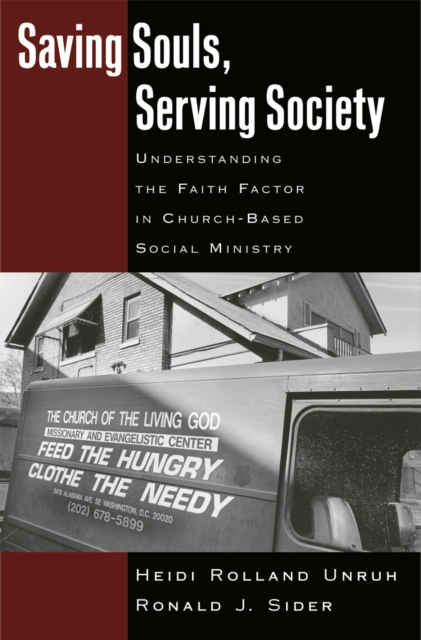
Recent years have seen unprecedented attention to faith-based institutions as agents of social change, spurred in part by cuts in public funding for social services and accompanied by controversy about the separation of church and state.
The common view of the nineteenth-century pastoral relationship--found in both contemporary popular accounts and 20th-century scholarship--was that women and clergymen formed a natural alliance and enjoyed a particular influence over each other.
The growing scholarly attention in recent years to the religious world of late antiquity has focused new attention on the quest for holiness by the strange, compelling, often obscure early Christian monks known as the desert fathers.
The Fengdao kejie or "e;Rules and Precepts for Worshiping the Dao"e; dates from the early seventh century and is a key text of medieval Daoist priesthood and monasticism, which was first formally organized in the sixth century.
In this study, based on both historical evidence and ethnographic data, Paula Arai shows that nuns were central agents in the foundation of Buddhism in Japan in the sixth century.
Hope and Hospitality for Migrating People Never have so many people left their homes and migrated to other parts of the world as weve seen in recent years.
A Revolution in Rhyme: Poetic Co-option under the Islamic Republic offers, for the first time, an original, timely examination of the pivotal role poetry plays in policy, power and political legitimacy in modern-day Iran.
A Revolution in Rhyme: Poetic Co-option under the Islamic Republic offers, for the first time, an original, timely examination of the pivotal role poetry plays in policy, power and political legitimacy in modern-day Iran.
The Oxford Handbook of Mission Studies represents more than a century of scholarship related to the theology, history, and methodology of the propagation of Christian faith and the engagement of Christians with cultures, religions, and societies worldwide.
The Oxford Handbook of Mission Studies represents more than a century of scholarship related to the theology, history, and methodology of the propagation of Christian faith and the engagement of Christians with cultures, religions, and societies worldwide.
This book provides an account and explanation of a fundamental dilemma facing secular states: the 'legitimacy gap' left by the withdrawal of religion as a source of legitimacy.
This book provides an account and explanation of a fundamental dilemma facing secular states: the 'legitimacy gap' left by the withdrawal of religion as a source of legitimacy.
In early medieval Europe, monasticism constituted a significant force in society because the prayers of the religious on behalf of others featured as powerful currency.
In early medieval Europe, monasticism constituted a significant force in society because the prayers of the religious on behalf of others featured as powerful currency.
Bob Tennant presents a history of the missionary work, cultures, and rhetoric of the Church of England in 1760-1870, when it was the predominant organizer of Protestant overseas missions.
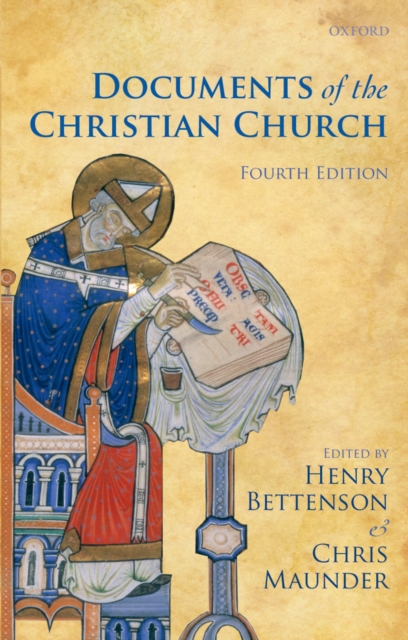
This selection of writings from the most important moments in the history of Christianity has become established as a classic reference work, providing insights into 2000 years of Christian theological and political debate.
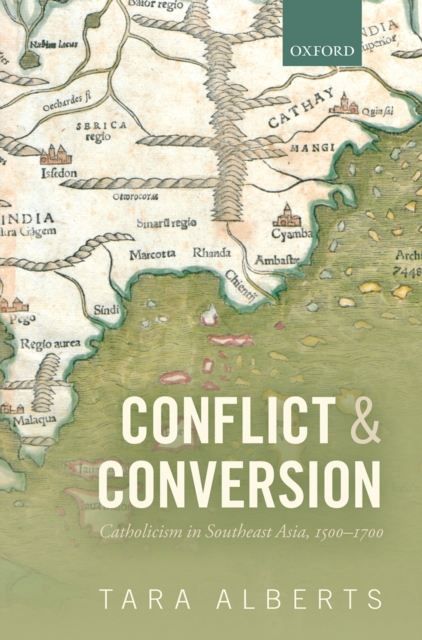
Conflict and Conversion explores how Catholic missionaries, merchants, and adventurers brought their faith to the strategically and commercially crucial region of Southeast Asia in the sixteenth and seventeenth centuries.
Gavin D'Costa breaks new ground in this authoritative study of the Second Vatican Council's doctrines on other religions, with particular attention to Judaism and Islam.
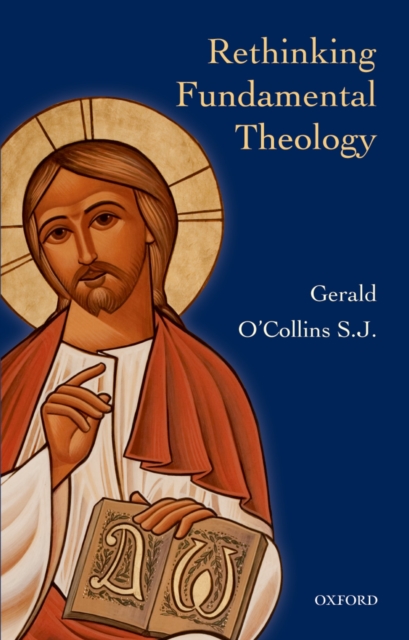
This book identifies the distinguishing features of fundamental theology, as distinct from philosophical theology, natural theology, apologetics, and other similar disciplines.
This book identifies the distinguishing features of fundamental theology, as distinct from philosophical theology, natural theology, apologetics, and other similar disciplines.
This volume proposes a fresh strategy for ecumenical engagement - 'Receptive Ecumenism' - that is fitted to the challenges of the contemporary context and has already been internationally recognised as making a distinctive and important new contribution to ecumenical thought and practice.
Michael Carrithers guides us through the complex and sometimes conflicting information that Buddhist texts give about the life and teaching of the Buddha.
In the last decades of the nineteenth century, urgent and unprecedented demands among oppressed peoples in colonial India drove what came to be called 'mass conversion movements' towards a range of Christian denominations, launching a revolution in South Asia's two thousand-year Christian history.
The Council of Chalcedon in 451 divided eastern Christianity, with those who were later called Syrian Orthodox among the Christians in the near eastern provinces who refused to accept the decisions of the council.
The Oxford Handbook of Early Christian Studies responds to and celebrates the explosion of research in this inter-disciplinary field over recent decades.
Robert Frykenberg's insightful study explores and enhances historical understandings of Christian communities, cultures, and institutions within the Indian world from their beginnings down to the present.
Keith Robbins, building on his previous writing on the modern history of the interlocking but distinctive territories of the British Isles, takes a wide-ranging, innovative and challenging look at the twentieth-century history of the main bodies, at once national and universal, which have collectively constituted the Christian Church.
Michael Carrithers guides us through the complex and sometimes conflicting information that Buddhist texts give about the life and teaching of the Buddha.
The fourteenth-century controversy between the Dominican Durandus of St Pourcain and his order plays a central role in explaining the later success of Thomism.