This book is an attempt to develop a dialogue between the philosophy of Emmanuel Levinas, Jean Porter's Thomistic theory of the natural law, and the virtue of solidarity as expressed in Catholic Social Teaching.
This book is meant for every family member, colleague, and airplane seatmate who has asked me a variation of the following question: "e;Why is the world like this?
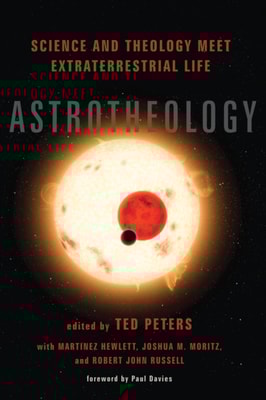
Astrotheology: Science and Theology Meet Extraterrestrial Life looks at both ends of the telescope: the unfathomable reaches of cosmic space and the excited stirrings within the human psyche.
In response to the recent critiques made against Balthasar's interpretation of Christ's descent into hell on Holy Saturday, this book argues that Balthasar does not intend to present a radical reinterpretation of the doctrine in contrast to the traditional teachings but rather intends to fully appreciate the in-betweenness of Holy Saturday as the day of transition from the cross to the resurrection, from the old aeon to the new.
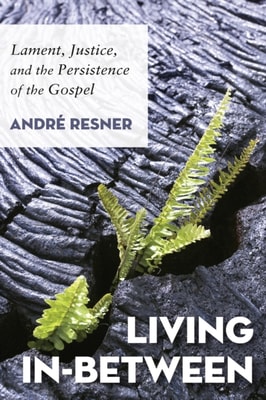
The community of faith finds itself located precariously between Jesus' first and second comings, between the promise and fulfillment, between what God has begun in the gospel and what God has yet to complete.
Gundamentalism and Where It Is Taking America is the work of James Atwood, a retired Presbyterian pastor and an avid deer hunter for half a century who has also been in the forefront of the faith community's fight for two constitutional rights: the right to keep and bear arms and the right to live in domestic tranquility, free of gun violence.
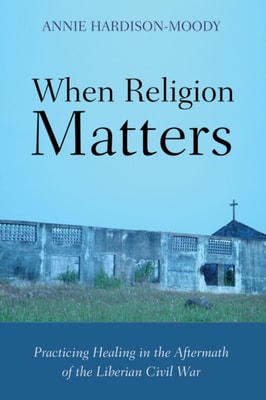
How does starting with women's statements that "e;God was there"e; in the moment of wartime violence shift the ways we think about religion, conflict, and healing?
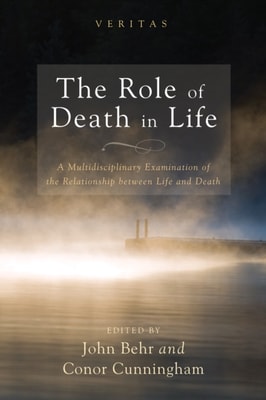
The relation between life and death is a subject of perennial relevance for all human beings--and indeed, the whole world and the entire universe, in as much as, according to the saying of ancient Greek philosophy, all things that come into being pass away.
The Architectonics of Hope provides a critical excavation and reconstruction of the Schmittian seductions that continue to bedevil contemporary political theology.
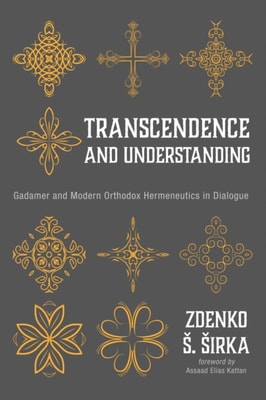
This book brings into conversation Western and Orthodox hermeneutical schools: one represented by Hans-Georg Gadamer and his followers, while the other school is less focused around one person and yet displays common distinct features.
Transforming Wisdom offers an extensive, multidisciplinary introduction to pastoral psychotherapy from some of the most respected practitioners in the field.
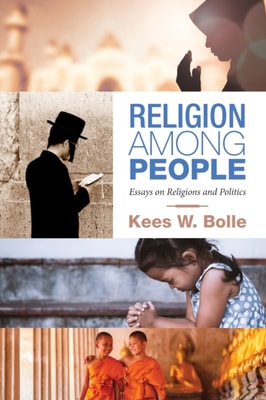
"e;At the deepest level religious traditions determine what goes on between one human being and another, between one community and another, and between human beings and whoever holds power over them.
Thinking beyond the absolutes Christians and other religious persons increasingly find "e;deabsolutized"e; in our modern thought world, Swidler reflects on the ways we humans think about the world and its meaning now that increasingly we notice that there are other ways of understanding the world than the way we grew up in.
The Hebrew prophets of ancient Israel strove to convey God's point of view to the people and the powers at a time when injustice, deceit, malfeasance, and crushing the poor and the oppressed was prominent--much like today!
If you are passionate about participating in the recovery of preaching for the spiritual formation of God's people, then you will want to jump into this lively collection of biblically rigorous, culturally intuitive, grace-drenched sermons.
The creation of humankind in the Image of God is perhaps the most foundational tenet of theological anthropology, yet it is rarely understood in the fullness of what it represents.
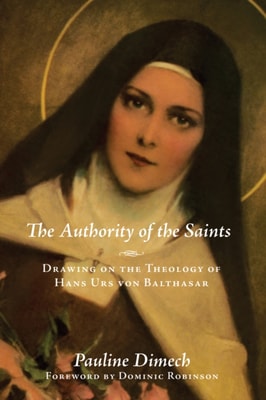
Pauline Dimech explores whether and to what extent we may attribute authority to the saints, but also how we may ensure that it is the saints, and not the scoundrels, whose influence persists and whose memory endures.
Theologians are constantly accused of only speaking in theories, positing arguments to be considered by the mind with little bearing on the practicalities of life.
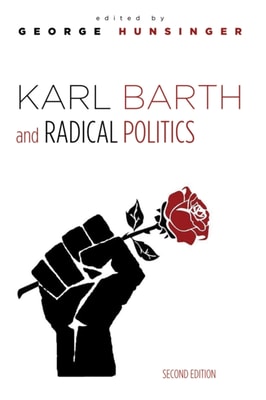
Karl Barth was one of the most important Christian theologians of the twentieth century, but his political views have often not been taken sufficiently into account.
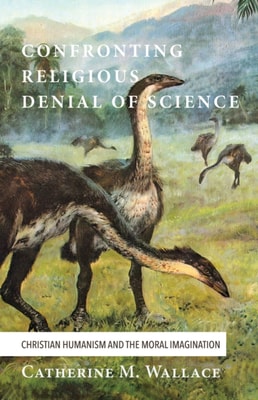
Confronting Religious Denial of Science: Christian Humanism and the Moral Imagination traces the cultural backstory of contemporary conflicts between biblical literalists who oppose evolution and "e;New Atheists"e; who insist that religion is so pernicious it should be outlawed, if not exterminated.
In this book, Stan Chu Ilo offers an integral theology of development and a critical social analysis of different development theories and practices in the world, especially in Africa.
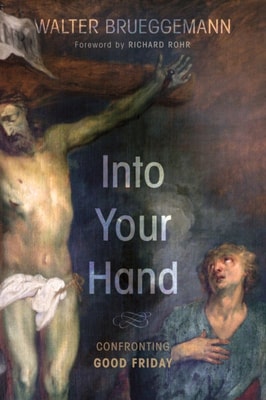
This set of seven sermons follows the traditional church sequence of "e;The Seven Last Words of the Cross,"e; utterances that the gospel narratives place on the lips of Jesus.