Five hundred years ago Martin Luther posted his ninety-five theses or grievances to the door of the All Saints' Church of Wittenberg and condemned the Catholic Church's teaching of indulgences as nothing but a scheme to raise money for the church.
Continuing his series of sermons for the Common Lectionary (Revised), Bruce Taylor offers theologically rich, sacramentally sensitive, and biblically centered proclamations for the Sundays and major feast days of Year B, from Pentecost through Christ the King (Reign of Christ), and a sample of preaching from the Daily Lectionary.
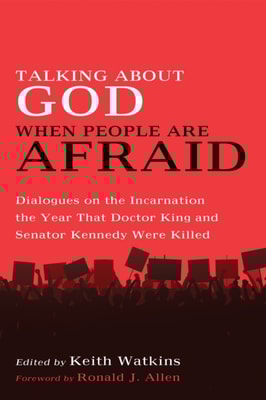
The Dialogues on the Incarnation presented in this book show a group of four preachers as they endeavored to help the people in their church make theological sense at a time when optimism and fear were intermingled.
Written in the high art style of prophetic witness, The Scroll of Anatiya reveals a new kind of biblical heroine who is fiercely passionate and sensual.
Reading the Bible Badly exposes how American Christians misunderstand and misuse the Bible, reading Scripture through "e;lenses"e; that distort its true character.
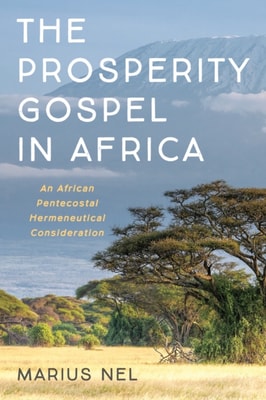
Africans' prevailing interest in the prosperity gospel is not only connected to the influence of American prosperity teachers reaching a worldwide audience through their imaginative use of the media, but is also related to the African worldview and African traditional religion, and its lasting influence on contemporary Africans and the way they think about prosperity, as well as their interest in prosperity in post-colonial Africa.
A defense of the New Testament view that all things are to be united in Christ, which entails that the ultimate destiny of the universe, and of all that is in it, is to be united in God.
Lyn Brakeman was among the first women to enter the ordination process in the Episcopal Church just after the General Convention voted in 1976 that women could be priests.
Postcolonial Public Theology is a tour de force--theological reflection transformed by encounter with the most compelling intellectual discourses of our time.
Should Christianity's theological face remain largely European and North American in the twenty-first century in the wake of the expansion of Christianity in sub-Saharan Africa, Asia, and Latin America?
According to Hebrews, the Son of God appeared to "e;break the power of him who holds the power of death--that is, the devil--and free those who all their lives were held in slavery by their fear of death.
In Building a Community of Interpreters Walter Dickhaut argues that the practice of reading (and, by extension, listening) is no less creative than the practice of writing (and speaking); readers and hearers, just as much as writers and speakers, are producers of meaning.
Negating Negation critically examines key concepts in the corpus of Pseudo-Dionysius the Areopagite: divine names and perceptible symbols, removal and negation, hierarchy and hierurgy, ineffability and incomprehensibility.
Missio Dei by its very nature requires the church to come to terms with the exercise of power, both internally and externally, as it confronts the world.
As experiences of suffering continue to influence the responses of identity groups in the midst of violent conflict, a way to harness their narratives, stories, memories, and myths in transformative and nonviolent ways is needed.
What do Robben Island, Colonel Gadaffi, the earthquake in Haiti, the riots in London, credit crunch, child abuse, and the death of Christ have in common?
Born Again and Beyond identifies and interacts with various theological blind spots in Evangelicalism--such as its naive rationality, its faulty understanding of the nature of both Scripture and the gospel, and its emphasis on salvation as an event rather than a process.
There are few situations in the life of a church that are more disruptive or destructive than the presence of sin in the life of its membership, especially the leadership.