Demonstrates that Buddhists appropriated the practice, vocabulary, and ideology of sacrifice from Vedic religion, and discusses the relationship of this sacrificial discourse to ideas of karma in the Pali canon and in early Buddhism.
This is a major anthropological study of contemporary Tibetan Buddhist monasticism and tantric ritual in the Ladakh region of North-West India and of the role of tantric ritual in the formation and maintenance of traditional forms of state structure and political consciousness in Tibet.
Scholars of Buddhism, themselves Buddhist, here seek to apply the critical tools of the academy to reassess the truth and transformative value of their tradition in its relevance to the contemporary world.
Providing an overall interpretation of the Buddhist monument Borobudur in Indonesia, this book looks at Mahayana Buddhist religious ideas and practices that could have informed Borobudur, including both the narrative reliefs and the Buddha images.
By providing an annotated translation of, and applying the methods of literary criticism to, a first-century account of the life of the saint Purna, this study introduces the reader to the richness and complexity of an essential Buddhist genre.
Demonstrates how the four noble truths are used thorughout the Pali canon as a symbol of Buddha's enlightenment and as a doctrine within a larger network of Buddha's teachings.
This work presents an exploration of Buddhist philosophy and practice as a potential resource for an approach to psychotherapy which is responsive to the needs of its time and context, and attempts to open up a three-way dialogue between Buddhism, psychotherapy and contemporary discourse to reveal a meaningful theory and practice for a contemporary psychotherapy.
Buddhist meditation, while attracting less popular attention than some other meditative disciplines, has given rise to a particularly rich literature in recent years.
Action Dharma charts the emergence of a new chapter in an ancient faith - the rise of social service and political activism in Buddhist Asia and the West.
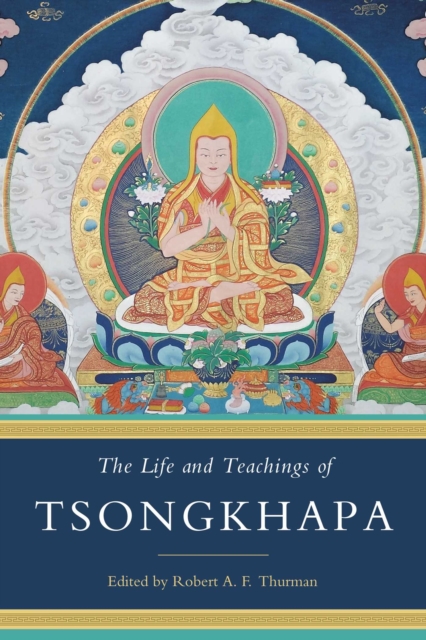
Places the controversy initiated by the Tibetan Tsong kha pa - who elaborated on one of the eight difficult points in understanding Madhyamaka philosophy - in its Indian and Tibetan context.
Brings together Paul Williams' previously published papers on the Indian and Tibetan interpretations of selected verses from the eighth and ninth chapters of the Bodhicaryavatara.
This book contributes to the history of religions and Buddhist studies fields by focussing on what is a far too frequently ignored aspect of religious experience: visual images.
Written as a companion to Eliot's 3-volume Hinduism and Buddhism this text begins with an overview of Buddhism as practiced in India and China before presenting an in depth account of the history of Buddhism in Japan.
A balanced selection from Buddhist writings, including scriptures used by the Zen School, with chapters on the Buddha, Tibetan Buddhism, Concentration and Meditation, the Buddhist Order, and Nirvana.
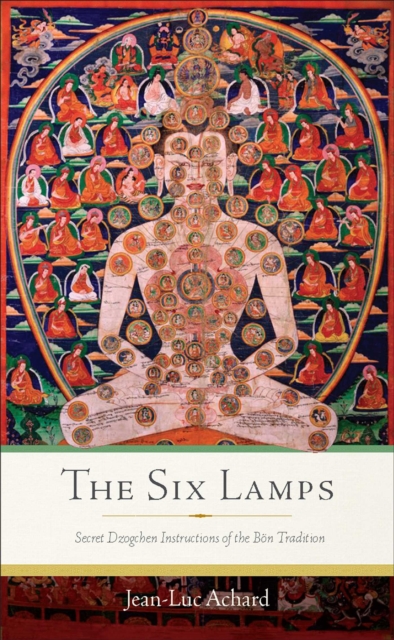
Subtle-body practices are found particularly in Indian, Indo-Tibetan and East Asian societies, but have become increasingly familiar in Western societies, especially through the various healing and yogic techniques and exercises associated with them.
Providing a systematic and complete overview of the highest scholarly quality on Tantric mantras in Hinduism, this book presents a summary on the nature of Tantric mantras, their phonetic aspect, structure and classifications.