
Christianity: sacred texts and revered writings
Sorting
Bestseller Sorting collapsed
Bestseller
Name: A-Z
Name: Z-A
Price ascending
Price descending
Publication Date ascending
Publication Date descending

E-book
Price
0
10.99 £




E-book
0
0
Price
10.99 £
A journey from Burning Man to the Akashic Field that suggest how 5-MeO-DMT triggers the human capacity for higher knowledge through direct contact with the zero-point field *; Examines Bufo alvarius toad venom, which contains the potent natural psychedelic 5-MeO-DMT, and explores its entheogenic use *; Proposes a new connection between the findings of modern physics and the knowledge held by shamans and religious sages for millennia The venom from Bufo alvarius, an unusual toad found in the Sonoran desert, contains 5-MeO-DMT, a potent natural chemical similar in effect to the more common entheogen DMT.
Read more

E-book
Price
0
7.99 £
E-book
0
0
Price
7.99 £
A clinical psychiatrist explores the effects of DMT, one of the most powerful psychedelics known.
Read more
E-book
Price
0
8.99 £
E-book
0
0
Price
8.99 £
The core teachings and riotous life of the psychedelic yogi Ganesh Baba *; Presents the teachings of Ganesh Baba's ';Crea' Yoga, which he derived from the tantric practices of traditional Kriya Yoga *; Explains the basic exercises for following the Crea (creative) Yoga practice *; Includes many anecdotes from the colorful life of this ';psychedelic' baba Shri Mahant Swami Ganeshanand Saraswati Giri (ca.
Read more
E-book
Price
0
14.99 £
E-book
0
0
Price
14.99 £
Kabbalistic initiatory teachings for becoming a vessel for illumination, prophecy, and peace by creating an inner dwelling place for God's divine presence *; Reveals practices for self mastery and revelation based on the holy design of the first Hebrew Sanctuary, the lives of the Hebrew Prophets, and the Tree of Life *; Shows how the Tree of Life's ten sefirot correspond to the Torah's prophetic Ten Songs of Creation; to alchemical ritual practices of fire, water, air, and earth; and to specific parts of the body, emotions, and aspects of the soul Many synagogues and churches, including the First and Second Temples of the Hebrews, follow an archetypal design first used in the Ohel Moed, or Tent of Meeting, and its sacred Tabernacle, which housed the Ark of the Covenant and the Ten Commandments.
Read more
E-book
Price
0
7.99 £
E-book
0
0
Price
7.99 £
The first English translation of Maria de Naglowska's essential treatise on the spiritually transformative power of sex, La lumire du sexe *; Reveals mystic sexual practices for growth of the soul and enlightenment *; Explains the inner workings of the sex magic rituals of La confrrie de la Flche d'Or [The Brotherhood of the Golden Arrow], the notorious occult order of 1930s Paris *; Translated from the original French with an Introduction and Notes by Donald Traxler *; Features elegant French flaps Never before available in English, The Light of Sex expounds the tenets of the revolutionary religious system conceived by Maria de Naglowska--Russian mystic, occultist, esoteric high priestess, rumored lover of Julius Evola, and self-styled ';Satanic Woman' of 1930s Paris.
Read more
E-book
Price
0
8.99 £
E-book
0
0
Price
8.99 £
The first English translation of Maria de Naglowska's treatise on advanced sexual magic practices, Le mystre de la pendaison *; Details Naglowska's advanced occult teachings on the Third Term of the Trinity and the spiritually transformative power of sex *; Explains the mystical erotic hanging rituals of La confrrie de la Flche d'Or [The Brotherhood of the Golden Arrow], the notorious occult order of 1930s Paris *; Continues the sexual initiatory teachings first expounded in Naglowska's The Light of Sex Available for the first time in English, Advanced Sex Magic illuminates the revolutionary occult teachings of Maria de Naglowska--Russian mystic, esoteric high priestess, and self-styled ';Satanic Woman' of 1930s Paris.
Read more
E-book

Unknown author
Price
0
8.99 £
E-book
Unknown author
0
0
Price
8.99 £
A study of the importance of psychedelic plants and drugs in religion and society *; With contributions by Albert Hofmann, R.
Read more
E-book
Price
0
7.99 £
E-book
0
0
Price
7.99 £
Reveals techniques for achieving spiritual immortality through an in-depth exploration of Lao-tzu's Tao Te Ching *; Includes practices and meditations for living in harmony with the Tao (universal essence) and Te (kind action) *; Reveals the integration of heavenly and human power in the mystic field within us *; Presents Tao Huang's English translation of the Tao Te Ching from the original Chinese Mawangdui text unearthed in 1973 For over 2,500 years the words of the Tao Te Ching, the primary scripture of Laoism and Taoism, have been regarded as among the greatest treasures of the world.
Read more
E-book
Price
0
7.99 £
E-book
0
0
Price
7.99 £
An in-depth look at the role of number as a bridge between Heaven and Earth *; Reveals the numerical code by which the ancients maintained high standards of art and culture *; Sets out the alchemical formulas for the fusion of elements and the numerical origins of various sacred names and numbers *; Describes the rediscovery of knowledge associated with the Holy Grail, through which the influence of the Heavenly Order is made active on Earth The priests of ancient Egypt preserved a geometrical canon, a numerical code of harmonies and proportions, that they applied to music, art, statecraft, and all the institutions of their civilization.
Read more
E-book
Price
0
9.99 £
E-book
0
0
Price
9.99 £
An intimate glimpse into the world of ancient Peruvian spiritual practice and cosmology*; Reveals the mysteries of the world of living energy (kawsay pacha) through intensive in-depth interviews with six Q'ero mystics*; Explores the energetics, spirits, tools, and practices of Andean mysticism--the real story behind the fictionalized accounts in The Celestine Prophecy Known as the ';keepers of the ancient knowledge,' the Q'ero Indians of Peru are the most respected mystics of the south-central Andes.
Read more
E-book
Price
0
13.99 £
E-book
0
0
Price
13.99 £
An extensive examination of the history of gnosticism and how its philosophy has influenced the Western esoteric tradition *; Explains how the Gnostic understanding of self-realization is embodied in the esoteric traditions of the Rosicrucians and Freemasons *; Explores how gnosticism continues to influence contemporary spirituality*; Shows gnosticism to be a philosophical key that helps spiritual seekers "e;remember"e; their higher selvesGnosticism was a contemporary of early Christianity, and its demise can be traced to Christianity's efforts to silence its teachings.
Read more
E-book
Price
0
10.99 £
E-book
0
0
Price
10.99 £
The symbolism and use of the number twelve in organizing ancient societies *; Connects the zodiac, the twelve months of the year, and the political divisions of ancient nations *; Explores the sacred geography of ancient landscapes in Europe and Israel Throughout the world--in countries as far apart as China, Ireland, Iceland, and Madagascar--there survive records and traditions of whole nations being divided into twelve tribes and twelve regions, each corresponding to one of the twelve signs of the zodiac and to one of the twelve months of the year.
Read more
E-book
Price
0
8.99 £
E-book
0
0
Price
8.99 £
Outlines the principles and mechanics of the soul body, the spiritual vehicle that enables individual consciousness to survive the body's death *; Shows that the ancient Vedic, Egyptian, Hebraic, and Pythagorean traditions shared and understood this spiritual practice *; Reveals modern science as only now awakening to this ancient sacred scienceAncient peoples the world over understood that individual consciousness is rooted in a universal field of consciousness and is therefore eternal, surviving the passing of the physical body.
Read more
E-book
Price
0
14.99 £
E-book
0
0
Price
14.99 £
Social visionary Joseph Chilton Pearce's indictment of cultural imprinting as the cause of humankind's cruel and violent behavior *; Refutes the Neo-Darwinist assumption that violence is inherent in humanity *; Identifies religion as the sustaining force behind our negative cultural imprinting *; Shows how infant-adult interactions unconsciously block the creative spirit We are all too aware of the endless variety of cruel and violent behavior reported to us in the media, reminded daily that in every corner of the world someone is suffering or dying at the hands of another.
Read more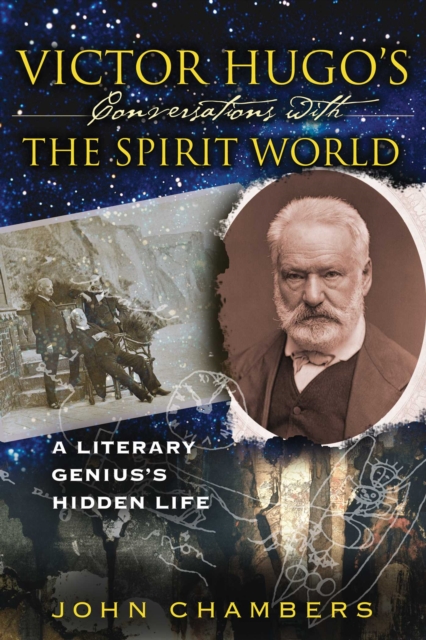
E-book
Price
0
12.99 £
E-book
0
0
Price
12.99 £
First English translation of Victor Hugo's writings on his experiments in spiritualism *; Reveals Hugo's conversations with renowned discarnate entities such as Shakespeare, Plato, Galileo, and Jesus *; Examines his contacts with aliens from the planets Mercury and Jupiter and the revelation that our entire universe is a quantum hologram *; Discusses Hugo's possible role as a grand master of the Priory of Sion During Victor Hugo's exile on the Isle of Jersey, where he and his family and friends escaped the reign of Napolon III, he conducted ';table-tapping' sances, transcribing hundreds of channeled conversations with entities from the beyond.
Read more
E-book
Price
0
10.99 £
E-book
0
0
Price
10.99 £
Jesus was an initiate and adept of the ancient Judaic mysteries who strove to reinstate the tradition of the bridechamber sacrament in his time *; Shows that Jesus sought to establish equity of masculine and feminine in both spiritual practice and social traditions, particularly in the sacrament of marriage *; Reinterprets Jesus' key teachings in light of the ancient tradition of sacred consortship *; Reveals what happened to the gnostic heart of Christianity that Jesus embodied Jesus was a high-initiate and master adept of the ancient Judaic mysteries who strove to free people from the dead hand of the ritualists.
Read more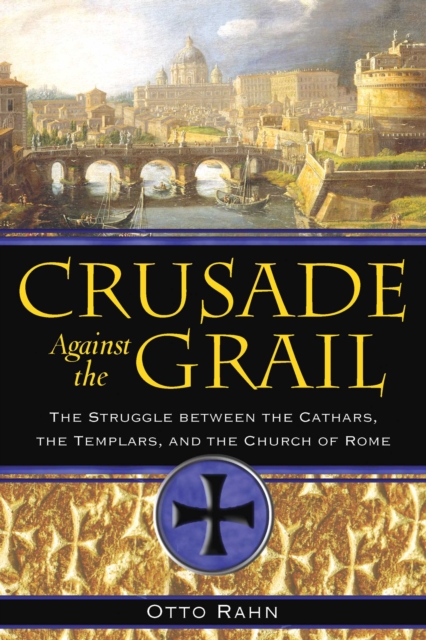
E-book
Price
0
7.99 £
E-book
0
0
Price
7.99 £
The first English translation of the book that reveals the Cathar stronghold at Montsgur to be the repository of the Holy Grail *; Presents the history of the Papal persecution of the Cathars that lies hidden in the medieval epic Parzival and in the poetry of the troubadours *; Provides new insights into the life and death of this gifted and controversial author Crusade Against the Grail is the daring book that popularized the legend of the Cathars and the Holy Grail.
Read more
E-book
Price
0
7.99 £
E-book
0
0
Price
7.99 £
The first English translation of Maria de Naglowska's sexually magical novella, Le rite sacr de l'amour magique *; Contains autobiographical material from Maria de Naglowska's life *; Continues, in symbolic story form, the sexual initiatory teachings expounded in Naglowska's The Light of Sex and Advanced Sex Magic *; Includes a summary of Naglowska's religious doctrine in her own words Available for the first time in English, The Sacred Rite of Magical Love is a mystical, sexually magical novella written by Maria de Naglowska--the Russian mystic and esoteric high priestess of 1930s Paris.
Read more
E-book
Price
0
11.99 £
E-book
0
0
Price
11.99 £
A revolutionary call to overthrow society's mental controls and expand consciousness for the greater good of humanity *; Explores the tactics used to control consciousness, such as misinformation, debt systems, fear conditioning, and the distraction of entertainment and technology *; Reveals the emerging mechanisms for neurogenetic evolution within our brains that will enable us to throw off the shackles of mental control *; Explains how to break through the barriers inhibiting conscious evolution and restore our connection with Nature and the Divine Within society there exists a silent war.
Read more
E-book
Price
0
7.99 £
E-book
0
0
Price
7.99 £
How to break free from the physical world and travel via the energy body *; Examines the seven secrets of time from the viewpoint of mystics and scientists, including Helena Blavatsky, C.
Read more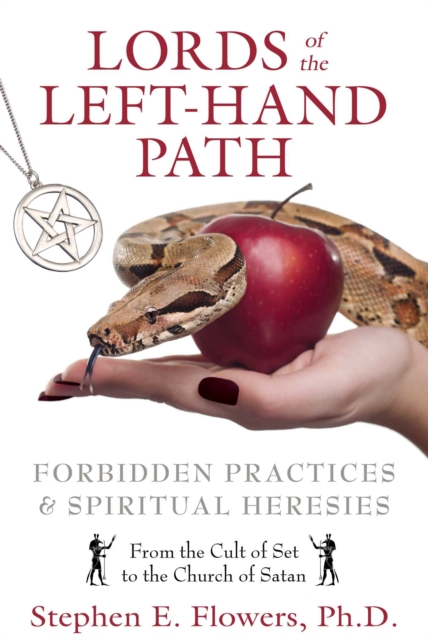
E-book
Price
0
13.99 £
E-book
0
0
Price
13.99 £
Examines the left-hand path and reveals the masters of the tradition *; Explores the practices and beliefs of many left-hand path groups, including the Cult of Set, the Hell-Fire Club, and heretical Sufi, Zoroastrian, Christian, and Muslim sects *; Investigates many infamous occult personalities, including Helena Blavatsky, Aleister Crowley, the Marquis de Sade, and Anton LaVey *; Explains the true difference between the right-hand path and the left-hand path--union with and dependence on God versus individual freedom and self-empowerment From black magic and Satanism to Gnostic sects and Gurdjieff's Fourth Way, the left-hand path has been linked to many practices, cults, and individuals across the ages.
Read more
E-book
Unknown author
Price
0
7.99 £
E-book
Unknown author
0
0
Price
7.99 £
Bridging the gap between science and the world's great spiritual traditions to move our worldview forward *; With contributions from 28 leading scientists and spiritual thinkers, including Michael Beckwith, Deepak Chopra, Larry Dossey, Amit Goswami, Stanislav Grof, Jean Houston, Barbara Marx Hubbard, Jos Argelles, and Peter Russell *; Offers strategies to promote the fusion of science and spirituality *; Explores phenomena at the crossroads of science and religion, such as the nonlocal mind, conscious evolution, and quantum consciousness Edited by Nobel Prize nominee Ervin Laszlo and WorldShift International cofounder Kingsley Dennis, this volume brings together 28 leading scientists and spiritual thinkers for a game-changing conversation on bridging the gap between science and religion.
Read more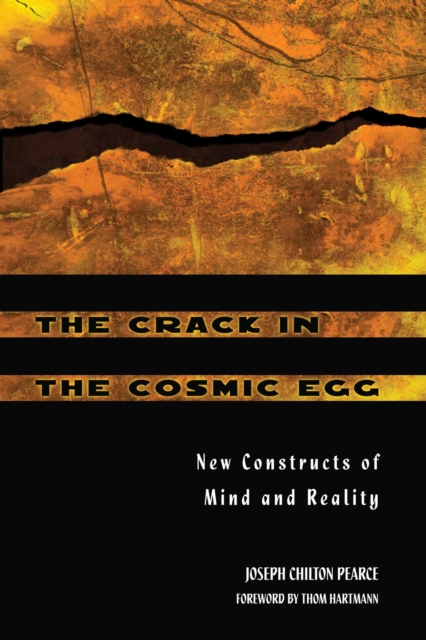
E-book
Price
0
7.99 £
E-book
0
0
Price
7.99 £
The classic work that shaped the thought of a generation with its powerful insights into the true nature of mind and reality.
Read more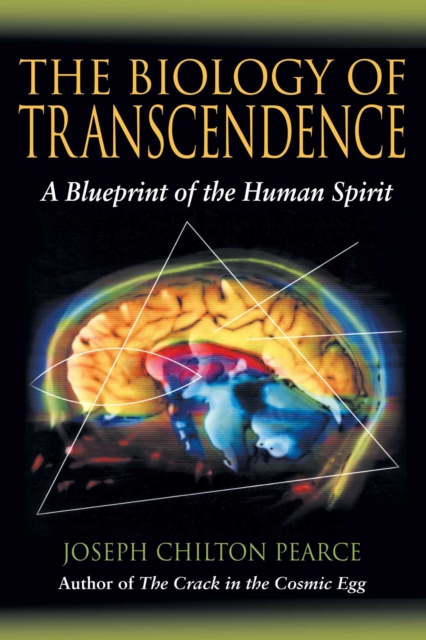
E-book
Price
0
7.99 £
E-book
0
0
Price
7.99 £
Uses new research about the brain to explore how we can transcend our current physical and cultural limitations *; Reveals that transcendence of current modes of existence requires the dynamic interaction of our fourth and fifth brains (intellect and intelligence) *; Explores the idea that Jesus, Lao-tzu, and other great beings in history are models of nature's possibility and our ability to achieve transcendence *; 17,000 sold in hardcover since April 2002 Why do we seem stuck in a culture of violence and injustice?
Read more
E-book
Price
0
7.99 £
E-book
0
0
Price
7.99 £
The story of John Chang, the first man to be documented performing pyrokinesis, telekinesis, levitation, telepathy, and other paranormal abilities.
Read more
E-book
Price
0
11.99 £
E-book
0
0
Price
11.99 £
A book that verifies the existence of secret underground chambers beneath the Sphinx and demonstrates its origins as the Egyptian god of the dead, Anubis*; Includes an anthology of eyewitness accounts from early travelers who explored the secret chambers before they were sealed in 1926*; Reveals that the Sphinx was originally carved as a monumental crouching Anubis, the Egyptian jackal god of the necropolisShrouded in mystery for centuries, the Sphinx of Giza has frustrated many who have attempted to discover its original purpose.
Read more
E-book
Price
0
7.99 £
E-book
0
0
Price
7.99 £
Poems and commentary that open the door for a new generation to experience the ecstatic and embodied spiritual truths contained in Rumi's poetry *; Reveals how the four practices of eating lightly, breathing deeply, moving freely, and gazing intently can invoke the divinity within us all *; Explains how these practices dissolve the self's need for identity so that we may experience a state of transcendent ecstasy and union with the divine *; Takes Rumi's path to finding God from theoretical to embodied practices The great thirteenth-century Sufi mystic and poet Jalaluddin Rumi began his life as an orthodox Islamic believer but felt that to fully experience complete union with the divine he must abandon institutionalized religion and its prescribed forms of worship.
Read more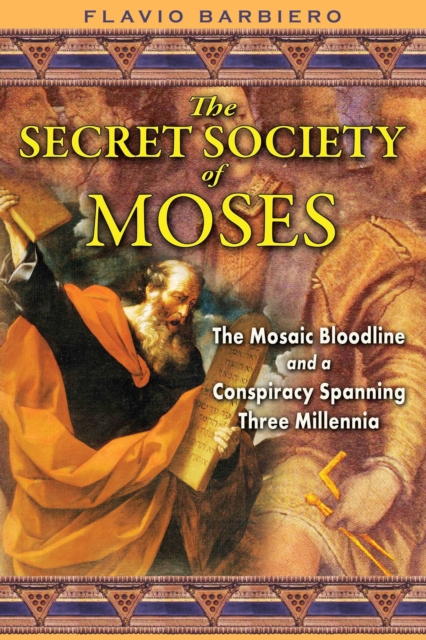
E-book
Price
0
14.99 £
E-book
0
0
Price
14.99 £
A radical reexamination of Western history that suggests the descendants of Moses were the architects of the rise of the Roman Church and the ancestors of European aristocracy *; Answers the inexplicable disappearance of all mention of Moses's descendants from the Bible *; Reveals the key role played by Josephus Flavius in shaping early Christianity *; Explains the connection of this secret priesthood to modern secret societies like the Freemasons After the book of Exodus, Moses's two sons and numerous descendants all vanish from the Bible.
Read more
E-book
Price
0
12.99 £
E-book
0
0
Price
12.99 £
Shows how the true teachings of Jesus were passed down through the centuries and shaped the vision of the Founding Fathers *; Reveals for the first time the hidden link that connects James the Brother, Islam, the Cathars, the Knights Templar, and Freemasonry *; Shows how the Founding Fathers used these teachings enshrined in Masonic principles to build a new nation With the success of Paul's desire to impose his vision for the Church, the true teachings of Jesus--as preserved by his family and disciples--were forced into hiding.
Read more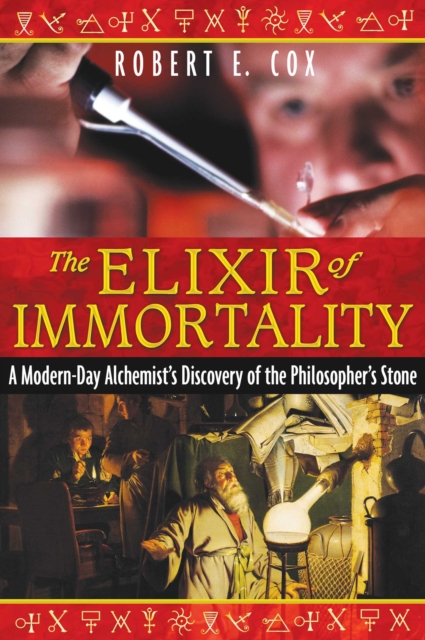
E-book
Price
0
7.99 £
E-book
0
0
Price
7.99 £
A modern-day quest that echoes the ancient alchemists' work to discover the elixir of life *; Provides an overview of alchemical practices in the ancient world--from Europe to China *; Reveals the alchemical secrets for creating this elixir in clear scientific language In 1989, while attempting to extract precious minerals from his property, a wealthy Arizonan obtained a mysterious white material that initially defied scientific attempts to identify it.
Read more
E-book
Unknown author
Price
0
10.99 £
E-book
Unknown author
0
0
Price
10.99 £
The ultimate source text of Enochian Magic never before available in book form *; Contains the actual and complete Tables of Enoch given to Dr.
Read more
E-book
Price
0
5.99 £
E-book
0
0
Price
5.99 £
*; Explores the lifestyle of indigenous peoples of the world who exist in complete harmony with the natural world and with each other.
Read more
E-book
Price
0
11.99 £
E-book
0
0
Price
11.99 £
Ejercicios prácticos para alcanzar niveles más elevados de orgasmo, renovar las relaciones y descubrir el poder sanador del sexo
• Se ilustra cómo identificar y proporcionar la mayor satisfacción posible a los nueve tipos de anatomía genital masculina y femenina, como los del “hombre coyote” o la “mujer búfala”
• Se presentan ejercicios para la obtención de mayor placer sexual e intensidad del orgasmo
• Se explica cómo realizar una poderosa labor de sanación con energías sexuales, con los chacras y el cuerpo de luz
La práctica del Quodoushka, que se basa en antiguas enseñanzas mayas, olmecas y toltecas, trasmitidas de generación en generación por los ancianos naguales del cabello torcido del sendero de la dulce medicina de la danza del sol, ofrece orientación práctica sobre el sexo, la intimidad y las relaciones y sobre cómo alcanzar niveles más elevados de orgasmo y éxtasis sexual.
Read more• Se ilustra cómo identificar y proporcionar la mayor satisfacción posible a los nueve tipos de anatomía genital masculina y femenina, como los del “hombre coyote” o la “mujer búfala”
• Se presentan ejercicios para la obtención de mayor placer sexual e intensidad del orgasmo
• Se explica cómo realizar una poderosa labor de sanación con energías sexuales, con los chacras y el cuerpo de luz
La práctica del Quodoushka, que se basa en antiguas enseñanzas mayas, olmecas y toltecas, trasmitidas de generación en generación por los ancianos naguales del cabello torcido del sendero de la dulce medicina de la danza del sol, ofrece orientación práctica sobre el sexo, la intimidad y las relaciones y sobre cómo alcanzar niveles más elevados de orgasmo y éxtasis sexual.

E-book
Price
0
6.99 £
E-book
0
0
Price
6.99 £
A radical reinterpretation of the relationship of Judas and Jesus *; Reexamines the role and the purpose the key figure of Judas played in the crucifixion story *; Reveals how Judas was ';betrayed' by Jesus, and how, taken to the limits of his humanity, he lost everything he most cherished on the path to his true self The familiar story of Judas, betrayer of Jesus, is striking because of its incomprehensibility.
Read more
E-book
Price
0
8.99 £
E-book
0
0
Price
8.99 £
Restores to the forefront of the Christian tradition the importance of the divine feminine*; The first complete English-language translation of the original Coptic Gospel of Mary, with line-by-line commentary*; Reveals the eminence of the divine feminine in Christian thought*; Offers a new perspective on the life of one of the most controversial figures in the Western spiritual traditionPerhaps no figure in biblical scholarship has been the subject of more controversy and debate than Mary Magdalene.
Read more
E-book
Price
0
6.99 £
E-book
0
0
Price
6.99 £
A new translation and analysis of one of the most controversial of the apocryphal gospels *; Emphasizes an initiatic marriage between the male and female principles as the heart of the Christian mystery *; Bears witness to the physical relationship shared by Jesus and Mary Magdalene *; Translated from the Coptic and analyzed by the author of the bestselling The Gospel of Mary Magdalene (over 90,000 sold The mainstream position of the Christian church on sexuality was perhaps best summed up by Pope Innocent III (1160-1216) when he stated that ';the sexual act is so shameful that it is intrinsically evil.
Read more
E-book
Price
0
6.99 £
E-book
0
0
Price
6.99 £
A new translation and analysis of the gospel that records the actual words of Jesus*; Explores the gnostic significance of Jesus's teachings recorded in this gospel*; Explains the true nature of the new man whose coming Jesus envisioned *; Translated and interpreted by the author of the bestselling The Gospel of Mary Magdalene and The Gospel of PhilipOne of the cache of codices and manuscripts discovered in Nag Hammadi, the Gospel of Thomas, unlike the canonical gospels, does not contain a narrative recording Christ's life and prophecies.
Read more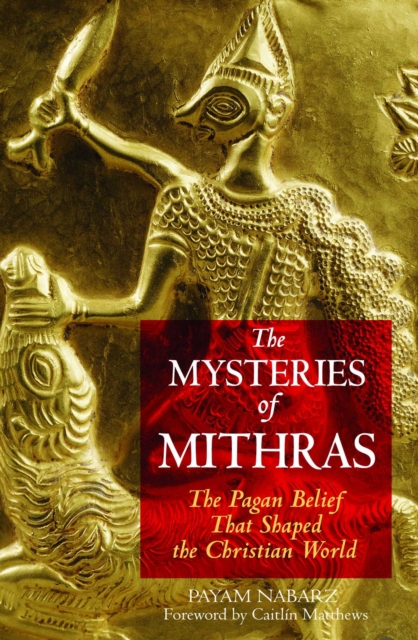
E-book
Price
0
7.99 £
E-book
0
0
Price
7.99 £
An overview of Mithraism, the ancient Roman mystery religion popular in the Roman Legions*; Provides a comprehensive history of Mithraism, including its influence on Christianity and Islam*; Includes rituals, meditations, and teaching tales for readers who wish to follow the Mithraic path*; Studies the evolution and divergence of the Eastern (Persian) and Western (Roman) forms of MithraismThe Mysteries of Mithras presents a revival of the magical practices and initiatory system of Mithraism, the ancient Roman mystery religion that was immensely popular in the Roman Legions from the late second century B.
Read more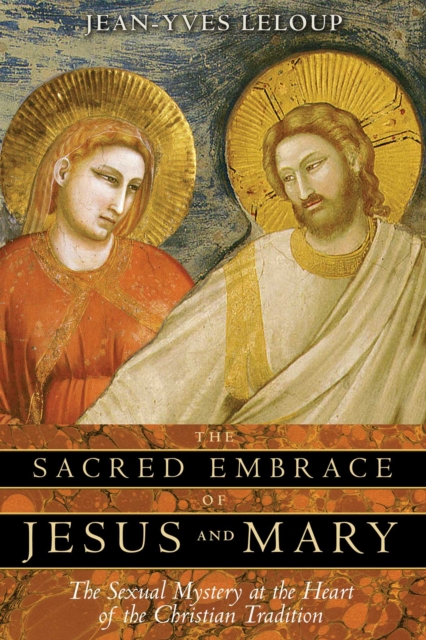
E-book
Price
0
6.99 £
E-book
0
0
Price
6.99 £
An examination of how the teachings of Jesus reveal the essential role of sexuality in spiritual growth and transformation*; Shows that Jesus did not come to redeem humanity from the life of the flesh, but to honor it as a spiritual path*; Uses Hebrew, gnostic, and early Christian source texts to reveal the true context of the words attributed to Jesus*; Explores the spiritual and physical relationship shared by Jesus and Mary MagdaleneOf all the major religions, Christianity is the only one that has utterly rejected sexuality as one of the many paths that can lead to enlightenment and salvation.
Read more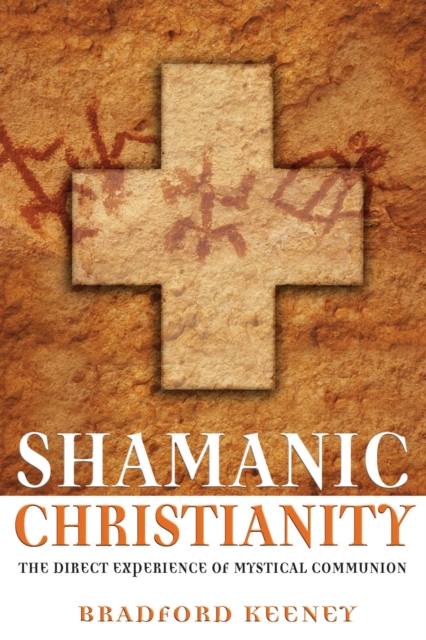
E-book
Price
0
10.99 £
E-book
0
0
Price
10.99 £
A guide to reconnecting with Jesus, Mary, and the saints as shamanic teachers of divine mysteries*; Contains meditations, contemplations, parables, and active ritual tasks that help bring forth a shamanic understanding and practice of Christianity*; Shows shamanic experience to be the root of mystical communionWhen the missionaries came to North America to ';save' the American Indians, they were perplexed to discover that while they talked about Jesus, some of the Indians claimed to talk directly with him.
Read more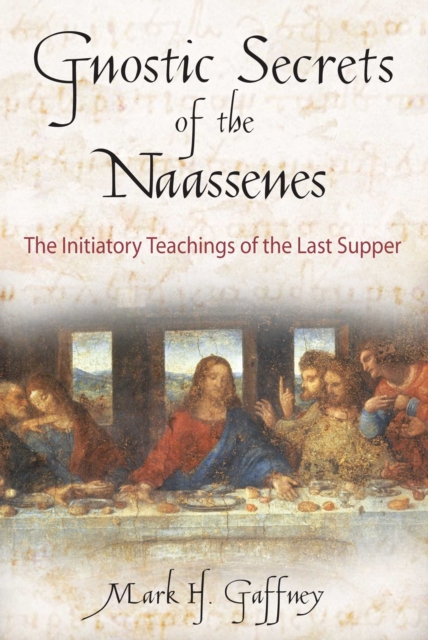
E-book
Price
0
12.99 £
E-book
0
0
Price
12.99 £
Reveals the hidden meaning of the Grail and a secret Christian doctrine for achieving higher consciousness*; Shows that Gnosticism is not a derivative of Christianity but the revelation of the true message of Jesus*; Describes the ancient relationship between water and spirit*; Explains the doctrine of immanence taught by Jesus at the Last Supper*; Features the translated source text from The Refutation of All Heresies by Bishop Hippolytus, the only existing record of the Naassene SermonIn the third century C.
Read more
E-book
Price
0
7.99 £
E-book
0
0
Price
7.99 £
A groundbreaking study of the connection between spirituality, psychology, and neurophysiology that is coded into the book of Genesis.
Read more
E-book
Price
0
11.99 £
E-book
0
0
Price
11.99 £
*; Fox marries mysticism with social justice, leading the way toward a gentler and more ecological spirituality and an acceptance of our interdependence*; A road map to fulfillment for the coming centuryIn A Spirituality Named Compassion, Matthew Fox, the popular and controversial author, establishes a spirituality for the future that promises personal, social, and global healing.
Read more
E-book
Price
0
8.99 £
E-book
0
0
Price
8.99 £
Training methods for tracking and wilderness observation woven into extraordinary real-life stories of intuitive animal-reading skills *; Explains technical tracking methods and observational skills such as shadowing and envisioning through the innermost thoughts of an accomplished native tracker *; Reveals how to track by expanding your awareness and consciousness to become one with the animal you are tracking *; Shares stories of tracking Wolves, Bears, Deer, Cougars, and many other animals Stepping beyond the shape of a footprint and into the unseen story of the track, veteran wilderness guide Tamarack Song takes you inside the eyes and mind of an intuitive tracker, with intimate stories where Frogs show the way out of the woods, scat reveals life histories, and Bears demonstrate how to find missing people.
Read more
E-book
Price
0
7.99 £
E-book
0
0
Price
7.99 £
Shares the spiritual wisdom of Rastafari through the stories, teachings, and traditions of practicing Rastas in Jamaica *; Includes the author's interviews with bush doctors, healers, and Rastafarians gathered during his 15 years of living in Jamaica *; Reveals the old ways of the Rastafarians and how their beliefs form an unbroken lineage tracing back to King Solomon *; Explains the connection of Rasta beliefs to important biblical passages Tracing their lineage back to King Solomon--the wisest man who ever lived--Rastafarians follow a spiritual tradition of peace and meditation that is more a way of life than an organized religion.
Read more
E-book
Price
0
8.99 £
E-book
0
0
Price
8.99 £
A radical reinterpretation of Egypt's ancient origins and its esoteric philosophy *; Explains how the ';spontaneous' appearance of Egyptian civilization 5,000 years ago represents the remnants of an ancient worldwide advanced culture *; Explores astrophysical, geophysical, and anthropological evidence of forgotten civilizations beneath the Mediterranean and along the coast of northwestern Africa *; Examines the mystical traditions and initiatory rituals of the ancient Egyptians and their sophisticated understanding of precession, human evolution, and divine purpose Radically reinterpreting the time line of prehistory, J.
Read more
E-book
Price
0
10.99 £
E-book
0
0
Price
10.99 £
Reveals the discovery of an artifact that many experts believe may be the Holy Grail *; Traces the journey of the Grail from the Holy Land to Rome and eventually to a ruined chapel in Shropshire, England *; Uncovers new evidence identifying the historical King Arthur and his connection to the Holy Grail The popular Arthurian stories of the Middle Ages depict the Holy Grail as Christ's cup from the Last Supper, which was believed to have been endowed with miraculous healing powers and the ability to give eternal life to whoever drank from it.
Read more
E-book
Price
0
13.99 £
E-book
0
0
Price
13.99 £
Suggests that Jesus survived the crucifixion, went to Egypt, then settled in France *; Reveals new discoveries that show the beginnings of Christianity in Egypt *; Presents historical and archaeological research that proves a connection between Jerusalem, Egypt, and Rennes-le-Chteau in the south of France *; Posits Rennes-le-Chteau as the actual location of Jesus Christ's tomb, and that writings by him will be found there Jesus did not die on the cross.
Read more
E-book
Price
0
8.99 £
E-book
0
0
Price
8.99 £
A book of wisdom teachings and rituals that invoke ancient Egyptian deities to awaken human consciousness *; Provides guided shamanic visualizations to invoke 26 of the most significant gods *; Takes the reader through shamanic portals of death, rebirth, and illumination *; Reconciles internal conflict through a sacred marriage of heart and mind In Shamanic Mysteries of Egypt, Nicki Scully and Linda Star Wolf renew humanity's connection to the ancient gods of Egypt, the neteru.
Read more
E-book
Price
0
10.99 £
E-book
0
0
Price
10.99 £
Furthers the revelations of The Urantia Book, providing a beautiful vision of our coming return to the Multiverse *; Offers angelic reassurance that ';Armageddon has been canceled' and that the coming transition will be gentle and the future positive *; Explains Lucifer's angelic rebellion, its impact on the past 200,000 years, and the transformation of consciousness on the horizon as the fallen angels return *; Shares the author's spiritual wisdom gained through extensive travels and encounters with angels, ETs, and other enlightened beings As recorded in The Urantia Book, two hundred millennia ago 37 planets, including our own, were quarantined from the rest of the Multiverse to quell the spread of the Lucifer rebellion within the angelic hierarchy.
Read more