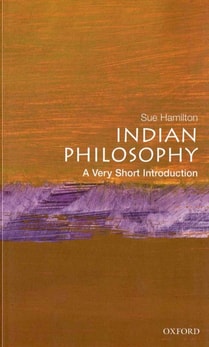
India has a long, rich, and diverse tradition of philosophical thought, spanning some two and a half millennia and encompassing several major religious traditions.
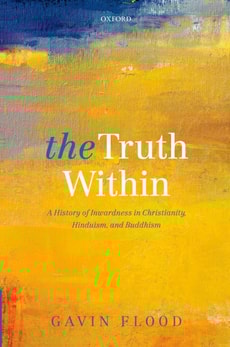
The idea that there is a truth within the person linked to the discovery of a deeper, more fundamental, more authentic self, has been a common theme in many religions throughout history and an idea that is still with us today.
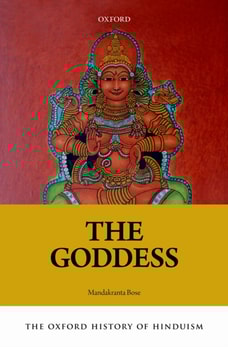
The Oxford History of Hinduism: The Goddess provides a critical exposition of the Hindu idea of the divine feminine, or Devi, conceived as a singularity expressed in many forms.
The Oxford History of Hinduism: The Goddess provides a critical exposition of the Hindu idea of the divine feminine, or Devi, conceived as a singularity expressed in many forms.
This book examines historical changes in the grammar of the Indo-Aryan languages from the period of their earliest attestations in Vedic Sanskrit (around 1000 bc) to contemporary Hindi.
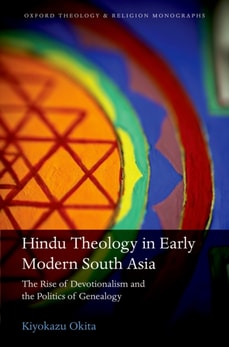
Focusing on the idea of genealogical affiliation (sampradaya), Kiyokazu Okita explores the interactions between the royal power and the priestly authority in eighteenth-century north India.
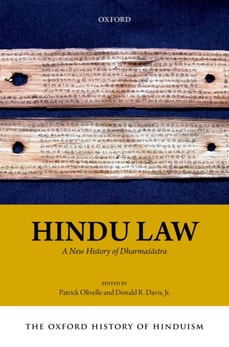
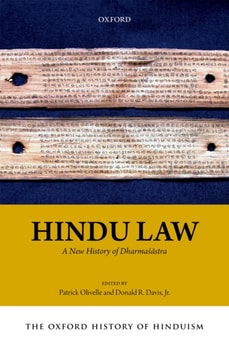
Through pointed studies of important aspects and topics of dharma in Dharmasastra, this comprehensive collection shows that the history of Hinduism cannot be written without the history of Hindu law.
Through pointed studies of important aspects and topics of dharma in Dharmasastra, this comprehensive collection shows that the history of Hinduism cannot be written without the history of Hindu law.
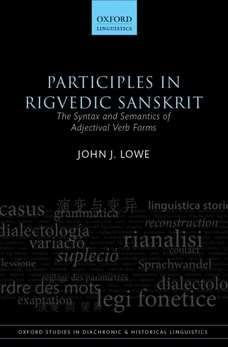
This book examines several thousand examples of tense-aspect stem participles in the Rigveda, and the passages in which they appear, in terms of both their syntax and semantics.
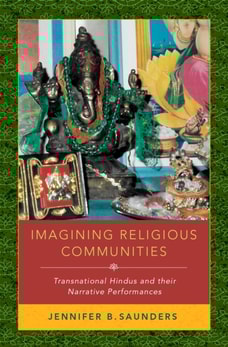
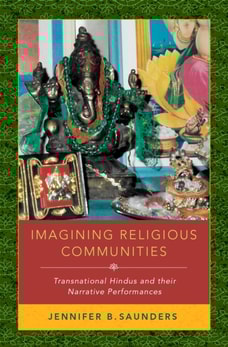
Imagining Religious Communities tells the story of the Gupta family through the personal and religious narratives they tell as they create and maintain their extended family and community across national borders.
Imagining Religious Communities tells the story of the Gupta family through the personal and religious narratives they tell as they create and maintain their extended family and community across national borders.
Sayings of Gorakhnath presents a translation of late-medieval texts in Old Hindi, traditionally attributed to one of the founders of the Order of Nath Yogis.
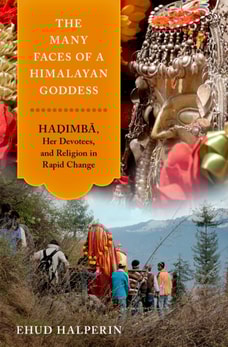
Hadimba is a primary village goddess in the Kullu Valley of the West Indian Himalayan state of Himachal Pradesh, a rural area known as the Land of Gods.
Hadimba is a primary village goddess in the Kullu Valley of the West Indian Himalayan state of Himachal Pradesh, a rural area known as the Land of Gods.
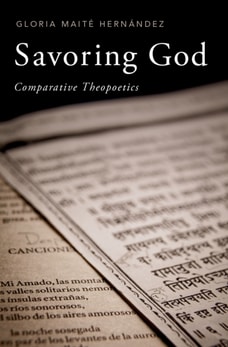
Savoring God is a comparative study that examines the creative interaction of poetry and theology in two mystical poems central to the Christian and the Hindu traditions, the sixteenth-century Spanish Cantico espiritual (Spiritual Canticle), by Saint John of the Cross, and the Sanskrit Rasa Lila (Dance of Love), which originated in the oral tradition.
Savoring God is a comparative study that examines the creative interaction of poetry and theology in two mystical poems central to the Christian and the Hindu traditions, the sixteenth-century Spanish Cantico espiritual (Spiritual Canticle), by Saint John of the Cross, and the Sanskrit Rasa Lila (Dance of Love), which originated in the oral tradition.
Comprising more than twelve million people and renowned for their resistance to Brahminical values, the Virasaivas are a vibrant and unorthodox religious community with a provocative socio-political voice.
Comprising more than twelve million people and renowned for their resistance to Brahminical values, the Virasaivas are a vibrant and unorthodox religious community with a provocative socio-political voice.
The sharp contrast between cultures with a monotheistic paternal deity and those with pluralistic maternal deities is a theme of abiding interest in religious studies.
The sharp contrast between cultures with a monotheistic paternal deity and those with pluralistic maternal deities is a theme of abiding interest in religious studies.
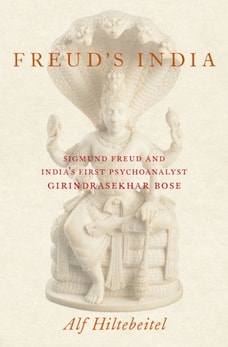
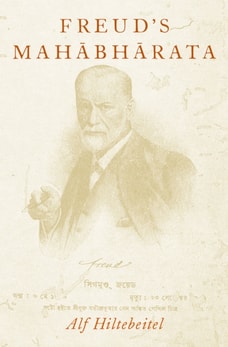
Though Freud never overtly refers to the Mahthe companion volume to Freud's India, Alf Hiltebeitel offers what he calls a "e;pointillist introduction"e; to a new theory about the Mah
Though Freud never overtly refers to the Mahthe companion volume to Freud's India, Alf Hiltebeitel offers what he calls a "e;pointillist introduction"e; to a new theory about the Mah
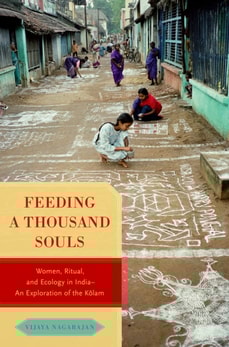
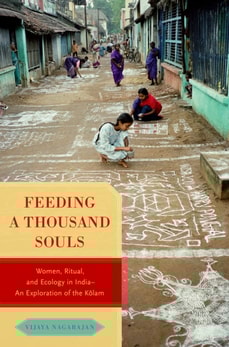
Every day millions of Tamil women in southeast India wake up before dawn to create a kolam, an ephemeral ritual design made with rice flour, on the thresholds of homes, businesses and temples.
Every day millions of Tamil women in southeast India wake up before dawn to create a kolam, an ephemeral ritual design made with rice flour, on the thresholds of homes, businesses and temples.