In the mid-nineteenth century, the American missionary James Butler predicted that Christian conversion and British law together would eradicate Indian ascetics.
Though many practitioners of yoga and meditation are familiar with the Shri Chakra, a sacred diagram, few fully understand the depth of meaning in this representation of the cosmos.
Sayings of Gorakhnath presents a translation of late-medieval texts in Old Hindi, traditionally attributed to one of the founders of the Order of Nath Yogis.
Western Sufism is sometimes dismissed as a relatively recent "e;new age"e; phenomenon, but in this book Mark Sedgwick argues that it has deep roots, both in the Muslim world and in the West.
Western Sufism is sometimes dismissed as a relatively recent "e;new age"e; phenomenon, but in this book Mark Sedgwick argues that it has deep roots, both in the Muslim world and in the West.
Exploring medieval manuscripts, Gandhi's writings, and performances in multiple religious and non-religious contexts, Narasinha Mehta of Gujarat demonstrates how over five centuries, performers and audiences of devotional songs and hagiographic narratives associated with the saint-poet Narasinha Mehta have sculpted them into popular sources of moral inspiration.
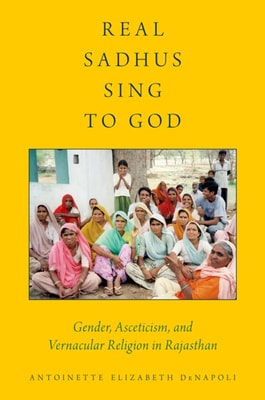
Drawing on ethnographic research spanning ten years, Antoinette Elizabeth DeNapoli offers a new perspective on the practice of asceticism in India today.
Led by Buddhists and the yoga traditions of Hinduism and Jainism, Indian thinkers have long engaged in a rigorous analysis and reconceptualization of our common notion of self.
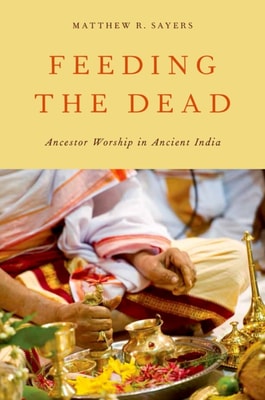
Feeding the Dead outlines the early history of ancestor worship in South Asia, from the earliest sources available, the Vedas, up to the descriptions found in the Dharmshastra tradition.
John Nemec examines the beginnings of the non-dual tantric philosophy of the famed Pratyabhijna or "e;Recognition [of God]"e; School of tenth-century Kashmir, the tradition most closely associated with Kashmiri Shaivism.
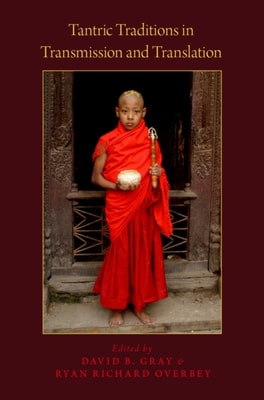
Tantric traditions in both Buddhism and Hinduism are thriving throughout Asia and in Asian diasporic communities around the world, yet they have been largely ignored by Western scholars until now.
Peter Gottschalk offers a compelling study of how, through the British implementation of scientific taxonomy in the subcontinent, Britons and Indians identified an inherent divide between mutually antagonistic religious communities.
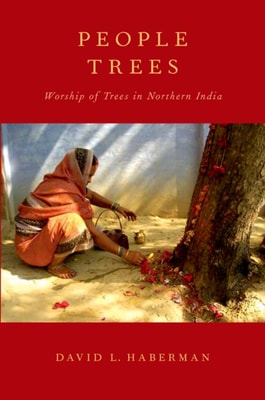
In recent years, India's "e;sacred groves,"e; small forests or stands of trees set aside for a deity's exclusive use, have attracted the attention of NGOs, botanists, specialists in traditional medicine, and anthropologists.
This fascinating book explores the concept of slow living, offering a philosophical and psychological exploration of the need for a slower pace of life.
Western scholars have argued that Indian civilization was the joint product of an invading Indo-European people--the "e;Indo-Aryans"e;--and indigenous non-Indo European peoples.
Sherman Jackson offers a translation and analysis of Ibn 'Ata' Allah al-Sakandari's Taj al-'Arus, a work on spiritual education steeped in the classical Sufi tradition, yet directed to those who have no affiliation with Sufism in any institutionalized form.
David Shulman and Velcheru Narayana Rao offer a groundbreaking cultural biography of Srinatha, arguably the most creative figure in the thousand-year history of Telugu literature.
Winner of the Award for Excellence in Religion: Textual Studies from the American Academy of ReligionThis book explores the relationship between ethics, aesthetics, and religion in classical Indian literature and literary theory by focusing on one of the most celebrated and enigmatic texts to emerge from the Sanskrit epic tradition, the Mahabharata.
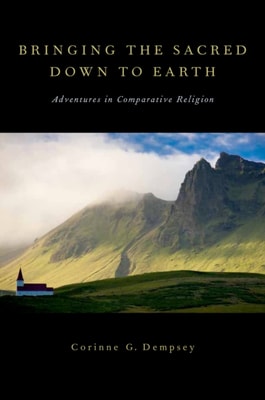
In Bringing the Sacred Down to Earth, Corinne Dempsey offers a comparative study of Hindu and Christian, Indian and Euro/American earthbound religious expressions.
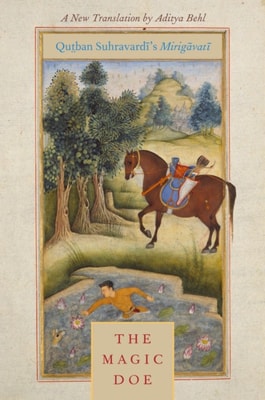
Mirigavati or The Magic Doe is the work of Shaikh Qutban Suhravardi, an Indian Sufi master who was also an expert poet and storyteller attached to the glittering court-in-exile of Sultan Husain Shah Sharqi of Jaunpur.
John Nemec examines the beginnings of the non-dual tantric philosophy of the famed Pratyabhijna or "e;Recognition [of God]"e; School of tenth-century Kashmir, the tradition most closely associated with Kashmiri Shaivism.
Vitthal, also called Vithoba, is the most popular Hindu god in the western Indian state of Maharashtra, and the best-known god of that region outside India.
In literature and popular imagination, the Bauls of India and Bangladesh are characterized as musical mystics: orange-clad nomads of both Hindu and Muslim backgrounds.
Manu's Code of Law is one of the most important texts in the Sanskrit canon, indeed one of the most important surviving texts from any classical civilization.