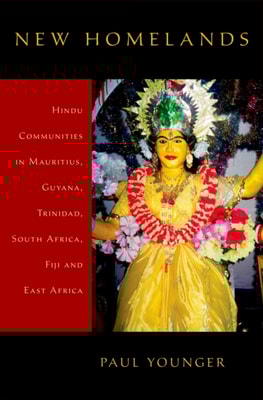
When the colonial slave trade, and then slavery itself, were abolished early in the 19th century, the British empire brazenly set up a new system of trade using Indian rather than African laborers.
This is the second in a trilogy of works by the famed Bengali novelist Bankimcandra Chatterji (1838-1894), and the second to be translated by Julius Lipner.
Originally published under the title Asceticism and Eroticism in the Mythology of Siva, this book traces the development of an Indian approach to an enduring human dilemma: the conflict between spiritual aspirations and human desires.
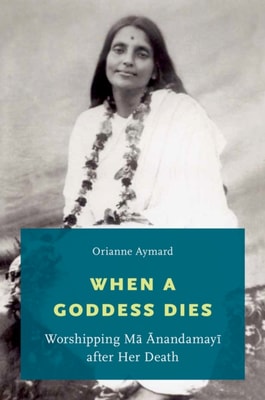
A distinctive aspect of Hindu devotion is the veneration of a human guru, who is not only an exemplar and a teacher but is also understood to be an embodiment of the divine.
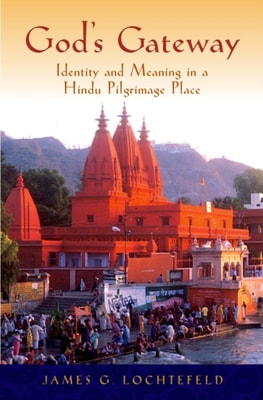
The town of Deopatan, three kilometers northeast of Kathmandu, is above all famous for its main sanctum, the temple of Pasupati, the "e;lord of the animals,"e; a form of Siva and the tutelary deity of the kings of Nepal since ancient times.
Although Buddhism is often depicted as a religion of meditators and philosophers, some of the earliest writings extant in India offer a very different portrait of the Buddhist practitioner.
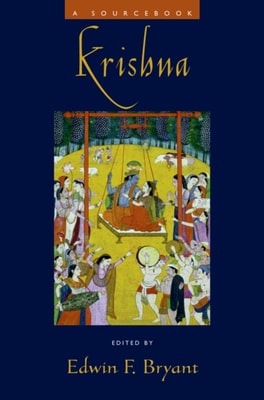
No Hindu god is closer to the soul of poetry than Krishna, and in North India no poet ever sang of Krishna more famously than SurdD^=as-or Sur, for short.
For countless generations families have lived in isolated communities in the Godavari Delta of coastal Andhra Pradesh, learning and reciting their legacy of Vedas, performing daily offerings and occasional sacrifices.
Wendy Doniger and Martha Nussbaum bring together leading scholars from a wide array of disciplines to address a crucial question: How does the world's most populous democracy survive repeated assaults on its pluralistic values?
Wendy Doniger and Martha Nussbaum bring together leading scholars from a wide array of disciplines to address a crucial question: How does the world's most populous democracy survive repeated assaults on its pluralistic values?
The first comprehensive book on alcohol in pre-modern India, An Unholy Brew: Alcohol in Indian History and Religions uses a wide range of sources from the Vedas to the Kamasutra to explore drinks and styles of drinking, as well as rationales for abstinence from the earliest Sanskrit written records through the second millennium CE.
Kabir was a great iconoclastic-mystic poet of fifteenth-century North India; his poems were composed orally, written down by others in manuscripts and books, and transmitted through song.
In this magisterial volume of essays, Wendy Doniger enhances our understanding of the ancient and complex religion to which she has devoted herself for half a century.
In this magisterial volume of essays, Wendy Doniger enhances our understanding of the ancient and complex religion to which she has devoted herself for half a century.
In Bringing the Sacred Down to Earth, Corinne Dempsey offers a comparative study of Hindu and Christian, Indian and Euro/American earthbound religious expressions.
Based on three years of anthropological fieldwork in the Indian state of Rajasthan, Casting Kings explores the manner in which semi-nomadic performers known as Bhats understand, and also subvert, caste hierarchies.
The Ramayana is one of India's foundational epics, and it demonstrates a continuing power to influence social, religious, cultural, and political life.
The devotional poems of Annamayya (15th century) are perhaps the most accessible and universal achievement of classical Telugu literature, one of the major literatures of pre-modern India.
In this book, Tracy Pintchman has assembled ten leading scholars of Hinduism to explore the complex relationship between Hindu women's rituals and their lives beyond ritual.
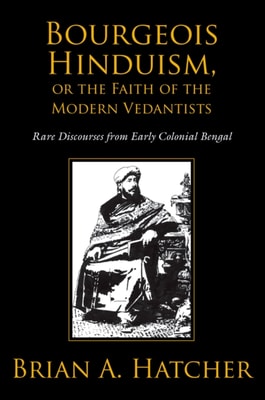
Drawing on a large body of previously untapped literature, including documents from the Church Missionary Society and Bengali newspapers, Brian Pennington offers a fascinating portrait of the process by which "e;Hinduism"e; came into being.