Der funfte Band der Reihe Lernweg zum Schia-Islam beschaftigt sich mit einem wichtigen gegenwartigen und zukunftigen Problem der Menschheit, dem Jenseits im Allgemeinen und der Beziehung zwischen Jenseits und Diesseits im Spezifischen.
Der funfte Band der Reihe Lernweg zum Schia-Islam beschaftigt sich mit einem wichtigen gegenwartigen und zukunftigen Problem der Menschheit, dem Jenseits im Allgemeinen und der Beziehung zwischen Jenseits und Diesseits im Spezifischen.
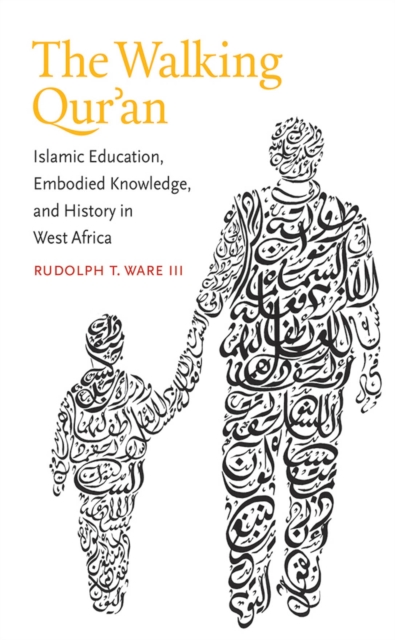
Spanning a thousand years of history and bringing the story to the present through ethnographic fieldwork in Senegal, Gambia, and Mauritania Rudolph Ware documents the profound significance of Qur'an schools for West African Muslim communities.
Would the rabbis and the romans have dared to touch Jesus if he had received the kind of Miracles Moses received: Miracles meant for Jehovah's enemies?
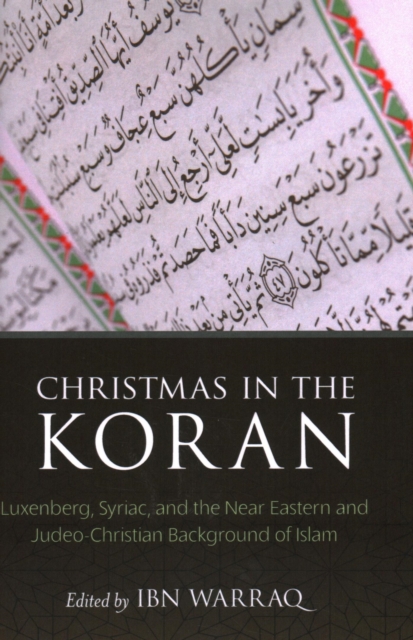
Centering on the pioneering work of Christoph Luxenberg, this anthology of scholarly yet accessible studies of the Koran makes a convincing case that Islams holy book borrowed heavily from Christian texts in Syriac and other Near Eastern sources.
Centering on the pioneering work of Christoph Luxenberg, this anthology of scholarly yet accessible studies of the Koran makes a convincing case that Islams holy book borrowed heavily from Christian texts in Syriac and other Near Eastern sources.
What happens when religious authority is examined with the same rigor applied to history, law, politics, and every other institution that shapes human life?
Studienarbeit aus dem Jahr 2020 im Fachbereich Theologie - Islamische Religionswissenschaft, Note: 1,0, Johann Wolfgang Goethe-Universität Frankfurt am Main (Studien der Kultur und Religion des Islam), Veranstaltung: Geschlechterkonfigurationen im Koran und in der Exegese, Sprache: Deutsch, Abstract: In der Arbeit werden die Koraninterpretationen von zwei ExegetInnen miteinander verglichen, einer zählt zu den vormodernen ExegetInnen und die andere zu den modernen ExegetInnen.
In seventh-century Damascus, Imam an-Nawawi gathered forty-two hadiths he judged to be the foundations of the entire religion — on intention, sincerity, mercy, lawful earning, and trust in Allah — drawn largely from Bukhari and Muslim.
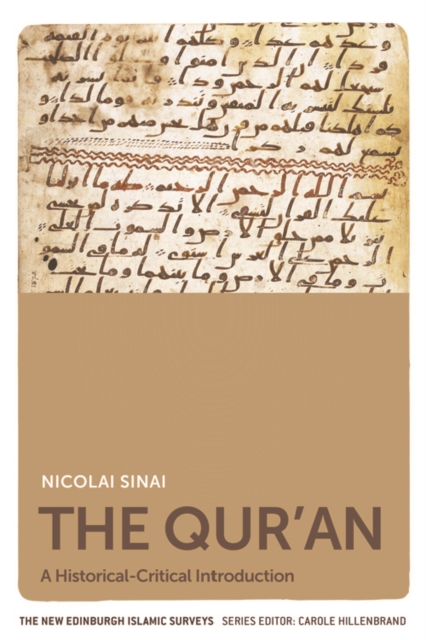
The Qur'an represents both Islam's historical point of origin and its scriptural foundation, inaugurating a new religion and, ultimately, a new civilisation.
Spanning a thousand years of history and bringing the story to the present through ethnographic fieldwork in Senegal, Gambia, and Mauritania Rudolph Ware documents the profound significance of Qur'an schools for West African Muslim communities.
Spanning a thousand years of history and bringing the story to the present through ethnographic fieldwork in Senegal, Gambia, and Mauritania Rudolph Ware documents the profound significance of Qur'an schools for West African Muslim communities.
Spanning a thousand years of history and bringing the story to the present through ethnographic fieldwork in Senegal, Gambia, and Mauritania Rudolph Ware documents the profound significance of Qur'an schools for West African Muslim communities.
Spanning a thousand years of history and bringing the story to the present through ethnographic fieldwork in Senegal, Gambia, and Mauritania Rudolph Ware documents the profound significance of Qur'an schools for West African Muslim communities.
"e;As Professor Fazlur Rahman shows in the latest of a series of important contributions to Islamic intellectual history, the characteristic problems of the Muslim modernists-the adaptation to the needs of the contemporary situation of a holy book which draws its specific examples from the conditions of the seventh century and earlier-are by no means new.
"e;As Professor Fazlur Rahman shows in the latest of a series of important contributions to Islamic intellectual history, the characteristic problems of the Muslim modernists-the adaptation to the needs of the contemporary situation of a holy book which draws its specific examples from the conditions of the seventh century and earlier-are by no means new.
Qur'anic Abrogation After Muhammad: The Eternal Flux presents a bold new interpretive framework for reconciling classical Qur'anic injunctions with the ethical imperatives of the modern world.
For anyone, non-Muslim or Muslim, who wants to know how to approach, read, and understand the text of the Qur'an, How to Read the Qur'an offers a compact introduction and readers guide.
Qur'anic Abrogation After Muhammad: The Eternal Flux presents a bold new interpretive framework for reconciling classical Qur'anic injunctions with the ethical imperatives of the modern world.
For anyone, non-Muslim or Muslim, who wants to know how to approach, read, and understand the text of the Qur'an, How to Read the Qur'an offers a compact introduction and readers guide.
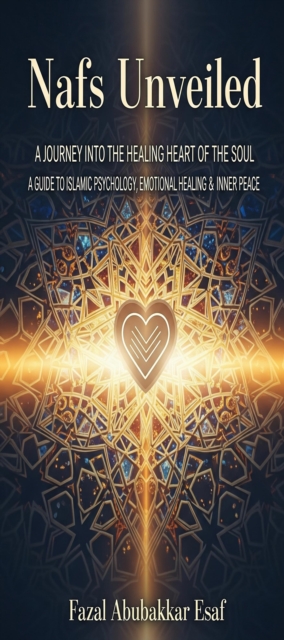
The Soul as a Map, the Self as a MirrorIn the Islamic worldview, the soul (nafs), heart (qalb), spirit (ruh), and intellect ('aql) are not abstract theological ideas—they are real faculties that shape how we perceive, respond, and heal.
This work, Volume 2 in the series is separated into two parts: Part 1 presents the discursive concepts and the order of power of Qur'anic discourse which ensured that it could NOT be made manifest within the ambit of the discourse of and the order of power of the Age of Prophethood, for only the Qur'an is the Manifest Book.
This book provides Islamic psychology practitioners a framework on integrating evidence-based approaches of spiritual interventions based on Islamic jurisprudence (Shari'ah with therapy).
This book provides Islamic psychology practitioners a framework on integrating evidence-based approaches of spiritual interventions based on Islamic jurisprudence (Shari'ah with therapy).
The focus of this study is the final part of Dionysius bar Salibi's polemical work against the Muslims, which contains a number of quotations from the Qur'an in Syriac translation.
Islam and Papal Power in Late Medieval and Early Modern Europe traces the influential history of another book: Riccoldo da Montecroce's Contra legem Sarracenorum.