The Routledge Introduction to Qur'anic Arabic is an innovative, text-based, language course designed for students interested in acquiring a foundation in Qur'anic and Classical Arabic.
The Routledge Introduction to Qur'anic Arabic is an innovative, text-based, language course designed for students interested in acquiring a foundation in Qur'anic and Classical Arabic.
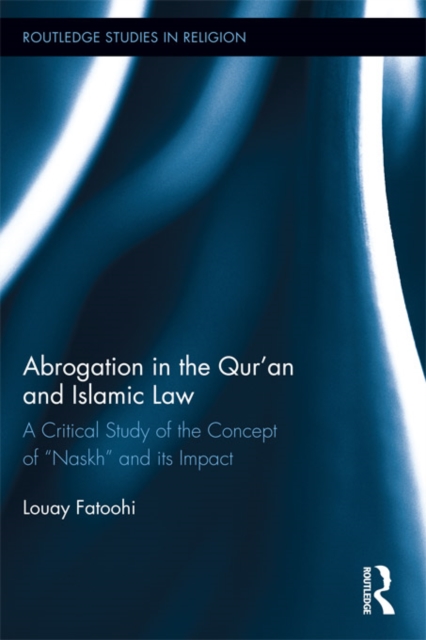
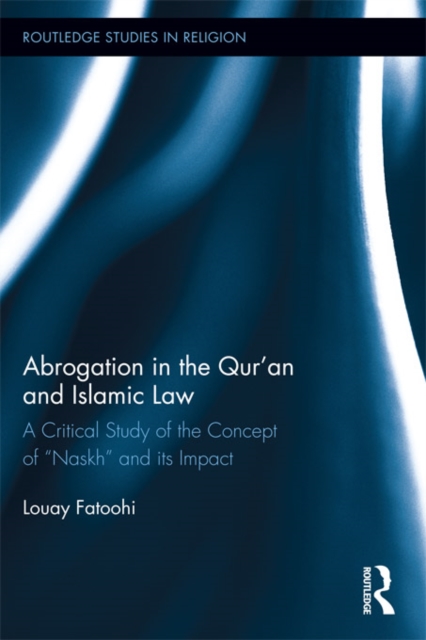
This book examines in detail the concept of "e;abrogation"e; in the Qur'an, which has played a major role in the development of Islamic law and has implications for understanding the history and integrity of the Qur'anic text.
This book examines in detail the concept of "e;abrogation"e; in the Qur'an, which has played a major role in the development of Islamic law and has implications for understanding the history and integrity of the Qur'anic text.
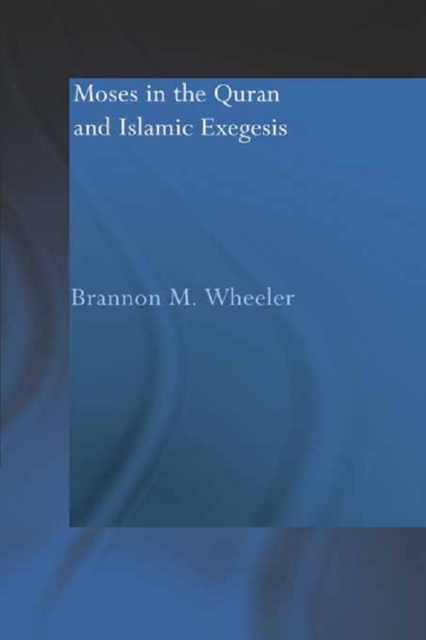
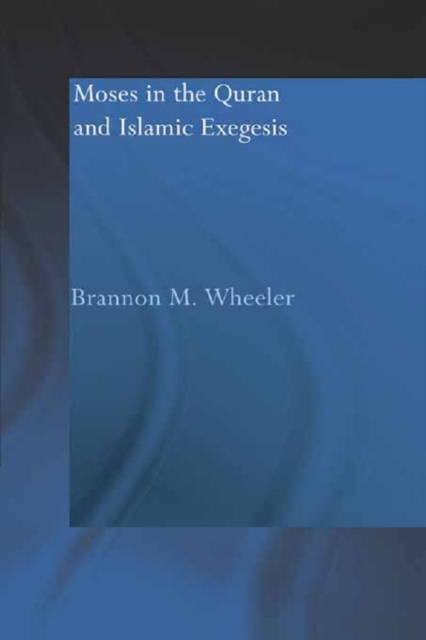
Relating the Muslim understanding of Moses in the Qur'an to the Epic of Gilgamesh, Alexander Romances, Aramaic Targums, Rabbinic Bible exegesis, and folklore from the ancient and medieval Mediterranean, this book shows how Muslim scholars authorize and identify themselves through allusions to the Bible and Jewish tradition.
Relating the Muslim understanding of Moses in the Qur'an to the Epic of Gilgamesh, Alexander Romances, Aramaic Targums, Rabbinic Bible exegesis, and folklore from the ancient and medieval Mediterranean, this book shows how Muslim scholars authorize and identify themselves through allusions to the Bible and Jewish tradition.
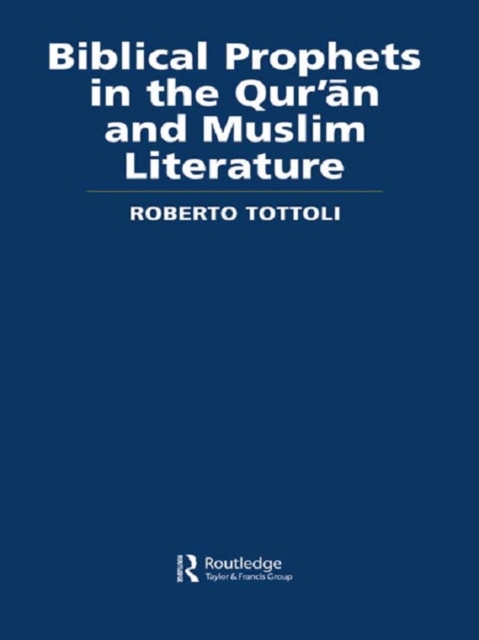
Part 1 is a comprehensive study of the Qur'anic data about each prophet, with a full portrait of every figure and dealing also with all the major scholarly literature on the subject and with the Qur'anic concept of prophetology.
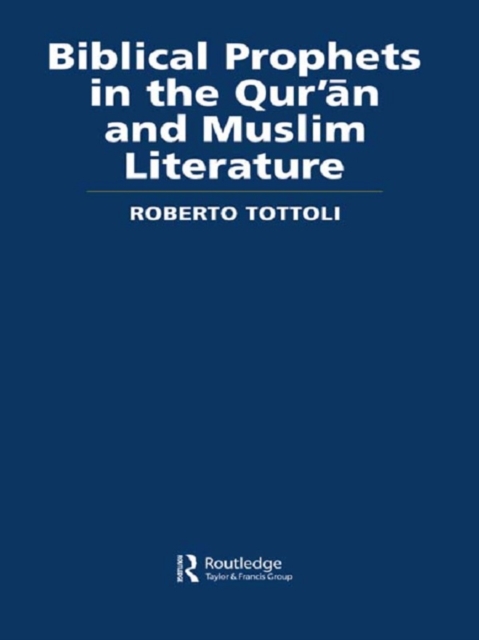
Part 1 is a comprehensive study of the Qur'anic data about each prophet, with a full portrait of every figure and dealing also with all the major scholarly literature on the subject and with the Qur'anic concept of prophetology.
The most important debate in Islamic origins is that of the reliability of the lists of transmitters (isnads) that are said to guarantee the authenticity of the materials to which they are attached.
The most important debate in Islamic origins is that of the reliability of the lists of transmitters (isnads) that are said to guarantee the authenticity of the materials to which they are attached.
For the western scholar of Islam, the great body of Arabic literature known as the Hadith has long been of outstanding interest and a subject of intensive study.
For the western scholar of Islam, the great body of Arabic literature known as the Hadith has long been of outstanding interest and a subject of intensive study.
Muhammad and the Supernatural: Medieval Arab Views examines the element of the supernatural (or miracle stories) in the life of the Prophet Muhammad as depicted in two genres: prophetic biography (sira) and Qur'an exegesis (tafsir).
Muhammad and the Supernatural: Medieval Arab Views examines the element of the supernatural (or miracle stories) in the life of the Prophet Muhammad as depicted in two genres: prophetic biography (sira) and Qur'an exegesis (tafsir).
This book examines the contrasting interpretations of Islam and the Qur'an by Averroes and Al-Ghazali, as a way of helping us untangle current impasses affecting each Abrahamic faith.
This book examines the contrasting interpretations of Islam and the Qur'an by Averroes and Al-Ghazali, as a way of helping us untangle current impasses affecting each Abrahamic faith.
This book challenges the dominant scholarly notion that the Qur'an must be interpreted through the medieval commentaries shaped by the biography of the prophet Muhammad, arguing instead that the text is best read in light of Christian and Jewish scripture.
This book challenges the dominant scholarly notion that the Qur'an must be interpreted through the medieval commentaries shaped by the biography of the prophet Muhammad, arguing instead that the text is best read in light of Christian and Jewish scripture.
Offering an analysis of Christian-Muslim dialogue across four centuries, this book highlights those voices of ecumenical tone which have more often used the Qur'an for drawing the two faiths together rather than pushing them apart, and amplifies the voice of the Qur'an itself.
Offering an analysis of Christian-Muslim dialogue across four centuries, this book highlights those voices of ecumenical tone which have more often used the Qur'an for drawing the two faiths together rather than pushing them apart, and amplifies the voice of the Qur'an itself.
In recent years, the study of the Qur'an and its interpretation has expanded to incorporate insights gained from historical, biblical, literary and critical studies.
In recent years, the study of the Qur'an and its interpretation has expanded to incorporate insights gained from historical, biblical, literary and critical studies.
Originally published in 1964, this volume gathers together extracts from many of Arberry's best-known works and supplements them with a selection of previously unpublished translations.
Originally published in 1964, this volume gathers together extracts from many of Arberry's best-known works and supplements them with a selection of previously unpublished translations.