West African Muslims in Colonial and Antebellum South Carolina is a historical study of the presence of enslaved West African Muslims in colonial and antebellum South Carolina.
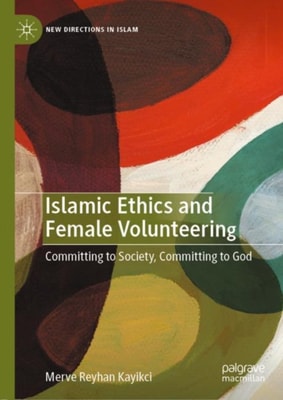
This book acknowledges and discusses the now politically infamous aspects of an American Muslim woman's life such as Islamophobia and hijab, but it more importantly examines how women actually deal with these obstacles, intentionally shifting the lens to capture a more holistic, nuanced understanding of their human experiences.
This book examines queer activism and queer social movements (QSMs) in Indonesia and Malaysia, broadly engaging with these topics on three different levels: macro (global and national discourses), meso (organizational level - activities), and micro (individual - the activist).
This book focuses on how religion-particularly Christianity, Islam, Judaism, and, to a lesser extent, Hinduism-is shaping the ethos and daily actions of market participants within the global money markets.
The book, organized in three parts, offers a guide to constructing financial instruments based on cash waqf in alignment with the Sustainable Development Goals.
This book discusses financial inclusion, gender equality, regulatory regimes for microfinance, women empowerment, and digital finance from an Islamic perspective.
In this book we study The Tabligh Jama'at, an Islamic revivalist movement which, through participation in its preaching tours, provides satisfaction to individuals experiencing the crisis of modernity.
Marketing in the emerging Islamic markets is a challenging business function since international companies must contend with unfamiliar customs, cultural differences, and legal challenges.
This book presents an empirical examination of consent-seeking among Pashtun Muslims in the Pakistani province of Khyber Pakhtunkhwa (KPK), to determine whether cultural norms and beliefs have largely come to diverge from the principles of consent in Islamic law and jurisprudence.
This is the first study to compare the philosophical systems of secular scientific philosopher Mario Bunge (1919-2020), and Moroccan Islamic philosopher Taha Abd al-Rahman (b.
This book traces the development of Oman's inclusive agreements and highlights their importance for international negotiations, dealing with issues most relevant to humanity's own survival today, nuclear weapons or climate change.
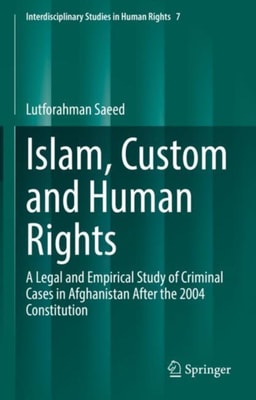
For the first time, the author has explored the intertwinement of written law, Islamic law, and customary law in the highly complex Afghan society, being deeply influenced by traditional cultural and religious convictions.
Artistic (Self)-Representations of Islam and Muslims: Perspectives Across France and the Maghreb is a collection of essays that explores the question of artistic representation(s)/self-representation(s) of Muslim religious and cultural identity in France, the Maghreb and in/between since the 2000s.
The book is a collection of chapters discussing the Sustainable Development Goals in the broader context of Islamic finance along with mapping the SDGs with Maqasid Al-Shariah.
This book argues that multiculturalism remains a relevant and vital framework through which to understand and construct inclusive forms of citizenship.
If films drawing on Middle East tropes often highlight white Westerners, figures such as Sinbad and the Thief of Bagdad embody a counter-tradition of protagonists, derived from Islamic folklore and history, who are portrayed as 'Other' to Western audiences.
This book brings a transnational perspective to the study of immigrant integration in contemporary Western European societies, with a specific focus on transnational Turkish Islam and Turkish integration in Great Britain.
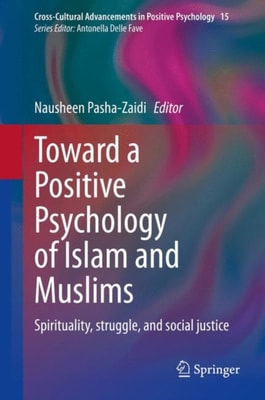
This book integrates research in positive psychology, Islamic psychology, and Muslim wellbeing in one volume, providing a view into the international experiential and spiritual lives of a religious group that represents over 24% of the world's population.
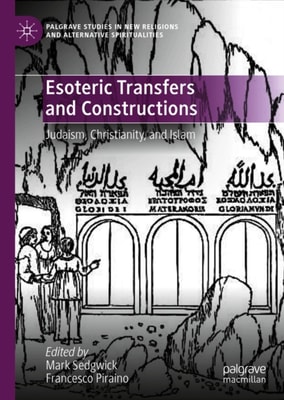
This contribution to the global history of ideas uses biographical profiles of 18th-century contemporaries to find what Salafist and Sufi Islam, Evangelical Protestant and Jansenist Catholic Christianity, and Hasidic Judaism have in common.
Drawing upon law, politics, sociology, and gender studies, this volume explores the ways in which the Muslim body is stereotyped, interrogated, appropriated and demonized in Western societies and subject to counter-terror legislation and the suspension of human rights.
This is a rare piece of empirical research, which reveals the workings of a spiritual order, its leadership, as well as their approaches, methods and tools.
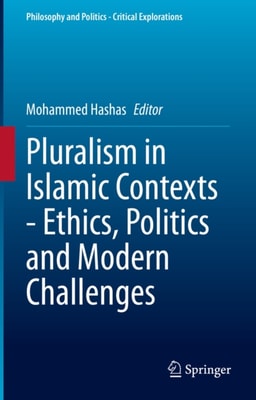
This book brings together international scholars of Islamic philosophy, theology and politics to examine these current major questions: What is the place of pluralism in the Islamic founding texts?
This book invokes the Tawhidi ontological foundation of the Qur'anic law and worldview, and is also a study of ta'wil, the esoteric meaning of Qur'anic verses.