Introducing a framework to generate new conversations about inter-religious dialogue and create a community of religions, Shai Har-El argues that Islam and Judaism, sister religions, are closely related to one another with roots intertwined in the land, in the language, and in the memories of shared history.
Sacred Violence and Religious Violence examines the place that ideology or political religion plays in legitimizing violence to bring about a purer world.
Chechens: Culture and Society is an ethnography that elaborates the lived experiences of Chechens, focusing primarily on relationships and socio-cultural norms within the context of the current conflict in the Chechen Republic.
Tracing representations of the Rushdie affair from 1989 to 2009, this study establishes a genealogy of how British Muslims appeared on the public scene and how an imaginary and politics of this subject position developed.
Drawing on international and multidisciplinary expertise, this pioneering edited collection analyzing Islam in contemporary Ethiopia challenges the popular notion of a 'Christian Ethiopia' imagined as the century-old, never colonized Abyssinia, isolated in the highlands and dominated by Orthodox Christianity.
Islam in India: History, Politics and Society is based on the historical and contemporary relevance of the religion and its related culture(s) in India.
Islam in India: History, Politics and Society is based on the historical and contemporary relevance of the religion and its related culture(s) in India.
This book introduces Islam through a "e;humanistic"e; lens, by highlighting the affective traditions and expressions associated with Sufism and Shi'ism.
Founded in the waning years of the Ottoman Empire, the Imperial School for Tribes (Asiret Mektebi) was an initiative by Sultan Abdulhamid II to bring the sons of prominent Arab tribal leaders to Istanbul for a world-class education and transform them into loyal Ottoman future military and governmental leaders.
Founded in the waning years of the Ottoman Empire, the Imperial School for Tribes (Asiret Mektebi) was an initiative by Sultan Abdulhamid II to bring the sons of prominent Arab tribal leaders to Istanbul for a world-class education and transform them into loyal Ottoman future military and governmental leaders.
This story is a biography of passion, perseverance, courage and destiny where a boy is suddenly transported onto a path that signifies a journey into manhood, empowering him to live up to some of the ideals he'd set for himself in an imagination stretched to serve God, family and country.
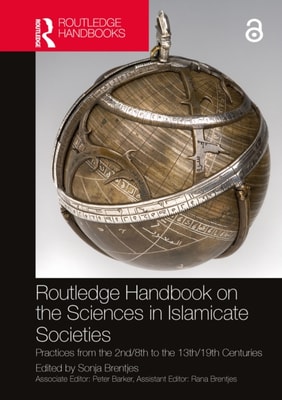
The Routledge Handbook on the Sciences in Islamicate Societies provides a comprehensive survey on science in the Islamic world from the 8th to the 19th century.
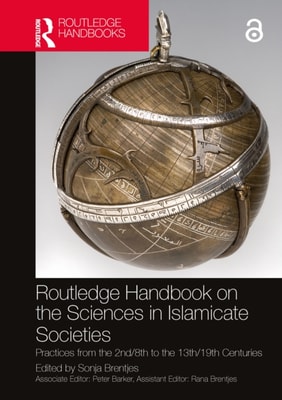
The Routledge Handbook on the Sciences in Islamicate Societies provides a comprehensive survey on science in the Islamic world from the 8th to the 19th century.
A first-of-its-kind combination of the legendary wisdom stories of Islam's great comic foil with spiritual insights for seekers of all traditions-or none.
A fascinating insider's account of Sufi life in contemporary EgyptFor centuries Sufism-Islamic mysticism-held a major place in Islamic spirituality, intellectual life, and popular religion.
Cet ouvrage propose en deux volumes une vue d'ensemble de l'histoire de la philosophie islamique depuis ses origines au VIIIe siècle jusqu'à son déclin au XIe siècle.
Cet ouvrage jette la lumière sur les travaux des intellectuels et politiciens qui appartiennent à une idéologie qui a pris de l'ampleur ces dernières années : l'islamophobie.
Dans la recherche historique présentée dans ce livre, Hussein Ahmad Sabra essaye de mettre en évidence pour la première fois un aspect très important et peu connu des Assassins ismaéliens chiites, qui n'étaient que des mercenaires à la demande.
À travers une méthode d'étude phénoménologique, Morgan Lotz étudie les Iraniennes au travers d'un prisme historique et socio-anthropologique pour comprendre leur rôle et leur évolution, leur permanence et leur métamorphose dans la société iranienne.
Les recherches sur les partis islamistes et les partis démocrates-chrétiens européens restent le plus souvent cloisonnées, donnant lieu à des études monolithiques.