Few topics in South Asian history are as contentious as that of the Turkic conquest of the Indian subcontinent that began in the twelfth century and led to a long period of Muslim rule.
A distinguished scholar of international politics clarifies what is widely misunderstood in the West: Islam and Islamism are not two words for the same thing Despite the intense media focus on Muslims and their religion since the tragedy of 9/11, few Western scholars or policymakers today have a clear idea of the distinctions between Islam and the politically based fundamentalist movement known as Islamism.
A concise and illuminating portrait of Allah from one of the world’s leading Qur’anic scholars The central figure of the Qur’an is not Muhammad but Allah.
This mirror for princes sheds light on the relationship between spiritual and political authority in early modern Egypt This guide to political behavior and expediency offers advice to Sufi shaykhs, or spiritual guides, on how to interact and negotiate with powerful secular officials, judges, and treasurers, or emirs.
An eye-opening history of Britain and the Islamic world—a thousand-year relationship that is closer, deeper, and more mutually beneficial than is often recognized In this broad yet sympathetic survey—ranging from the Crusades to the modern day—Martin Pugh explores the social, political, and cultural encounters between Britain and Islam.
The Ahmadiyya Muslim community represents the followers of Mirza Ghulam Ahmad (1835-1908), a charismatic leader whose claims of spiritual authority brought him into conflict with most other Muslim leaders of the time.
A groundbreaking study of the role of Muslims in eighteenth'century France From the beginning, French revolutionaries imagined their transformation as a universal one that must include Muslims, Europe’s most immediate neighbors.
The thirteenth century brought new urgency to Catholic efforts to convert non-Christians, and no Catholic ruler was more dedicated to this undertaking than King Louis IX of France.
A compelling book that casts the Qur'anic encounter with Jews in an entirely new lightIn this panoramic and multifaceted book, Meir Bar-Asher examines how Jews and Judaism are depicted in the Qur'an and later Islamic literature, providing needed context to those passages critical of Jews that are most often invoked to divide Muslims and Jews or to promote Islamophobia.
Offering a new approach to the study of religion and empire, this innovative book challenges a widespread myth of modernity-that Western rule has had a secularizing effect on the non-West-by looking closely at missionary schools in Bengal.
The violent partitioning of British India along religious lines and ongoing communalist aggression have compelled Indian citizens to contend with the notion that an exclusive, fixed religious identity is fundamental to selfhood.
Abridged from the four-volume The Passion of al-Hallaj, one of the major works of Western orientalism, this book explores the life and teaching of a famous tenth-century Sufi mystic and martyr, and in so doing describes not only his experience but also the whole milieu of early Islamic civilization.
Women, the Recited Qur'an, and Islamic Music in Contemporary Indonesia takes readers to the heart of religious musical praxis in Indonesia, home to the largest Muslim population in the world.
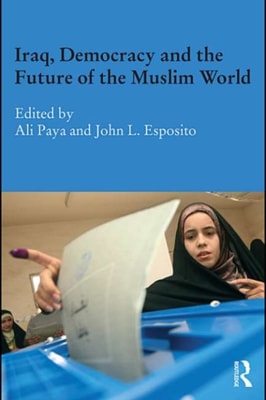
Iraq, democracy and Islam are powerful global forces which shape not only many aspects of the lives of Muslims, but the lives of other citizens of the world as well.
The political downfall of the Suharto administration in 1998 marked the end of the "e;New Order"e; in Indonesia, a period characterized by 32 years of authoritarian rule.
This book examines the long-term effects of violence on the everyday cultural and religious practices of a younger generation of Ahmadis and Sikhs in Frankfurt, Germany and Toronto, Canada.
Pitfalls of Scholarship offers an array of reflections on higher education, its entanglements with humanity's pursuit of natural and social knowledge, and the impact national environments have upon it.
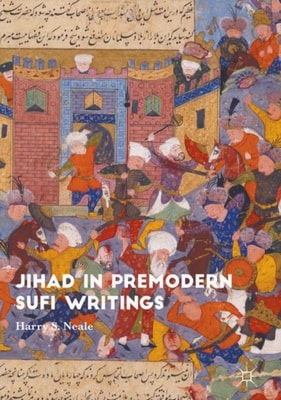
This book is the only comprehensive study in a European language that analyzes how Sufi treatises, Qur'anic commentary, letters, hagiography, and poetry define and depict jihad.
Sufism is often understood to be the mystical dimension of Islam, and many works have focused on the nature of "e;mystical experiences"e; and the relationship between man and God.
Mawlana Mawdudi was one of the most influential and important Islamic thinkers of the modern world, whose brand of political Islam has won widespread acceptance in South and South East Asia as well as the Middle East.
This book provides an introduction to the vision of an economic system based completely on the Holy Qur'an-a system defined as a collection of institutions, representing rules of behavior, prescribed by Allah for humans, and the traditions of the Messenger.
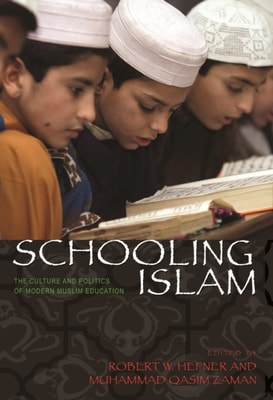
This volume of Princeton Readings in Religions brings together the work of more than thirty scholars of Islam and Muslim societies in South Asia to create a rich anthology of primary texts that contributes to a new appreciation of the lived religious and cultural experiences of the world's largest population of Muslims.
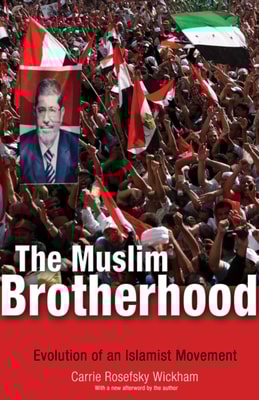
How the Muslim Brotherhood rose to power in Egypt, and what it means for the Islamic worldFollowing the Arab Spring, the Muslim Brotherhood achieved a level of influence previously unimaginable.
If you've ever sighed wistfully upon hearing of someone memorizing the Quran, wishing it was something you could do, too, then prepare to replace that wistfulness with determination!
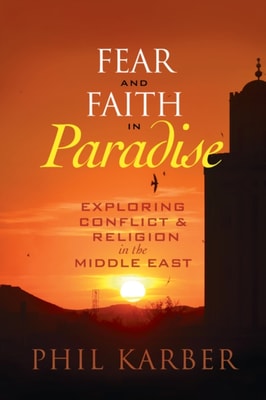
From life along the Tigris River in the 1970s to the ongoing Arab Spring uprisings, Phil Karber has witnessed decades of change throughout the Middle East.
Militant Islamic believers represents a small, but significant percentage of those who embrace the Muslim religion, it is powerful, well financed, and according to their own statements, hopeful of destroying the United States who they see as the Great Satan, the usurper of Muslim lands, the pilferer of Muslim resources and the one obstacle that stands in the way of their stated goalan Islamic Caliphate controlling the entire world.
Zainab is a thirteen year old facing a LOT of problems that threaten to overwhelm her: manipulation, bullying, the sexual exploitation of a friend and eventually an attempted suicide.