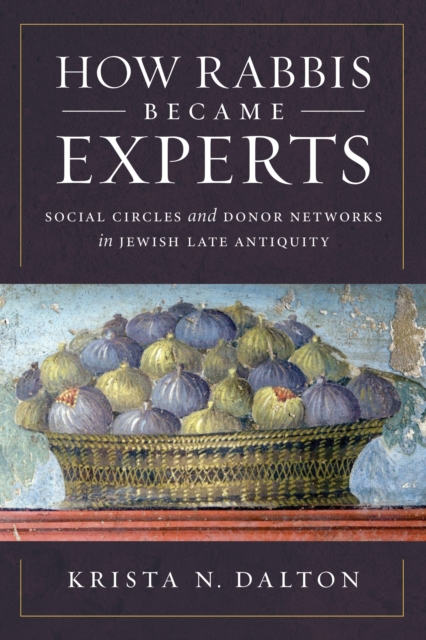
How rabbinic expertise was socially constructed, performed, and defended in Roman PalestineAt the turn of the common era, the Jewish communities of Roman Palestine saw the organization of a small group of literate Jewish men who devoted their lives to the interpretation and teaching of their sacred ancestral texts.
To date, scholars have skilfully discussed aspects of Polqar's thought, and yet none of the existing studies offers a comprehensive examination that covers Polqar's thought in its entirety.
Twenty-eight of today’s top Jewish women writers tell the truth about all the things their rabbis warned them never to discuss in public in this hilarious and provocative collection.
Varieties of Jewish Happiness uses an ancient Jewish wedding blessing and biblical sources as the vehicles to understand what kindles feelings of Happiness in us and how these feelings can be experienced within marriage.
Jesus Christ (self 'n Jood) was teen die tradisies van die Jode omdat die wette wat deur die Joodse Rabbis gemaak word, 'n swaar las op die Jode plaas wat nie in staat is om hulle ten volle na te kom nie.
Jésus-Christ (lui-même Juif) était contre les traditions juives car les lois faites par les Rabbins Juifs sont un lourd fardeau pour les Juifs qui ne peuvent pas les observer entièrement.
Ce livre ouvrira la porte à de nouvelles découvertes passionnantes dont vous n'avez jamais entendu parler et que vous ne connaissez pas sur le mode de vie juif.
A Social History of Christian Origins explores how the theme of the Jewish rejection of Jesus - embedded in Paul's letters and the New Testament Gospels - represents the ethnic, social, cultural, and theological conflicts that facilitated the construction of Christian identity.
A Social History of Christian Origins explores how the theme of the Jewish rejection of Jesus - embedded in Paul's letters and the New Testament Gospels - represents the ethnic, social, cultural, and theological conflicts that facilitated the construction of Christian identity.
This volume examines Apuleius' comic donkey novel, The Golden Ass, within the context of the popular beliefs and Jewish and Christian writings that were part of the intellectual culture of his own day in 2nd century C.
This volume examines Apuleius' comic donkey novel, The Golden Ass, within the context of the popular beliefs and Jewish and Christian writings that were part of the intellectual culture of his own day in 2nd century C.