The book brings together the essays on Second Temple Judaism by Moshe Weinfeld, one of the leading figures in comparative literature and the history of religion in ancient Near Eastern studies.
Judith Lieu examines the rhetorical function of Jews in the early texts of the second century and seeks to acknowledge the complex nature of an issue which is too easily proclaimed 'Christian anti-Semitism'.
Gershon Brin examines the development of biblical law, suggesting that it may be due to different authors with different legal outlooks, or that the differing policies were required in response to different social needs, etc.
Berlinerblau argues that in order to procure reliable historical information about 'popular religious groups' (such as women, non-privileged economic strata, heterodox elements) we must search for what he calls 'implicit evidence': mundane details regarding the vow which the biblical writers tacitly assumed and hence unknowingly bequeathed to posterity.
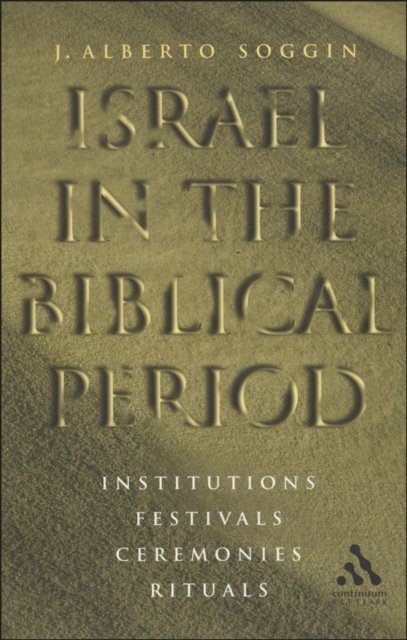
In this short, accessible and readable book, Professor Soggin gives an account of all the features of Israelite and Jewish religion in the biblical period.
'Content analysis'-which is a computer-assisted form of textual analysis-is used to examine divine activity in six prophetic texts, comparing God's activity to that of humans.
The Serekh Texts discusses the central rule documents produced by a pious Jewish community of the Essenes that lived at Qumran by the Dead Sea at the turn of the era.
Redemption and Resistance brings together an eminent cast of contributors to provide a state-of-the-art discussion of Messianism as a topic of political and religious commitment and controversy.
In the course of a long and noteworthy career, Dr Andrew Macintosh has trained a large number of students in the language and literature of the Hebrew Bible/Old Testament.
This is the first attempt in biblical studies to apply the tools developed by theoreticians of metaphor to the common biblical metaphor of God as king.
This is the first full-scale assessment of the theological, social and ideational implications of our new understandings of ancient Israel's social and religious development.
Although its religious heritage was that of a variegated Judaism, the tiny early Christian movement was nevertheless much more complexly and richly linked with the Graeco-Roman world in which it came to birth than is usually allowed for.
Hjelm examines the various ancient sources mentioning Samaritans, dating from the Persian period to well into the Roman period and emanating from Jewish, Christian, Hellenistic and Samaritan circles.
Redemption and Resistance brings together an eminent cast of contributors to provide a state-of-the-art discussion of Messianism as a topic of political and religious commitment and controversy.
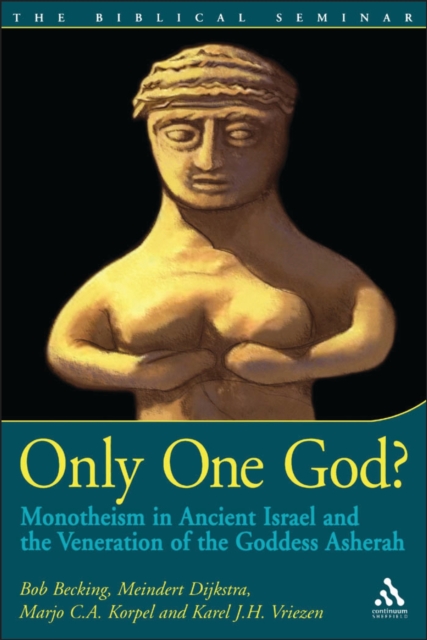
The view of ancient Israelite religion as monotheistic has long been traditional in Judaism, Christianity and Islam, religions that have elaborated in their own way the biblical image of a single male deity.
In this meticulously researched and compelling study, David Sim reconstructs the social setting of the Matthean community at the time the Gospel was written and traces its full history.
This is a study of the interrelationships between the formulary traditions of the legal documents of the Jewish colony of Elephantine and the legal formulary traditions of their Egyptian counterparts.
The 17 essays in this volume fall into four sections: Early Judaism and its Environment; Chronicles-Ezra-Nehemiah; Wisdom, Scribes and Scribalism; and Theology of the Hebrew Bible.
Of Scribes and Sages focuses primarily on early interpretation of Scripture, including the emergence of Scripture as Scripture in its various versions and contexts.
In the first of four volumes on A History of the Jews and Judaism in the Second Temple Period, Lester Grabbe presents a comprehensive history of Yehud - the Aramaic name for Judah - during the Persian Period.
For this volume, sequel to The Bible in Three Dimensions, the seven full-time members of the research and teaching faculty in Biblical Studies at Sheffield-Loveday Alexander, David Clines, Meg Davies, Philip Davies, Cheryl Exum, Barry Matlock and Stephen Moore-set themselves a common task: to reflect on what they hope or imagine, as century gives way to century, will be the key areas of research in biblical studies, and to paint themselves, however modestly, into the picture.
Intermarriage and group identity in the Second Temple Period will be investigated from different points of view with regard to methodology and analyzed texts.