Hjelm examines the various ancient sources mentioning Samaritans, dating from the Persian period to well into the Roman period and emanating from Jewish, Christian, Hellenistic and Samaritan circles.
Redemption and Resistance brings together an eminent cast of contributors to provide a state-of-the-art discussion of Messianism as a topic of political and religious commitment and controversy.
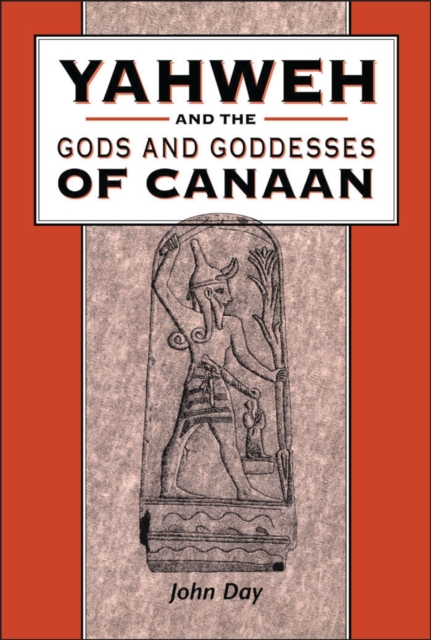
The view of ancient Israelite religion as monotheistic has long been traditional in Judaism, Christianity and Islam, religions that have elaborated in their own way the biblical image of a single male deity.
In this meticulously researched and compelling study, David Sim reconstructs the social setting of the Matthean community at the time the Gospel was written and traces its full history.
This is a study of the interrelationships between the formulary traditions of the legal documents of the Jewish colony of Elephantine and the legal formulary traditions of their Egyptian counterparts.
The 17 essays in this volume fall into four sections: Early Judaism and its Environment; Chronicles-Ezra-Nehemiah; Wisdom, Scribes and Scribalism; and Theology of the Hebrew Bible.
Of Scribes and Sages focuses primarily on early interpretation of Scripture, including the emergence of Scripture as Scripture in its various versions and contexts.
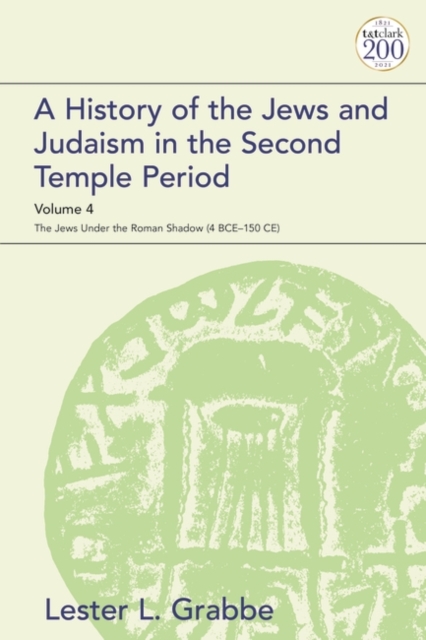
In the first of four volumes on A History of the Jews and Judaism in the Second Temple Period, Lester Grabbe presents a comprehensive history of Yehud - the Aramaic name for Judah - during the Persian Period.
For this volume, sequel to The Bible in Three Dimensions, the seven full-time members of the research and teaching faculty in Biblical Studies at Sheffield-Loveday Alexander, David Clines, Meg Davies, Philip Davies, Cheryl Exum, Barry Matlock and Stephen Moore-set themselves a common task: to reflect on what they hope or imagine, as century gives way to century, will be the key areas of research in biblical studies, and to paint themselves, however modestly, into the picture.
Intermarriage and group identity in the Second Temple Period will be investigated from different points of view with regard to methodology and analyzed texts.
A comprehensive discussion of texts concerning the goddess Asherah, as she is portrayed in texts from Ugarit (both epic and ritual texts, as well as the lists of sacrifices), Israel (the Khirbet el-Qom and Kuntillet Ajrud inscriptions) and the Old Testament.
The War Texts is the name given to a small group of Dead Sea Scrolls that depict the preparation for and the various phases of the eschatological battle between the 'Sons of Light' and the 'Sons of Darkness'.
The distinction between clean and unclean animals, probably originating in tensions between shepherds and farmers, is in the biblical laws of Leviticus 11 and Deuteronomy 14 transformed into an important theological principle.
The sixth and fifth centuries BCE were a time of constant re-identifications within Judean communities, both in exile and in the land; it was a time when Babylonian exilic ideologies captured a central position in Judean (Jewish) history and literature at the expense of silencing the voices of any other Judean communities.
This study breaks new ground in describing how various linguistic and pragmatic mechanisms affect both the form of the narrative clause and the arrangement of the grammatical elements.
An examination of the evidence that the Festival of Weeks was the occasion for the celebration of the renewal of the covenant in the Second Temple period, encompassing chapters on the Hebrew Bible, book of Jubilees, Qumran Scrolls, and the New Testament (Luke-Acts and Ephesians).
This book represents the fruit of a long process of study and reflection, a powerful but subtle synthesis, by one of the most eminent scholars of Second-Temple Judaism.
The Body As Property indicates that physical disfigurement functioned in biblical law to verify legal property acquisition, when changes in the status of dependents were formalized.
The occurrence of treaties throughout the Ancient Near East has been investigated on a number of occasions, generally in order to resolve certain questions arising in the biblical field.
In the generation after Constantine the Great elevated Christianity to a dominant position in the Roman Empire, his nephew, the Emperor Julian, sought to reinstate the old gods to their former place of prominencein the face of intense opposition from the newly powerful Christian church.
Blood for Thoughtdelves into a relatively unexplored area of rabbinic literature: the vast corpus of laws, regulations, and instructions pertaining to sacrificial rituals.
Throughout history, the relationship between Jews and their land has been a vibrant, much-debated topic within the Jewish world and in international political discourse.
Hasidism, a movement many believed had passed its golden age, has had an extraordinary revival since it was nearly decimated in the Holocaust and repressed in the Soviet Union.
This book contains an editionwith an extensive introduction, translation and commentaryof The Light of the World, a text on theoretical astronomy by Joseph Ibn Nahmias, composed in Judeo-Arabic around 1400 C.
Zorba the Buddha is the first comprehensive study of the life, teachings, and following of the controversial Indian guru known in his youth as Bhagwan Shree Rajneesh and in his later years as Osho (19311990).
Rabbis, Sorcerers, Kings, and Priests examines the impact of the Persian Sasanian context on the Babylonian Talmud, perhaps the most important corpus in the Jewish sacred canon.
This book explores the ways in which the early rabbis reshaped biblical laws of ritual purity and impurity and argues that the rabbis' new purity discourse generated a unique notion of a bodily self.
Foreigners and Their Food explores how Jews, Christians, and Muslims conceptualize "e;us"e; and "e;them"e; through rules about the preparation of food by adherents of other religions and the act of eating with such outsiders.
Orthodox by Design, a groundbreaking exploration of religion and media, examines ArtScroll, the world's largest Orthodox Jewish publishing house, purveyor of handsomely designed editions of sacred texts and a major cultural force in contemporary Jewish public life.
Halakhah in the Making offers the first comprehensive study of the legal material found in the Dead Sea Scrolls and its significance in the greater history of Jewish religious law (halakhah).
Lila Corwin Berman asks why, over the course of the twentieth century, American Jews became increasingly fascinated, even obsessed, with explaining themselves to their non-Jewish neighbors.
This landmark contribution to ongoing debates about perceptions of the Jews in antiquity examines the attitudes of Greek writers of the Hellenistic period toward the Jewish people.