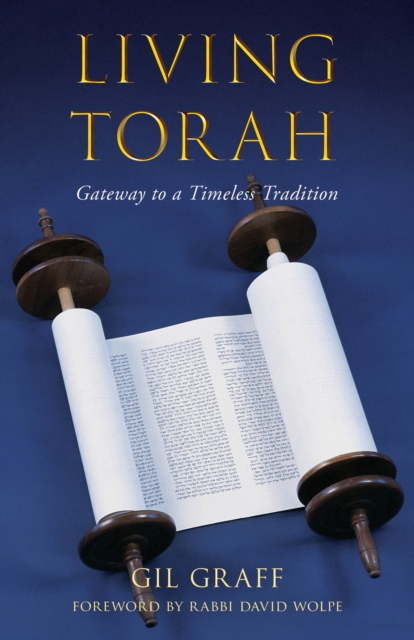
From the Penteteuch and Nevi'im to the Ketuvim and the oral Torah, this straightforward reference walks you through God's instructions to His people and explains how these teachings are incorporated into Jewish life.
Judaism has survived for four millennia, and many of its customs, laws, and traditions have remained exactly the same today as in the days of Abraham, Isaac, and Jacob.
The first major history of the scholarly quest to answer the question of Jewish originsThe Jews have one of the longest continuously recorded histories of any people in the world, but what do we actually know about their origins?
A revelatory account of a spiritual leader who dared to assert the value of rabbinic doubt in the face of messianic certaintyIn 1665, Sabbetai Zevi, a self-proclaimed Messiah with a mass following throughout the Ottoman Empire and Europe, announced that the redemption of the world was at hand.
A compelling look at the Fatimid caliphate's robust culture of documentationThe lost archive of the Fatimid caliphate (909-1171) survived in an unexpected place: the storage room, or geniza, of a synagogue in Cairo, recycled as scrap paper and deposited there by medieval Jews.
The life and many afterlives of one of the most enduring mystical testaments ever writtenThe Life of Saint Teresa of Avila is among the most remarkable accounts ever written of the human encounter with the divine.
A gripping biography by the author of Brave New WorldIn 1634 Urbain Grandier, a handsome and dissolute priest of the parish of Loudun was tried, tortured and burnt at the stake.
Scattered throughout the Talmud, the founding document of rabbinic Judaism in late antiquity, can be found quite a few references to Jesus--and they're not flattering.
The life and times of this iconic and enduring biblical bookThe Book of Job raises stark questions about the nature and meaning of innocent suffering and the relationship of the human to the divine, yet it is also one of the Bible's most obscure and paradoxical books, one that defies interpretation even today.
The life and times of an enduring work of Jewish spiritualityThe Babylonian Talmud, a postbiblical Jewish text that is part scripture and part commentary, is an unlikely bestseller.
A sweeping history of Judaism over more than three millenniaJudaism is one of the oldest religions in the world, and it has preserved its distinctive identity despite the extraordinarily diverse forms and beliefs it has embodied over the course of more than three millennia.
A pathbreaking history of Sufism, from the earliest centuries of Islam to the presentAfter centuries as the most important ascetic-mystical strand of Islam, Sufism saw a sharp decline in the twentieth century, only to experience a stunning revival in recent decades.
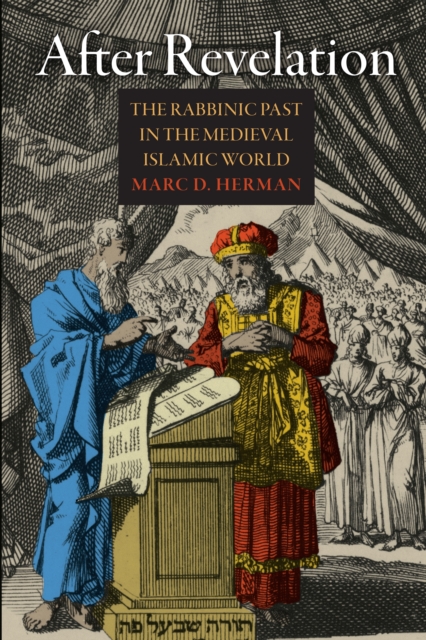
Much of what we know about life in the medieval Islamic Middle East comes from texts written to impart religious ideals or to chronicle the movements of great men.
A unique history of the Hebrew language from biblical times to the modern Jewish stateThis book explores the extraordinary hold that Hebrew has had on Jews and Christians, who have invested it with a symbolic power far beyond that of any other language in history.
A global journey showing how philosophy can transform our biggest disagreementsTeaching Plato in Palestine is part intellectual travelogue, part plea for integrating philosophy into our personal and public life.
A comprehensive and accessible guide to the Hebrew BibleThis book brings together some of the world's most exciting scholars from across a variety of disciplines to provide a concise and accessible guide to the Hebrew Bible.
A deeply personal look at death, mourning, and the afterlife in Jewish traditionAfter One-Hundred-and-Twenty provides a richly nuanced and deeply personal look at Jewish attitudes and practices regarding death, mourning, and the afterlife as they have existed and evolved from biblical times to today.
Hasidism, a controversial, mystical-religious movement of Eastern European origin, has posed a serious challenge to mainstream Judaism from its earliest beginnings in the middle of the eighteenth century.
Biblical in origin, the expression "e;eclipse of God"e; refers to the Jewish concept of hester panim, the act of God concealing his face as a way of punishing his disobedient subjects.
What Jewish tradition can teach us about human dignity in a scientific ageThis book explores one of the great questions of our time: How can we preserve our sense of what it means to be a person while at the same time accepting what science tells us to be true-namely, that human nature is continuous with the rest of nature?
From the first centuries of Islam to well into the Middle Ages, Jews and Christians produced hundreds of manuscripts containing portions of the Bible in Arabic.
A comprehensive and accessible account of the life and thought of Judaism's most celebrated philosopherMaimonides was the greatest Jewish philosopher and legal scholar of the medieval period, a towering figure who has had a profound and lasting influence on Jewish law, philosophy, and religious consciousness.
The life and times of this iconic and enduring biblical bookThe Book of Job raises stark questions about the nature and meaning of innocent suffering and the relationship of the human to the divine, yet it is also one of the Bible's most obscure and paradoxical books, one that defies interpretation even today.
How the Jewish people went from farmers to merchantsIn 70 CE, the Jews were an agrarian and illiterate people living mostly in the Land of Israel and Mesopotamia.
How the rise of Christianity profoundly influenced the development of Judaism in late antiquityIn late antiquity, as Christianity emerged from Judaism, it was not only the new religion that was being influenced by the old.
How Judaism, Christianity, and Islam have reimagined Abraham in their own imagesJews, Christians, and Muslims supposedly share a common religious heritage in the patriarch Abraham, and the idea that he should serve only as a source of unity among the three traditions has become widespread in both scholarly and popular circles.
A new approach to understanding Jewish thought since the eighteenth centuryIs Judaism a religion, a culture, a nationality-or a mixture of all of these?
The Jewish Social Contract begins by asking how a traditional Jew can participate politically and socially and in good faith in a modern democratic society, and ends by proposing a broad, inclusive notion of secularity.
This book traces the global, national, and local origins of the conflict between Muslims and Jews in France, challenging the belief that rising anti-Semitism in France is rooted solely in the unfolding crisis in Israel and Palestine.
*THE TOP-TEN BESTSELLER* From theNew York Timesbestselling author ofSorcery of ThornsandAn Enchantment of Ravenscomes a thrilling new YA fantasy about a teen girl with mythic abilities.
Pioneering biblical critic, theorist of democracy, and legendary conflater of God and nature, Jewish philosopher Baruch Spinoza (1632-1677) was excommunicated by the Sephardic Jews of Amsterdam in 1656 for his "e;horrible heresies"e; and "e;monstrous deeds.
Fluchten als Reaktion auf Verfolgung und Deportation zählten zu den wichtigsten Überlebensstrategien der Juden während der Zeit des Nationalsozialismus.
How ancient thinkers grappled with competing conceptions of divine lawIn the thousand years before the rise of Islam, two radically diverse conceptions of what it means to say that a law is divine confronted one another with a force that reverberates to the present.
A historical reevaluation of the relationship between Jews, miltary service, and warJews and the Military is the first comprehensive and comparative look at Jews' involvement in the military and their attitudes toward war from the 1600s until the creation of the state of Israel in 1948.
In the vein of Tuesdays with Morrie, a devoted student and friend of Holocaust survivor and Nobel Peace Prize recipient Elie Wiesel invites readers to witness one of the world's greatest thinkers in his own classroom in this instructive and deeply moving read, a National Jewish Book Award-winner.
Explores ancient Jewish beliefs in life after death as well as contemporary spiritual experiences*; Reveals clear references to the afterlife, heaven, and spiritual encounters in ancient Hebrew texts, including the Torah, the Zohar, and the Dead Sea Scrolls*; Shares profound stories from the author's clinical therapy practice to show how afterlife beliefs can heal destructive emotional patterns and ancestral trauma*; Describes the psychological parameters of trauma resolution, enabling long-term healing and spiritual advancementExploring afterlife theories from the ancient world as well as contemporary afterlife encounters, Carla Wills-Brandon, Ph.
New insights into how the Book of Samuel offers a timeless meditation on the dilemmas of statecraftThe Book of Samuel is universally acknowledged as one of the supreme achievements of biblical literature.
A groundbreaking reinterpretation of early Judaism, during the millennium before the study of the Bible took center stageEarly Judaism is often described as the religion of the book par excellencea movement built around the study of the Bible and steeped in a culture of sacred bookishness that evolved from an unrelenting focus on a canonical text.