This book focuses on how religion-particularly Christianity, Islam, Judaism, and, to a lesser extent, Hinduism-is shaping the ethos and daily actions of market participants within the global money markets.
This book reveals and counteracts the misuse of biblical texts and figures in political theology, in an attempt to decolonialize the reading of the Old Testament.
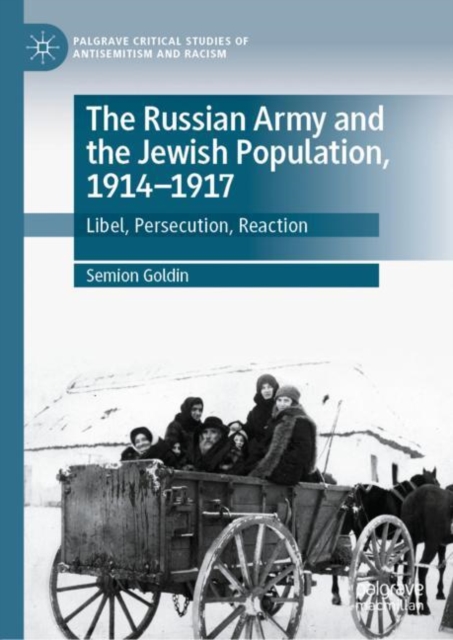
This book represents a new reading of a key moment in the history of East European Jewry, namely the period preceding the collapse of the Russian Empire.
This volume represents one of the first extensive studies that investigates the persistence of questions of race and racism in Italy from the liberal age to the present, through colonialism, Fascism and post-war Italy.
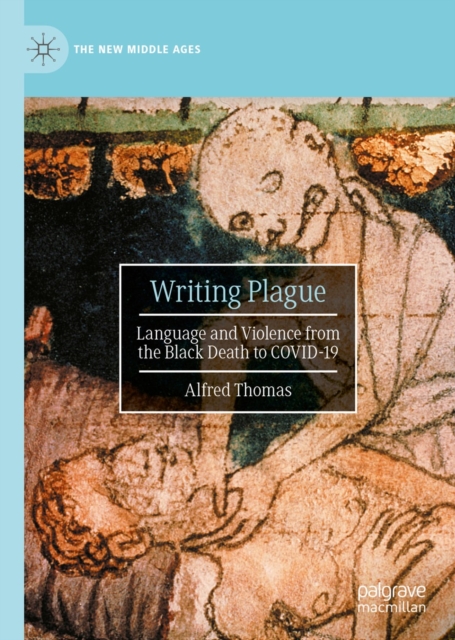
Writing Plague: Language and Violence from the Black Death to COVID-19 brings a holistic and comparative perspective to "e;plague writing"e; from the later Middle Ages to the twenty-first century.
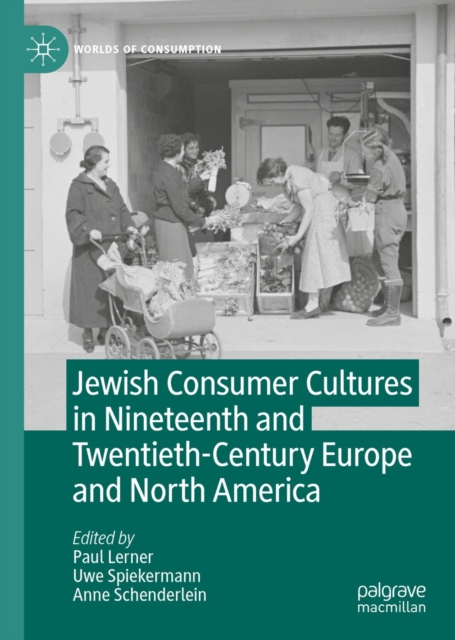
This book investigates the place and meaning of consumption in Jewish lives and the roles Jews played in different consumer cultures in modern Europe and North America.
This book explores the British Labour Party and the trade unions and how their relationship with the Jews of Palestine and Israel has evolved over the past one hundred years.
This book introduces the reader to the past and present of Jewish life in Turkey and to Turkish Jewish diaspora communities in Israel, Europe, Latin America and the United States.
This collected volume is based on the proceedings of a symposium held in 2018 at York University, Canada, which was held to commemorate the 70th anniversary of Israel.
The relationship between morality and religion has long been controversial, familiar in its formulation as Euthyphro's dilemma: Is an act right because God commanded it or did God command it because it is right.
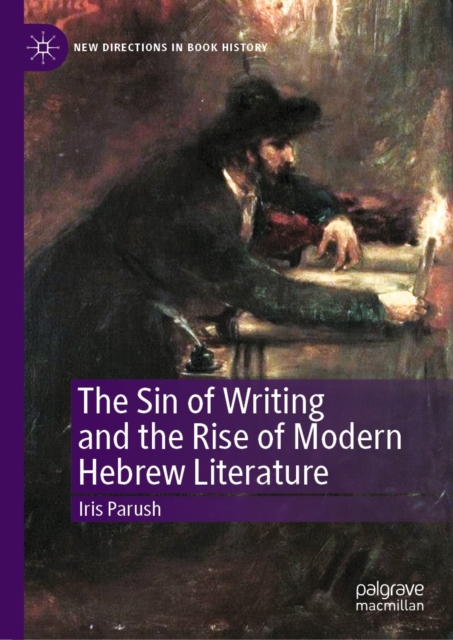
The Sin of Writing and the Rise of Modern Hebrew Literature contends that the processes of enlightenment, modernization, and secularization in nineteenth-century Eastern European Jewish society were marked not by a reading revolution but rather by a writing revolution, that is, by a revolutionary change in this society's attitude toward writing.
The book highlights the personal and scientific struggles of Arthur Erich Haas (1884-1941), an Austrian Physicist from a wealthy Jewish middle-class family, whose remarkable accomplishments in a politically hostile but scientifically rewarding environment deserve greater recognition.
The American Jewish Year Book, which spans three different centuries, is the annual record of the North American Jewish communities and provides insight into their major trends.
From generation to generation, three outstanding American Jewish directors-William Wyler, Sidney Lumet, and Steven Spielberg--advance a tradition of Jewish writers, artists, and leaders who propagate the ethical basis of the American Idea and Creed.
This book investigates one of the major issues that runs through the history of Italian Judaism in the aftermath of emancipation: the correlation between integration, seen as the acquisition of citizenship and culture without renouncing Jewish identity, and assimilation, intended as an open refusal of Judaism of any participation in the community.
Contemporary Judaism is transforming, especially in America, from a community experience to more of a do-it-yourself religion focused on the individual self.
This contribution to the global history of ideas uses biographical profiles of 18th-century contemporaries to find what Salafist and Sufi Islam, Evangelical Protestant and Jansenist Catholic Christianity, and Hasidic Judaism have in common.
In Israel, where the Orthodox rabbinate wields historically sanctioned influence over the legal definitions of marriage and parenthood, same-sex parenthood raises important questions such as what constitutes belonging to the national collective, who has the authority to define the norms of reproduction, and where the boundaries of Orthodox Judaism begin and end.
This book provides a new conceptual and methodological framework the social scientific study of Mishnah, as well as a series of case studies that apply social science perspectives to the analysis of Mishnah's evidence.
The American Jewish Year Book, now in its 118th year, is the annual record of the North American Jewish communities and provides insight into their major trends.
Part I of each volume will feature 5-7 major review chapters, including 2-3 long chapters reviewing topics of major concern to the American Jewish community written by top experts on each topic, review chapters on "e;National Affairs"e; and "e;Jewish Communal Affairs"e; and articles on the Jewish population of the United States and the World Jewish Population.
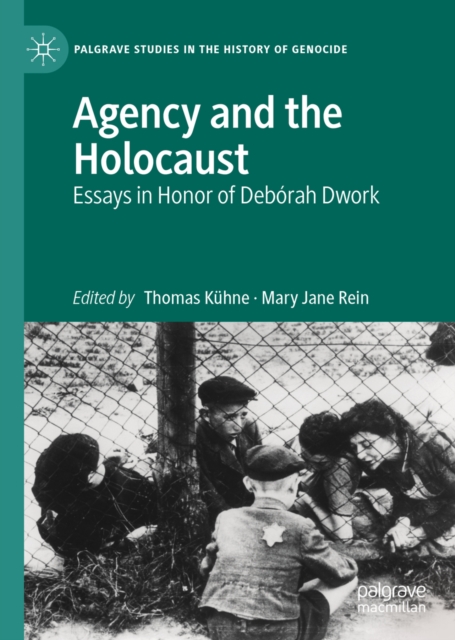
The book assembles case studies on the human dimension of the Holocaust as illuminated in the academic work of preeminent Holocaust scholar Deborah Dwork, the founding director of the Strassler Center for Holocaust and Genocide Studies, home of the first doctoral program focusing solely on the Holocaust and other genocides.
This book unlocks the Jewish theology of YHWH in three central stages of Jewish thought: the Hebrew bible, rabbinic literature, and medieval philosophy and mysticism.
This book presents the first comparative study of the works of Charlotte Delbo, Noor Inayat Khan, and Germaine Tillion in relation to their vigorous struggles against Nazi aggression during World War II and the Holocaust.
This book explores the transformative impact that the immigration of large numbers of Jews from the former Soviet Union to Germany had on Jewish communities from 1990 to 2005.
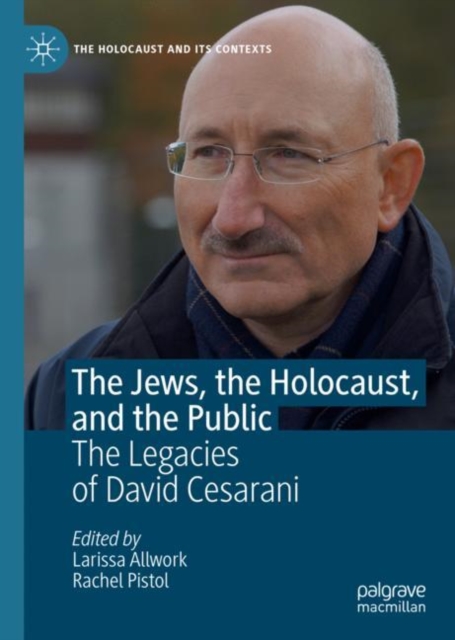
This book explores the work and legacy of Professor David Cesarani OBE, a leading British scholar and expert on Jewish history who helped to shape Holocaust research, remembrance and education in the UK.
This book reveals how Moses ibn Ezra, Judah Halevi, Moses Maimonides, and Shem Tov ibn Falaquera understood metaphor and imagination, and their role in the way human beings describe God.
In Germany at the turn of the century, Buddhism transformed from an obscure topic, of interest to only a few misfit scholars, into a cultural phenomenon.
Mahmoud Darwish: Palestine's Poet and the Other as the Beloved focuses on Palestinian national poet Mahmoud Darwish (1941-2008), whose poetry has helped to shape Palestinian identity and foster Palestinian culture through many decades of the Israeli-Palestinian conflict.
This book moves beyond the debate on 'wisdom literature', ongoing in biblical studies, to demonstrate the productivity of 'wisdom' as a literary category.