
Indigenous, ethnic and folk religions and spiritual beliefs
Sorting
Bestseller Sorting collapsed
Bestseller
Name: A-Z
Name: Z-A
Price ascending
Price descending
Publication Date ascending
Publication Date descending
E-book

Price
0
7.99 £




E-book
0
0
Price
7.99 £
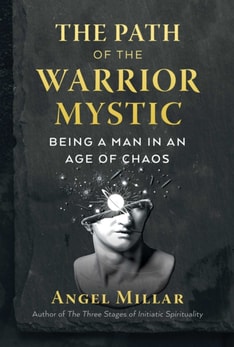
*; Explores the archetypal and classical male ideal found in ancient societies around the world *; Examines some of the problems facing men in the world today and shares practices to develop yourself in the face of these problems *; Provides techniques for developing your thinking and focus, overcoming fear, relaxing tension in your body, and developing a self-image more appropriate to who you are and aspire to be Ancient and classical societies have always had an ideal of manhood.
Read more

E-book
Price
0
6.99 £
E-book
0
0
Price
6.99 £
*; Explains how Kimbanda's presiding deity Eshu embodies both masculine and feminine principles, both god and devil, and thus represents human nature itself with all its vices and virtues *; Discusses Kimbanda's magical practices, initiation rites, sacred knives, and sacrificial offerings *; Details the seven realms and the entities that inhabit and govern each of them Although it has been demonized as a form of Satanic cult, Kimbanda--the tradition of Afro-Brazilian black magic--is a spiritual practice that embraces both the light and dark aspects of life through worship of the entities known as Eshu and Pombajira.
Read more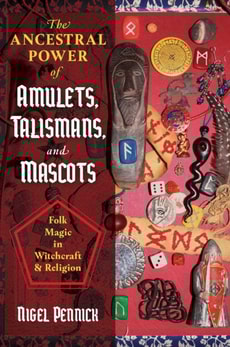
E-book
Price
0
9.99 £
E-book
0
0
Price
9.99 £
*; Looks at the age-old spiritual principles, folklore, and esoteric traditions behind the creation of magical objects as well as the use of numbers, colors, sigils, geometric emblems, knots, crosses, pentagrams, and other symbols *; Explores hundreds of artifacts, such as hagstones, Norse directional amulets, car hood mascots, objects made from bones and teeth, those connected with plants and animals, charms associated with gambling, and religious relics *; Includes photos of artifacts from the author's extensive collection Offering an illustrated exploration of the origins and history of amulets, lucky charms, talismans, and mascots, including photos of unique and original artifacts from his extensive collection, Nigel Pennick examines these objects from a magical perspective, from ancient Egypt to the present.
Read more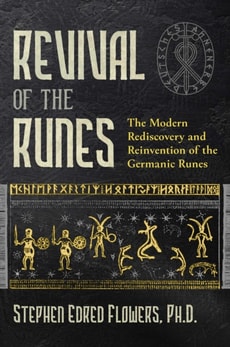
E-book
Price
0
8.99 £
E-book
0
0
Price
8.99 £
*; Explores the five periods of runic revival: the Renaissance, the Enlightenment, the Romantic period, the early 20th century, and the late 20th century *; Examines the use of runes by the foremost magicians and scholars of each era, including mystic and scholar Johannes Bureus, who developed his own integrated system of runology known as Adalruna *; Reveals how the Nazi misguided use of the runes showed a lack of comprehension of what was being discovered by scientific rune scholars of the day In this exploration of the history of the runes from 1500 CE to the present day, Stephen Edred Flowers examines the five periods of runic revival: the Renaissance, the Enlightenment, the Romantic period, the early 20th century, and the late 20th century.
Read more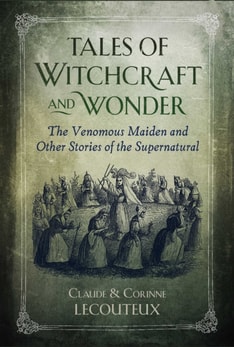
E-book
Price
0
13.99 £
E-book
0
0
Price
13.99 £
*; Offers commentary for each story, revealing its historical context, cultural and esoteric associations, and hidden pagan beliefs *; Explores how the tales transformed over the ages and their origins in Classical Antiquity, the Middle East, and India *; Includes stories never-before-translated from their original Latin and many purposely left in obscurity due to scandalous depictions of popes and other notables The Middle Ages witnessed the blossoming of oral traditions whose echoes can still be found in many legends, fables, and tales today.
Read more

E-book
Price
0
10.99 £
E-book
0
0
Price
10.99 £
*; Explains how a Vampyre is not a blood-sucking mythical figure but a shaman who is skilled in gathering, using, and storing energy for magical power and personal liberation *; Reveals how to gather and store energy from the world around you and shares magical techniques, manifestation methods, and practices to utilize the energy you have collected *; Looks at servitors and familiars, vampyric runes, dream architecture, money magick practices, and sex magick techniques as well as advanced practices such as healing with vampyric magick In this initiatory guide, Don Webb explains how to learn from the myth of the vampire to gather, use, and store energy for magical power, manifestation, and personal liberation.
Read more
E-book
Price
0
8.99 £
E-book
0
0
Price
8.99 £
A guide to the history and practices of the Druids and the Celtic faith *; Reconstructs the Druidic faith from surviving remnants, parallels with other Indo-European traditions, and dedicated study of scholarly sources *; Details magical rites and ceremonies, methods for consecrating an outdoor temple, and customs for celebrating important festivals such as Beltaine and Samhain *; Discusses rules for firecraft, making offerings to deities and spirits, and the ancient Coligny calendar, including the names of the months in old Gaulish Druids and their magic, lore, and rituals have fascinated all those who encounter them, from the ancient Greeks and Romans onward.
Read more
E-book
Price
0
6.99 £
E-book
0
0
Price
6.99 £
A complete guide to working with the Birth Odus of your Orishas Birth Chart*; Offers step-by-step instructions to calculate your Birth Odus and cast your full Orisha Birth Chart*; Presents detailed interpretations of each of the 16 Birth Odus, showing how their energies manifest in an individual's personality, relationships, financial status, and general approach to life*; Shares self-transformation techniques to help you improve the positive qualities of your chart while embracing, integrating, and neutralizing negative energies and tendenciesMuch like the celestial influences revealed by a natal astrology chart or the numerology of your birth date, African spiritual traditions believe that every person has specific personal energies ruling how we relate to each other and the way we foresee and achieve life goals.
Read more
E-book
Price
0
10.99 £
E-book
0
0
Price
10.99 £
An exploration of the traditional rites of auspicious building and crafting*; Explains the ceremonial beginnings and Hermetic principles in the laying out of foundations not only for sacred buildings like temples but also for homes and barns*; Examines the principles and ceremonies of electional astrology and details how to compute natural time, as opposed to clock time*; Shares examples from ancient Egypt, Iran, India, and Europe that range from the Stone Age to the Renaissance and include secret societiesWhen we make things--whether a building, a sacred space, or a magical object--there is a precise moment when the artifact comes into being as a separate entity.
Read more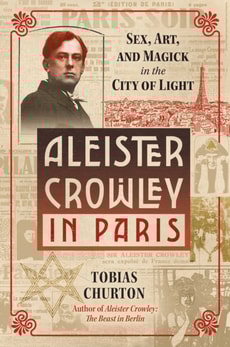
E-book
Price
0
14.99 £
E-book
0
0
Price
14.99 £
Examines Aleister Crowley's 30-year-long intimate association with Paris*; Investigates the tales of Crowley ';raising Pan,' going mad, and working gay sex magick in Paris*; Uncovers Crowley's involvement in the Belle poque with sculptor Auguste Rodin and other artists and in the 1920s with Berenice Abbott, Nancy Cunard, Man Ray, Andr Gide, and Aime Crocker*; Reveals Crowley's ';expulsion' from Paris in 1929 as a high-level conspiracy against CrowleyExploring occultist, magician, poet, painter, and writer Aleister Crowley's longstanding and intimate association with Paris, Tobias Churton provides the first detailed account of Crowley's activities in the City of Light.
Read more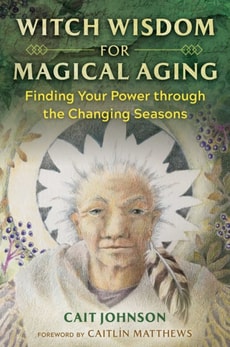
E-book
Price
0
6.99 £
E-book
0
0
Price
6.99 £
*; Presents four loving, feisty old witches, one for each season, who share earth-honoring wisdom, rituals, and spells to help you embrace your journey through the sacred latter half of life *; Filled with magical recipes, inspiring ceremonies, playful activities, and meaningful meditations You are invited into the magical world of four loving, feisty old witches, one for each season, who share earth-honoring wisdom, rituals, and spells to help you embrace your journey through the sacred latter half of life.
Read more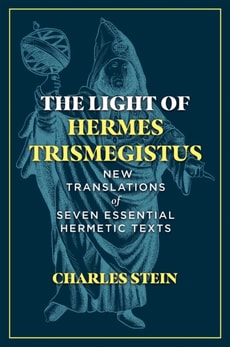
E-book
Price
0
19.99 £
E-book
0
0
Price
19.99 £
A presentation of seven essential texts, central to the Hermetic Tradition, never before published together*; Includes Theogony, The Homeric Hymn to Hermes, The Poem of Parmenides, The Poimandres, The Chaldean Oracles, Hymn to Isis, and On Divine Virtue, each translated from the original Greek or Latin*; Presents interpretive commentary for each text to progressively weave them together historically, poetically, hermeneutically, and magicallyLinked to both the Greek god Hermes and the Egyptian god Thoth, Hermes Trismegistus is credited, through legend, with thousands of mystical and philosophical writings of high standing, each reputed to be of immense antiquity.
Read more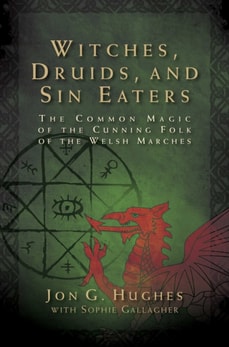
E-book
Price
0
10.99 £
E-book
0
0
Price
10.99 £
A guide to ancient beliefs including instructions for magic and spellcasting*; Describes the arcane rituals, ancient beliefs, and secret rites of the Welsh Marches, including those of the Sin Eaters, Eye Biters, and Spirit Hunters*; Shares extracts from ancient texts stored in the archives of the National Museum of Wales, along with many original photographs of related artifacts*; Includes a Grimoire of the Welsh Marches, a wide collection of spells and magical workings along with practical instruction on crafting and castingIn this collaboration between a Druid and a witchcraft researcher, Jon G.
Read more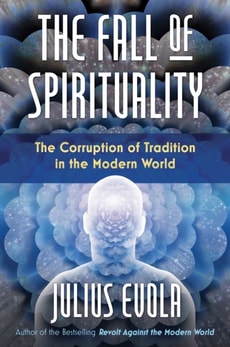
E-book
Price
0
13.99 £
E-book
0
0
Price
13.99 £
*; Examines newer spiritual ';systems' of the modern era, from spiritism and theosophy, to parapsychic research and anthroposophism, to psychoanalysis and the Church of Satan *; Compares these newer spiritual ';systems' to the traditional spiritual path of the ancients and exposes the misunderstandings, misinterpretations, and occult dangers lurking in their practices *; Also examines important modern figures such as Nietzsche, Aleister Crowley, Rudolf Steiner, Dostoevsky, Freud, Jung, Gurdjieff, Krishnamurti, and Anton LaVey Written two years before his most prominent book Revolt Against the Modern World, Julius Evola's The Fall of Spirituality was originally published in Italian as Maschera e volto dello spiritualismo contemporaneo (The Mask and Face of Contemporary Spiritualism).
Read more
E-book
Price
0
19.99 £
E-book
0
0
Price
19.99 £
An illustrated reference book on a seminal figure of occult philosophy and Renaissance thought *; Explains Fludd's thoughts on cosmic harmonies, divination, the kabbalah, astrology, geomancy, alchemy, the Rosicrucians, and multiple levels of existence *; Includes more than 200 of Fludd's illustrations, representing the whole corpus of Fludd's iconography, each one accompanied by Godwin's expert commentary *; Explores Fludd's medical work as an esoteric Paracelsian physician and his theories on the macrocosm of elements, planets, stars, and subtle and divine beings and the microcosm of the human being and its creative activities, including material never before translated One of the last Renaissance men, Robert Fludd (1574-1637) was one of the great minds of the early modern period.
Read more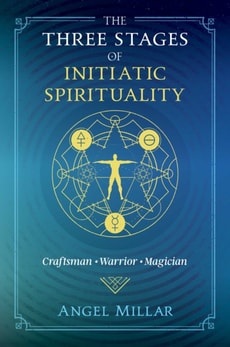
E-book
Price
0
7.99 £
E-book
0
0
Price
7.99 £
A detailed guide to the three successive initiatic archetypes: Craftsman, Warrior, and Magician *; Investigates the symbolism, rituals, and metaphysical aspects of each initiatic archetype, from the alchemy and shamanism of the craftsman, to the subtle energy work of the warrior, to the sex magic practices and Higher Self work of the magician *; Shares meditations, practices, and transformational techniques for each archetype *; Investigates the similarities between contemporary Western occultism, from Crowley to Chaos Magic, and the ';positive thinking' mind metaphysics movement Exploring the craftsman, warrior, and magician archetypes--three vocations that echo the traditional tripartite division of society--Angel Millar reveals how these archetypes represent the three successive stages of spiritual growth in an individual's life.
Read more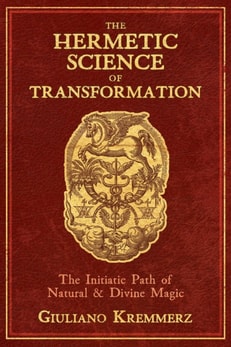
E-book
Price
0
13.99 £
E-book
0
0
Price
13.99 £
A classic initiatic primer for the serious magical aspirant, available now for the first time in English *; Details occult purification and preparations for the path of natural and divine magic *; Explains how initiation into the hermetic science transforms the novice not only mentally but also physically, altering even the very fluids of the body *; Offers a return to the original hermetic path of initiation, following the strict procedures and symbolism as defined in the spiritual practices of Pythagoras and his tradition The main purpose of the hermetic science, as seen by Giuliano Kremmerz (1861-1930), Italian alchemist, hermeticist, philosopher, and member of the Ur Group, is to allow the adept to concentrate on the natural and divine magic that will allow him or her to develop the latent powers innate in every human being.
Read more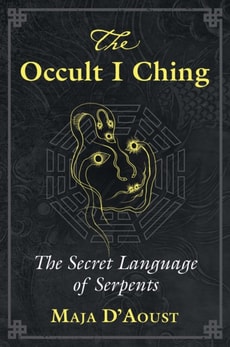
E-book
Price
0
10.99 £
E-book
0
0
Price
10.99 £
An illustrated guide to the occult history, serpent magic, and practical application of the I Ching *; Reveals how the sacred language of the original eight trigrams of the I Ching was discovered by a wisdom serpent known as Fu Xi *; Explores how the I Ching formed the basis of the earliest Taoist philosophies, its complex correlation with human DNA, and its relationship with artificial intelligence *; Provides new contemporary analysis of each of the 64 hexagrams, their changing lines, and archetypes of the I Ching *; Includes original artwork highlighting the serpent magic within the system and tools to help you interpret the I Ching based on your own individual experience One of the oldest books in the world, the I Ching has been used in China for millennia to open a dialogue with divinity, gain insight and wisdom, and pull aside the curtain of reality to reveal the light of the heavens.
Read more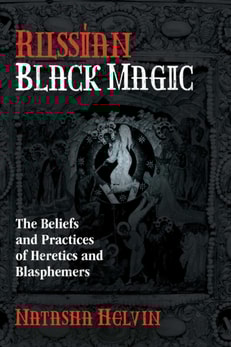
E-book
Price
0
6.99 £
E-book
0
0
Price
6.99 £
A rare look into the history, theory, and craft of the black mages and sorcerers of Russia *; Examines practical rituals and spells, the demonic pantheon, places of power, offerings and sacrifices, Hell Icons, and instructions for cemetery magic *; Provides insight into the fundamental ideology of black magic practitioners, from the universal laws of magic to the principles of morality *; Details how the Russian practice of black magic preserved ancient pagan traditions and evolved as the antithesis of Christianity Born in the Soviet Union and descended from a matrilineal line of witches, Natasha Helvin offers a rare look into the secret practices of Russian black magic, passed down from teacher to disciple for generations both orally and through their grimoires bound in black.
Read more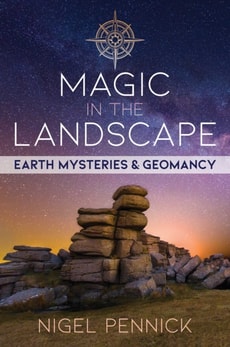
E-book
Price
0
6.99 £
E-book
0
0
Price
6.99 £
Learn to cultivate a traditional, beneficial relationship with the land by embracing the forgotten practices of our ancestors *; Details the ancient art of geomancy and Earth magic, including how to work with ley lines, astrology, and the four directions to honor a space and make it a place of power *; Explores the magic of the land around us and how our ancestors interacted with Earth energies and the forces of Nature *; Discusses the power of boundaries and magic circles, the proper ';feng shui' of graveyards and cemeteries, and magically powerful places such as crossroads, fairgrounds, and the mystic triangles found in ';no-man's lands' Our ancestors were deeply aware of the magical power of their local landscape, no matter where they lived.
Read more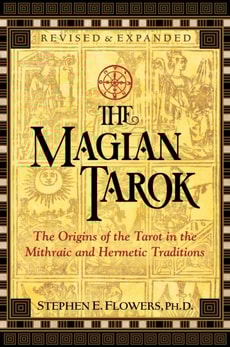
E-book
Price
0
6.99 £
E-book
0
0
Price
6.99 £
Reveals the historical roots of the symbology of the Tarot in the Mithraic tradition of the Persian Magi and the Hermetic tradition *; Explores the Magian teachings on the Stoeicheia and how this magical alphabet was the template for the Tarot *; Explains how the sequencing of the Major Arcana is related to the images used in Mithraic initiation *; Looks at the original meanings of the Major Arcana using Mithraic symbolism, as well as the deep-level connections of the Tarot with Egypt, the Romani people, the Semitic tradition, and runes The Tarot is a mythic map of the world and of consciousness.
Read more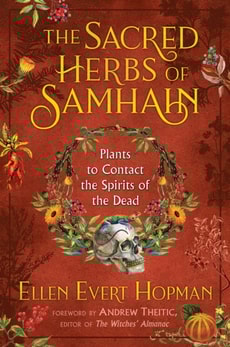
E-book
Price
0
9.99 £
E-book
0
0
Price
9.99 £
A practical guide to using the sacred herbs of Samhain for healing, divination, purification, protection, magic, and as tools for contacting the Spirits *; Explores the identification, harvest, and safe practical and ritual use of more than 70 plants and trees sacred to the Celtic festival of Samhain, the origin of Halloween *; Details the most effective plants for protection from the mischief of Fairies, herbs for releasing the Dead, and visionary plants for divination and shamanic work *; Provides instructions and suggestions for a traditional Dumb Supper, offerings to the Land Spirits, Samhain rites, and recipes for the sacred foods of Samhain The ancient Celts separated the year into two halves, the light half and the dark half, summer and winter.
Read more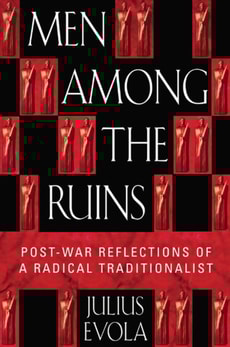
E-book
Price
0
11.99 £
E-book
0
0
Price
11.99 £
Julius Evola's masterful overview of the political and social manifestations of our time, the "e;age of decline"e; known to the Hindus as the Kali Yuga.
Read more
E-book
Price
0
14.99 £
E-book
0
0
Price
14.99 £
With unflinching gaze and uncompromising intensity Julius Evola analyzes the spiritual and cultural malaise at the heart of Western civilization and all that passes for progress in the modern world.
Read more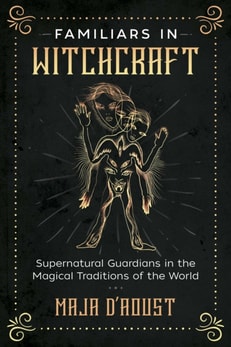
E-book
Price
0
6.99 £
E-book
0
0
Price
6.99 £
A comprehensive exploration of familiars and their many forms and powers *; Explores witch's familiars in folklore, shamanic, and magical traditions around the world, including Africa, India, Scandinavia, ancient Greece, and China *; Explains how familiars are related to shamanic power animals and how the witch draws on her personal sexual energy to give this creature its power *; Examines the familiar in alchemical, Hermetic, and Egyptian magical literature, including instructions for procuring a supernatural assistant Exploring the history and creation of a ';witch's familiar,' also known as a spirit double or guardian spirit, Maja D'Aoust shows how there is much more to these supernatural servant spirits and guardians than meets the eye.
Read more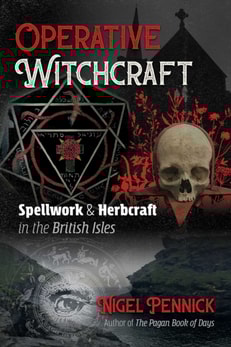
E-book
Price
0
6.99 £
E-book
0
0
Price
6.99 £
A comprehensive look at the history and practices of rural English witchcraft *; Explores witch's familiars and fetches, animal magic, and the forms of witchcraft practiced by rural tradespeople, such as blacksmiths, herbalists, and artisans *; Offers practical insight into spells, charms, folk incantations, herbal medicine practices, amulets, sigils, and tools of the craft *; Details the evolution of public perception of witchcraft throughout England's history, including the laws against witchcraft in place until the 1950s and witchcraft's contentious relationship with the Christian church In this practical guide, Nigel Pennick takes the reader on a journey through the practice of operative witchcraft in the British Isles from the Middle Ages and the Elizabethan era to the decriminalization of witchcraft in the 1950s and its practice today.
Read more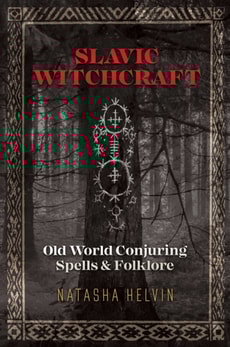
E-book
Price
0
6.99 £
E-book
0
0
Price
6.99 £
A practical guide to the ancient magical tradition of Russian sorcery and Eastern Slavic magical rites *; Offers step-by-step instructions for more than 300 spells, incantations, charms, amulets, and practical rituals for love, career success, protection, healing, divination, communicating with spirits and ancestors, and other challenges and situations *; Reveals specific places of magical power in the natural world as well as the profound power of graveyards and churches for casting spells *; Explores the folk history of this ancient magical tradition, including how the pagan gods gained new life as Eastern Orthodox saints, and shares folktales of magical beings, including sorceresses shapeshifting into animals and household objects Passed down through generations, the Slavic practice of magic, witchcraft, and sorcery is still alive and well in Russia, the Ukraine, and Belarus, as well as the Balkans and the Baltic states.
Read more
E-book
Price
0
10.99 £
E-book
0
0
Price
10.99 £
A comprehensive guide to the history and practice of Angular Magic *; Details the development of the magical system of the Nine Angles by the Church of Satan and the Temple of Set, as well as its internal body, the Order of the Trapezoid *; Analyzes the 3 key rites of Angular Magic: Die Elektrischen Vorspiele, the Ceremony of the Nine Angles, and the Call to Cthulhu *; Explores historical influences on Angular Magic, including Pythagorean number mysticism, John Dee's Enochian magic, and the writings of H.
Read more
E-book
Price
0
13.99 £
E-book
0
0
Price
13.99 £
An intimate portrait of Evola and his wartime activities that rebuts many of the Fascist pseudo-myths about him *; Traces the Baron's activities in Italy, Germany, and Austria during World War II *; Clarifies Evola's relations with Nazism and Fascism and reveals how he passionately rejected both ideologies because they were totalitarian *; Draws on personal conversations with those who knew Evola, new documentation never before made public, and letters from the Hakl and Scaligero archives Baron Giulio Cesare Andrea Evola, known to the English-speaking world as Julius Evola (18981974), was an Italian philosopher, magician, painter, occultist, Orientalist, linguist, and champion mountain climber.
Read more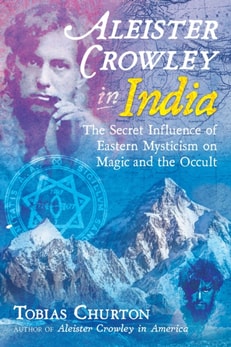
E-book
Price
0
14.99 £
E-book
0
0
Price
14.99 £
Follow Aleister Crowley through his mystical travels in India, which profoundly influenced his magical system as well as the larger occult world *; Shares excerpts from Crowley's unpublished diaries and details his travels in India, Burma, and Sri Lanka from 1901 to 1906 *; Reveals how Crowley incorporated what he learned in India--jnana yoga, Vedantist, Tantric, and Buddhist philosophy--into his own school of Magick *; Explores the world of Theosophy, yogis, Hindu traditions, and the first Buddhist sangha to the West as well as the first pioneering expeditions to K2 and Kangchenjunga in 1901 and 1905 Early in life, Aleister Crowley's dissociation from fundamentalist Christianity led him toward esoteric and magical spirituality.
Read more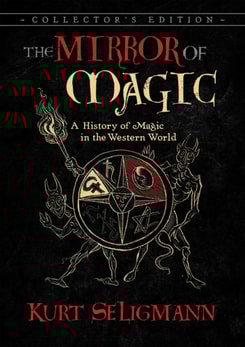
E-book
Price
0
19.99 £
E-book
0
0
Price
19.99 £
A collector's edition of the classic, illustrated, and comprehensive history of magic and the occult *; Written by renowned Surrealist and magic scholar Kurt Seligmann (1900-1962) *; Includes all 250 illustrations from the original 1948 edition *; Explores magical practices and beliefs from their origins in the ancient world through the heyday of secret societies in the 18th century In the occult classic The Mirror of Magic, renowned Surrealist Kurt Seligmann (1900-1962) draws from his encyclopedic practitioner's knowledge and extensive antiquarian collection to offer a comprehensive, illustrated history of magic and the occult from Mesopotamia and ancient Egypt through the 18th century.
Read more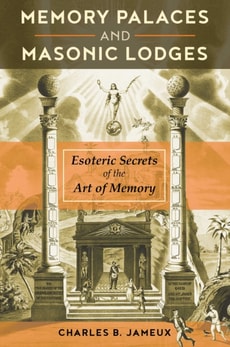
E-book
Price
0
6.99 £
E-book
0
0
Price
6.99 £
Reveals how the art of memory is the origin of the Masonic method *; Explains the classical techniques of the art of memory, how they were reworked by hermetic thinkers during the Renaissance, and how they contributed to the transformation of operative Freemasonry into speculative Freemasonry *; Traces the creation of speculative Freemasonry to 1637, one hundred years earlier than previously thought *; Explores how the ';memory palaces' created with the art of memory enabled access to universal knowledge as well as represented the Masonic temple in its imaginary state In Antiquity, the art of memory was a mnemonic device that allowed an orator, such as Cicero, to recall all the points he wished to make by associating each of them with an image or architectural element in the site he was speaking.
Read more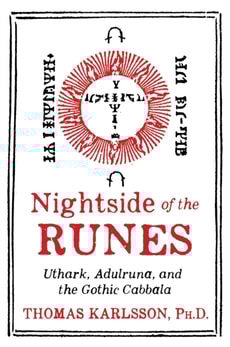
E-book
Price
0
13.99 £
E-book
0
0
Price
13.99 £
Reveals the occult wisdom and multidimensional layers of meaning hidden in the Nordic Rune stones *; Explores the practice of the Uthark divination system encoded within the traditional exoteric Futhark system of reading the runes *; Traces the relationship between the rune stones and numerology, the Cabbala, alchemy, Gothicism, and sigil magic *; Examines the history of the runes and the ancient spiritual mysticism of Odin Uncovering the dark side of the Nordic rune stones hidden beneath their traditional interpretation, Swedish scholar and runologist Thomas Karlsson examines the rune work of Swedish mystic and runologist Johannes Bureus (1568-1652) and professor Sigurd Agrell (1881-1937), both of whom devoted their lives to uncovering the secret uses of rune stones concealed from all but the highest initiates.
Read more
E-book
Price
0
10.99 £
E-book
0
0
Price
10.99 £
Reveals the origins and history of the New England witch hysteria, its continuing repercussions, and the multilayered practices of today's modern witches *; Shares the stories of 13 accused witches from the New England colonies through interviews with their living descendants *; Explores the positive role witches played in rural communities until the dawn of the industrial age, despite ongoing persecution *; Includes in-depth interviews with 25 modern witchcraft practitioners, interwoven with practical information on the sacred calendar, herb lore, spells, and magical practices New England has long been associated with witches.
Read more
E-book
Price
0
6.99 £
E-book
0
0
Price
6.99 £
A comprehensive account of the rich folk culture preserved in the rural secret societies of the British Isles *; Describes the secret rites, ceremonies, and initiation rituals of guilds and rural fraternities such as the Shoemakers, Horsemen, Toadmen, Mummers, and Bonesmen *; Explains their use of masks, black face, and other disguises to avoid persecution *; Draws not only on scholarly research but also the author's personal contacts within these still living traditions Centuries ago the remote, marshy plains of eastern England--the Fens--were drained to create agricultural land.
Read more
E-book
Price
0
6.99 £
E-book
0
0
Price
6.99 £
Learn how to use the principles and practices of natural magic for personal development and spiritual empowerment *; Offers detailed descriptions of the magical properties of minerals, animals, plants, and the earth's cycles and how to use them in your own practice *; Explores the magical laws of nature and how to guide your inner energy to work in concert with cosmic energies *; Details how to design your own ceremonies, practice elemental meditations, and craft your own magical talismans, wands, and divining rods An expert on European rural folk magic traditions, author Nigel Pennick presents a comprehensive introduction to the principles, rituals, practices, and magical tools required to draw on the magic inherent in the natural world.
Read more
E-book
Price
0
6.99 £
E-book
0
0
Price
6.99 £
A practical guide to the Anglo-Saxon Futhark and how runes were used in Old England *; Examines the 33 Northumbrian runes of the Anglo-Saxon Futhark, providing the meanings, historical uses, symbolism, and related tree and plant spirits for each *; Explores geomancy divination practices, the role of sacred numbers, and the power of the eight airts, or directions *; Provides a magical history of Northumbria, as well as a look at the otherworldly beings who call these lands home, including boggarts, brownies, and dragons *; Shows how traditional spirituality is intimately tied to the landscape and the cycle of the seasons In the early Anglo-Saxon period, the region of Great Britain known as Northumbria was a kingdom in its own right.
Read more
E-book
Price
0
8.99 £
E-book
0
0
Price
8.99 £
A surrealist exploration of the marvelous in ancient, classic, and modern works from around the world *; Long considered one of the most significant and original books to have come out of the surrealist movement *; Reveals the ';marvelous' in works from William Blake, Edgar Allen Poe, William Shakespeare, Chrtien de Troyes, and Arthur Rimbaud; legends and folktales from around the world; classics from Ovid, Plato, and Apuleius; Masonic ritual texts, Mesopotamia's Epic of Gilgamesh, the Popol-Vuh, Lewis Caroll's Alice through the Looking Glass, Solomon's Song of Songs, and Goethe's Faust First published in French as Miroir du merveilleux in 1940, Mirror of the Marvelous has long been considered one of the most significant and original books to have come out of the surrealist movement and Anas Nin suggested it as a source of inspiration, far ahead of its time.
Read more
E-book
Price
0
6.99 £
E-book
0
0
Price
6.99 £
A practical handbook to the history, exercises, and techniques of German rune work *; Explores the four traditional runic systems: the Older Futhark, the Anglo-Frisian Futhorc, the Younger Futhark, and the Armanic Futhork *; Details powerful rune work techniques and exercises, including rune yoga and dance, runic hand gestures (mudras), rune singing (mantras), runic healing, runic tantra and sex magic, rune rituals, runic divination, and the runic theory of crystals *; Examines the history of esoteric runology and the trailblazers of modern rune magic, including Guido von List, Friedrich Bernhard Marby, and Rudolf John Gorsleben Although the rune renaissance began blossoming in Anglo-American occult circles in the 1970s, the runes have been part of the occult revival in Germany since its beginning in the late 19th century, with roots that go back centuries further.
Read more
E-book
Price
0
7.99 £
E-book
0
0
Price
7.99 £
The most in-depth work in English on the most influential secret magic group of 20th-century Germany, the Fraternitas Saturni, or Brotherhood of Saturn *; Explores the history of the Order from its founding the late 1960s *; Transcribes many rituals and practices in such detail that readers will be able to undertake their own experiential work *; Examines the Order's teachings on cosmology, the Kabbalah, the Saturnian Sacraments, electrical magic, and sexual mysticism--the Yoga of the Dark Light *; Includes biographies of prominent members, including founder Gregor A.
Read more
E-book
Price
0
13.99 £
E-book
0
0
Price
13.99 £
Authentic initiatic practices, rituals, and wisdom collected by the UR Group *; Shares a rigorous selection of initiatory exercises, including instructions for creating the diaphanous body of the Opus magicum, establishing initiatic consciousness after death, and the construction of magical chains (the enchained awareness of initiates) *; Offers studies of mystery traditions throughout history, presenting not only the principles themselves but also witnesses to them and their continual validity today The ';Gruppo di UR' was a group of Italian esotericists who collaborated from 1927 to 1929.
Read more
E-book
Price
0
7.99 £
E-book
0
0
Price
7.99 £
Explores the role of magic and the occult in art and culture from ancient times to today *; Examines key figures behind esoteric cultural developments, such as Carl Jung, Anton LaVey, Paul Bowles, Aleister Crowley, and Rudolf Steiner *; Explores the history of magic as a source of genuine counter culture and compares it with our contemporary soulless, digital monoculture *; Reveals how the magic of art can be restored if art is employed as a means rather than an end and offers strategies to rekindle intuitive creativity Art, magic, and the occult have been intimately linked since our prehistoric ancestors created the first cave paintings some 50,000 years ago.
Read more
E-book
Price
0
6.99 £
E-book
0
0
Price
6.99 £
A tale of initiation, adventure, and romance set within the medieval Crusades*; Shares in novel form the mystical rituals and techniques of the Nizari Ismailis (the legendary Assassins) communicated to selected Knights Templar during the Crusades*; Shows how the Gnostic traditions of the Cathars and Nizaris were blended to become the core of the ';heretical' doctrines for which the Templars were later condemned*; Sheds light on the contemporary conflict between Islam and the West and offers a natural path of reconciliation between these disparate culturesSet within the dramatic tableau of the medieval Crusades, this story of initiation, adventure, and romance follows members of the Knights Templar and Assassins as they discover a mystical tradition with the potential to unify, protect, and liberate humankind--the very heresy for which the Knights Templar were later condemned.
Read more
E-book
Price
0
6.99 £
E-book
0
0
Price
6.99 £
A complete guide to the theory, practice, and history of Mazdan magic, the first organized system of magic *; Provides a complete curriculum of magical study and initiation centered on exercises keyed to the sacred Zoroastrian calendar *; Details advanced magical rituals and practices based on archaic Persian formulas, including fire rituals and divine invocations *; Explores the history and lore of Persian magic, explaining how the author reconstructed the original Mazdan system of magic Stephen Flowers explores the history, theory, practice, rituals, and initiations of the Mazdan magical system practiced by the Magi of ancient Persia, who were so skilled and famed for their effectiveness that their name came to mean what we today call ';magic.
Read more
E-book
Price
0
14.99 £
E-book
0
0
Price
14.99 £
An exploration of Crowley's relationship with the United States *; Details Crowley's travels, passions, literary and artistic endeavors, sex magick, and psychedelic experimentation *; Investigates Crowley's undercover intelligence adventures that actively promoted U.
Read more
E-book
Price
0
15.99 £
E-book
0
0
Price
15.99 £
An in-depth collection of ancient spells and magic practices drawn from rare and newly discovered texts *; Presents more than 600 magical prescriptions for healing and protection from both pagan and Christian sources *; Examines the practice of diagnosing illness through magic and explores ancient beliefs about curses and other evil spells and about devils, demons, and ghosts *; Includes spells from the heavily guarded gypsy tradition of magic and healing, drawn from newly discovered materials Since the beginning of history, people have sought remedies for the many ills that have beset them, from illnesses afflicting the body to threats posed by evil and hostile individuals.
Read more
E-book
Price
0
7.99 £
E-book
0
0
Price
7.99 £
An experiential guide to the wisdom preserved in Europe's far north*; Includes shamanic journeys to connect with deities and your ancestral shamans*; Provides step-by-step instructions to prepare for and conduct a seir ceremony*; Draws on archaeological evidence and surviving written records from Iceland*; Reveals the long tradition of female shamans in northern European shamanismShamanism is humanity's oldest spiritual tradition.
Read more
E-book
Price
0
14.99 £
E-book
0
0
Price
14.99 £
A comprehensive look at the life and continuing influence of 16th-century scientific genius and occultist Dr.
Read more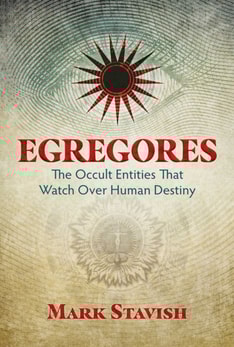
E-book
Price
0
6.99 £
E-book
0
0
Price
6.99 £
The first book to explore the history and influence of egregores, powerful autonomous psychic entities created by a collective group mind *; Examines the history of egregores from ancient times to present day, including their role in Western Mystery traditions and popular culture and media *; Reveals documented examples of egregores from ancient Greece and Rome, Tibetan Buddhism, Islam, modern esoteric orders, the writings of H.
Read more