Awakening: An Introduction to the History of Eastern Thought provides the reader with a thorough and valuable overview of the historical development of the major Eastern religious and philosophical traditions, primarily in India, China, and Japan.
Originally published in 1952, the first part of this book gives a portrait of Akbar (1542-1605), Emperor of India, not as a War Lord and Empire Builder, but as a man deeply absorbed in questions of the Spirit.
Originally published in 1952, the first part of this book gives a portrait of Akbar (1542-1605), Emperor of India, not as a War Lord and Empire Builder, but as a man deeply absorbed in questions of the Spirit.
For millennia, people have universally engaged in ecstatic experience as an essential element in ritual practice, spiritual belief and cultural identification.
For millennia, people have universally engaged in ecstatic experience as an essential element in ritual practice, spiritual belief and cultural identification.
This comprehensive and thought-provoking volume examines the role and function of religion in Hezbollah's political strategy in the context of contemporary Lebanese politics and global security.
This comprehensive and thought-provoking volume examines the role and function of religion in Hezbollah's political strategy in the context of contemporary Lebanese politics and global security.
Religion in 50 Words: A Critical Vocabulary is the first of a two-volume work that seeks to transform the study of religion by offering a radically critical perspective.
Religion in 50 Words: A Critical Vocabulary is the first of a two-volume work that seeks to transform the study of religion by offering a radically critical perspective.
Whilst accounting for the present-day popularity and relevance of Alan Watts' contributions to psychology, religion, arts, and humanities, this interdisciplinary collection grapples with the ongoing criticisms which surround Watts' life and work.
Whilst accounting for the present-day popularity and relevance of Alan Watts' contributions to psychology, religion, arts, and humanities, this interdisciplinary collection grapples with the ongoing criticisms which surround Watts' life and work.
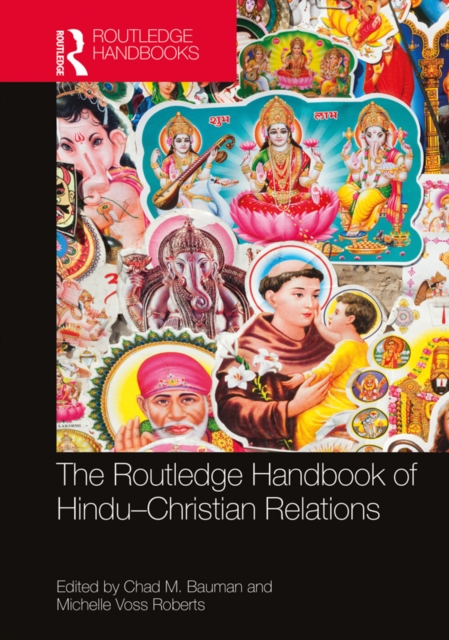
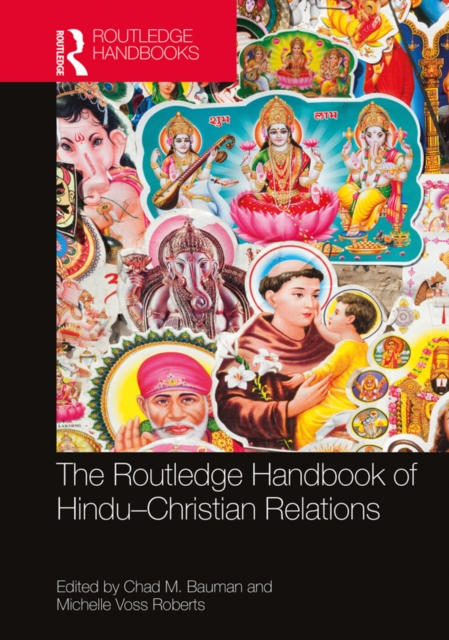
The historical interplay of Hinduism as an ancient Indian religion and Christianity as a religion associated (in India, at least) with foreign power and colonialism, continues to animate Hindu-Christian relations today.
The historical interplay of Hinduism as an ancient Indian religion and Christianity as a religion associated (in India, at least) with foreign power and colonialism, continues to animate Hindu-Christian relations today.
Ratified by the Parliament of the World's Religions in 1993 and expanded in 2018, "e;Towards a Global Ethic (An Initial Declaration),"e; or the Global Ethic, expresses the minimal set of principles shared by people-religious or not.
Ratified by the Parliament of the World's Religions in 1993 and expanded in 2018, "e;Towards a Global Ethic (An Initial Declaration),"e; or the Global Ethic, expresses the minimal set of principles shared by people-religious or not.
Originally published in 1961, Christianity Among the Religions examines whether it is possible to learn from other religions without compromising on personal religious loyalties.
Originally published in 1961, Christianity Among the Religions examines whether it is possible to learn from other religions without compromising on personal religious loyalties.
With a focus on Asian traditions, this book examines varieties of thought and self-transformative practice that do not fit neatly on one side or another of the standard Western division between philosophy and religion.
With a focus on Asian traditions, this book examines varieties of thought and self-transformative practice that do not fit neatly on one side or another of the standard Western division between philosophy and religion.
For good or ill, most, if not all, of the great institutions which have formed the framework of society have had their roots in the idea of Deity as a beneficent providential order of transcendental reality.
In this book, first published in 1948, an attempt has been made to provide an intelligible introduction to a somewhat complex aspect of scientific inquiry.
Originally published in 1949, this book examines the problems of morals in the light of science and philosophy and is addressed to those who do not accept revelation as the sanction for morality.
Originally published in 1949, this book examines the problems of morals in the light of science and philosophy and is addressed to those who do not accept revelation as the sanction for morality.
This volume brings together essays which discuss and contextualise Gandhi's ideas on pluralism, religious identity, non-violence, satyagraha, and modernity.
This volume brings together essays which discuss and contextualise Gandhi's ideas on pluralism, religious identity, non-violence, satyagraha, and modernity.
The emergence of religious fundamentalism in a globalized, post-colonial world poses a significant challenge to the "e;End of History"e; narratives common in academic and non-academic literature alike.