Drawing upon the most recent discoveries and scholarship in archaeology and the first-century Near East, The Dawn of Christianity reveals how a beleaguered group of followers of a crucified rabbi became the founders of a world-changing faith.
An Ancient Theory of Religion examines a theory of religion put forward by Euhemerus of Messene (late 4th-early 3rd century BCE) in his lost work Sacred Inscription, and shows not only how and why euhemerism came about but also how it was- and still is-used.
If you want to identify me, ask me not where I live, or what I like to eat, or how I comb my hair, but ask me what I am living for, in detail, and ask me what I think is keeping me from living fully for the thing I want to live for.
During the first half of the twentieth century, supporters of the eugenics movement offered an image of a racially transformed America by curtailing the reproduction of "e;unfit"e; members of society.
Valuable not only for their sublime musical expression, the African American spirituals give us profound insights into the human condition and the Christian life.
This revised study edition of the Book of Confessions contains the official creeds, catechisms, and confessional statements of the Presbyterian Church (U.
Aristotle in Coimbra is the first book to cover the history of both the College of Arts in Coimbra and its most remarkable cultural product, the Cursus Conimbricensis, examining early Jesuit pedagogy as performed in one of the most important colleges run by the Society of Jesus in the sixteenth century.
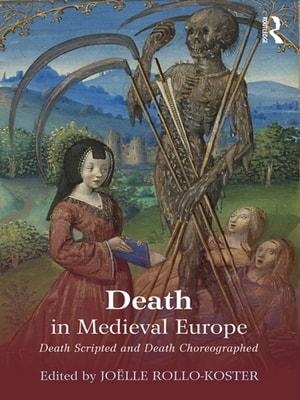
Death in Medieval Europe: Death Scripted and Death Choreographed explores new cultural research into death and funeral practices in medieval Europe and demonstrates the important relationship between death and the world of the living in the Middle Ages.
This book challenges the dominant scholarly notion that the Qur'an must be interpreted through the medieval commentaries shaped by the biography of the prophet Muhammad, arguing instead that the text is best read in light of Christian and Jewish scripture.
It is well known that the Western university gradually evolved from the monastic stadium via the cathedral schools of the twelfth century to become the remarkably vigorous and interdisciplinary European institutions of higher learning that transformed Christian intellectual culture in the thirteenth and fourteenth centuries.
In Christianity: The Biography Ian Shaw charts the story of Christianity from its birth and infancy among a handful of followers of Jesus Christ, through its years of development into a global religious movement, spanning continents and cultures and transcending educational and social backgrounds.
Renowned biblical scholar Thomas Schreiner looks at the historical and biblical roots of the doctrine of justification and offers an updated defense of this pillar of Reformed theology.
Scholar and pastor Matthew Barrett retraces the historical and biblical roots of the doctrine that Scripture alone is the final and decisive authority for God's people.
This book discusses various dynamic facets of the life of Rashid al-Ghannushi, a distinguished Islamic thinker and activist not only in Tunisia and North Africa, but in the entire Muslim world.
This book asks how the inhabitants and neighbours of the Eastern Roman Empire understand their identity as Romans in the centuries following the emergence of Islam as a world-religion.
When the Sisters Said Farewell tells an important story of the contributions of Catholic elementary schools to the United States by chronicling the experiences and insights of religious women (nuns) who were the last members of their communities to serve in parish elementary schools, and of those lay men and women who were the first to serve in those roles traditionally filled by the sisters.
This book explores the responses of the Roman Catholic Church to the French Revolution beginning in 1789, to the liberal revolution in 1830, and particularly the democratic revolution of 1848 in France, and asks how these events were perceived and explained.
This book provides a comparative analysis of cosmopolitan (esoteric) religious movements, such as Theosophy, Groupe Independent des Etudes Esoteriques, Anthroposophy, and Monism, in England, France, Germany, and India during the late nineteenth-century to the interwar years.
This book examines the Avar siege of Constantinople in 626, one of the most significant events of the seventh century, and the impact and repercussions this had on the political, military, economic and religious structures of the Byzantine Empire.
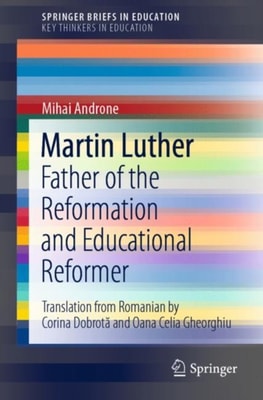
This book explores specific aspects of Martin Luther's ideas on education in general, and on religious education in particular, by comparing them to the views of other great sixteenth-century reformers: Huldrych Zwingli, John Calvin, and Philip Melanchthon.
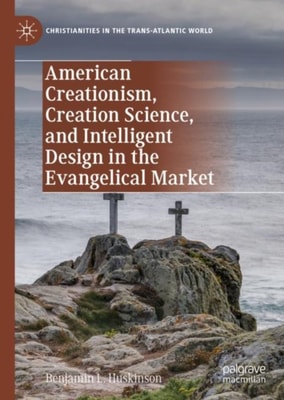
'In this compelling and thoroughly researched book, Benjamin Huskinson demonstrates that just as there is broad diversity within evangelicalism, so too there is broad diversity among "e;creationists.
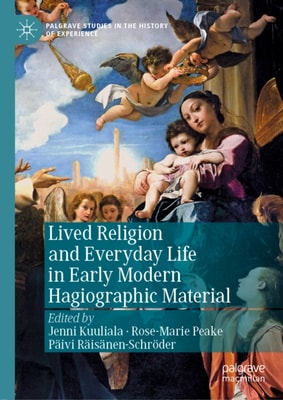
This book discusses the ways in which early modern hagiographic sources can be used to study lived religion and everyday life from the fifteenth to the seventeenth century.
Intended to appeal to both Christians and Jews,A Rabbi Looks at Jesus' Parables is an introduction to the teachings of Jesus, and compares the similarities and differences in Jesus' thinking to other Jewish sources from first-century Palestine.