The Bible can and should be an environment in which we live and move and have our being, an environment in which we are shaped by God in different and interrelated ways.
During a forty-year period ending in 2002, leaders of major American churches tried to unite their members, ministries, and public service in a new church they named A Church of Christ Uniting.
In light of the contemporary struggle between science and faith, Kathleen Mulhern's timely exploration of late nineteenth-century neo-Pascalian thought both recovers a lost perspective on the "e;war between science and religion"e; and offers a fruitful angle of study for twenty-first-century reflection.
Liturgical Elements for Reformed Worship is a series of four liturgical resources: three consisting of liturgical elements for Years A, B, and C, and a fourth, the first such resource to support the implementation of Year D: A Quadrennial Supplement to the Revised Common Lectionary (Cascade, 2012).
Drinking from the Same Well is designed for those who seek a praxis-oriented theological grounding in the exploration of cross-cultural perspectives in the field of pastoral care and counseling.
Jesus' best-known mandate--after perhaps the mandate to love God and neighbor--was given at the Last Supper just before his death: "e;Do this in memory of me.
Novatian of Rome and the Culmination of Pre-Nicene Orthodoxy is an overview of the development of Christology and Trinitarian doctrine, which reached a plateau with Novatian, the third-century priest of Rome.
Crossing Boundaries in the Americas, Vietnam, and the Middle East is the personal, yet profoundly political first-person account of one man's unique interracial and interfaith leadership roles over five decades in movements for civil rights, against the Vietnam War, and for Arab-Israeli-Palestinian peace.
Author John Raub's twenty-eight years as a monk changed him, sharpening his eye to see more deeply into situations with a perspective that welcomes debate, for controversy invites thought.
The church in the West has subsisted for five hundred years in a state of ever-increasing multiple identities, many of which claim to be the best representation of the church established by Christ.
Meet Me at the Palaver makes the case for a particular approach to pastoral counseling as a response to the destructive impact of colonial Christianity on indigenous African communities.
Believing that study and application of Scripture in the context of Christian community can greatly enhance the transformative power of the preached message, in Bringing Home the Message Robert Perkins aims to help pastors integrate small group ministry with their preaching.
With the subject of the atonement of Christ attracting such a lot of polemical work at this time, it is easy to conclude that the current debate is generating more heat than light.
In honor of what would have been Clarence Jordan's one hundredth birthday and the seventieth anniversary of Koinonia Farm, the first Clarence Jordan Symposium convened in historic Sumter County, Georgia, in 2012, gathering theologians, historians, actors, and activists in civil rights, housing, agriculture, and fair-trade businesses to celebrate a remarkable individual and his continuing influence.
American Catholic universities and colleges are wrestling today with how to develop in ways that faithfully serve their mission in Catholic higher education without either secularizing or becoming sectarian.
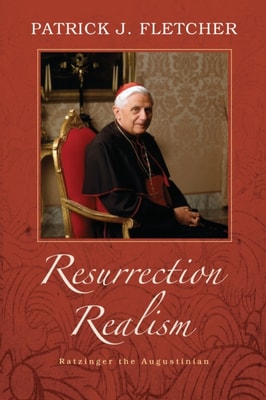
In Resurrection Realism, Patrick Fletcher examines the key role played by Joseph Ratzinger, later Pope Benedict XVI (2005-2013), in the lively twentieth-century debates over the resurrection.
Robert Rollock is best remembered today for the role he played in the development of Reformed covenant theology, a role defined especially by the uniquely mature treatment of a pre-fall covenant of works discovered in his thought.
Historians have painted a picture of nineteenth-century Baptists huddled in clapboard meetinghouses preaching sermons and singing hymns, seemingly unaware of the wider world.
The Pentecostal movement emerged at the turn of the twentieth century emphasizing the need for Christians to have a powerful experience of the Holy Spirit.
There are many books on Christian education, but few consider pedagogy with a biblical focus on formation, and a grounding in varied related disciplines.