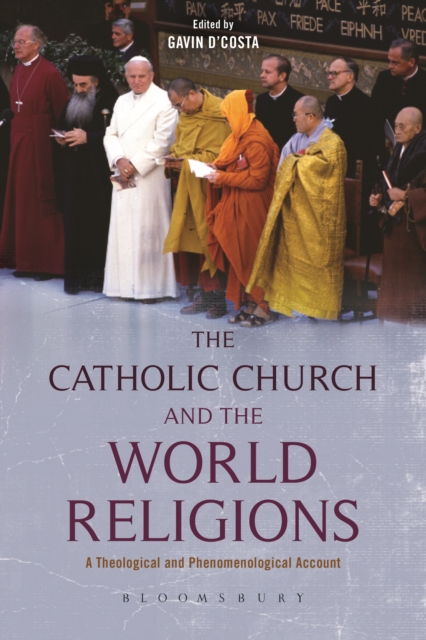
There is no single standard textbook that outlines the official Roman Catholic theological position in relation to other religions which then explicates this orientation theologically and phenomenologically in relation to the four main religions of the world and the flowering of new religious movements in the west.
Redemption and Resistance brings together an eminent cast of contributors to provide a state-of-the-art discussion of Messianism as a topic of political and religious commitment and controversy.
A fresh exploration of a redeeming, dynamic, and radically different way to hold one's religion Samir Selmanovic who grew up a in a culturally Muslim family in Croatia, converted to Christianity as a soldier in the then-Yugoslavian army, and went on to become a Christian pastor in Manhattan and in Southern California looks at how our ongoing and sometimes violent power struggles over who owns God and what God wants for the world and its peoples are not serving God, humanity, or our planet.
A fresh exploration of a redeeming, dynamic, and radically different way to hold one's religion Samir Selmanovic who grew up a in a culturally Muslim family in Croatia, converted to Christianity as a soldier in the then-Yugoslavian army, and went on to become a Christian pastor in Manhattan and in Southern California looks at how our ongoing and sometimes violent power struggles over who owns God and what God wants for the world and its peoples are not serving God, humanity, or our planet.
Inspired by the 1993 Parliament of the Worlds Religions, this volume for the first time brings the scholarly discipline of comparative religious ethics into constructive collaboration with the community of interreligious dialogue.
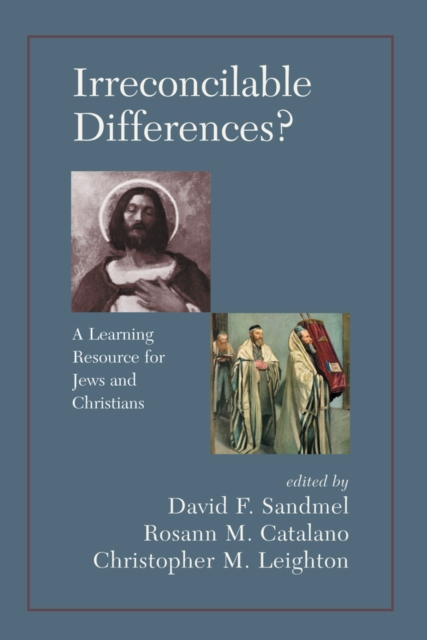
Written by Jewish and Christian educators for use by college and adult learners, this volume explores eight basic questions that lie at the core of both traditions and that can serve as a bridge for understanding.
Providing a historical context, this book examines the challenges that pluralism presents to denominationalism and civil religion and considers the contributions secularism and the New Age movement have made to the culture of religious pluralism.
Inspired by the 1993 Parliament of the Worlds Religions, this volume for the first time brings the scholarly discipline of comparative religious ethics into constructive collaboration with the community of interreligious dialogue.
Written by Jewish and Christian educators for use by college and adult learners, this volume explores eight basic questions that lie at the core of both traditions and that can serve as a bridge for understanding.
Providing a historical context, this book examines the challenges that pluralism presents to denominationalism and civil religion and considers the contributions secularism and the New Age movement have made to the culture of religious pluralism.
How can we develop and embody an ecclesiology, in contexts of urban marginality, that is radically receptive to the gifts and challenges of the agency of our non-Christian neighbours?
Breaking new ground in Christian-Jewish dialogue Deep Calls to Deep uses a new paradigm, one which is marked by experiential theology: a theology that addresses and emerges out of the day to day lived experience of practising Christians and Jews.
Often Christian interfaith engagement has been viewed through the lense of theology of religions where the primary questions are often about the salvific destiny of people of other faiths.
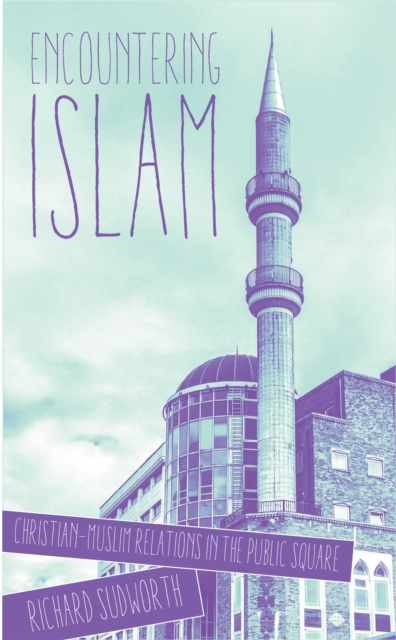
This book reflects on one of the most pressing challenges of our time: the current and historical relationships that exist between the faith-traditions of Judaism, Christianity and Islam.
Written specifically for level 2 undergraduates, this textbook introduces readers to the extremely wide range of forms of religious thought, and the responses of religion to modern ideas, cultural phenomenon and events of the 20th century
While a rational consciousness grasps many truths, Gananath Obeyesekere believes an even richer knowledge is possible through a bold confrontation with the stuff of visions and dreams.
The contributors to this volume treat pluralism as a concept that is historically and ideologically produced or, put another way, as a doctrine that is embedded within a range of political, civic, and cultural institutions.
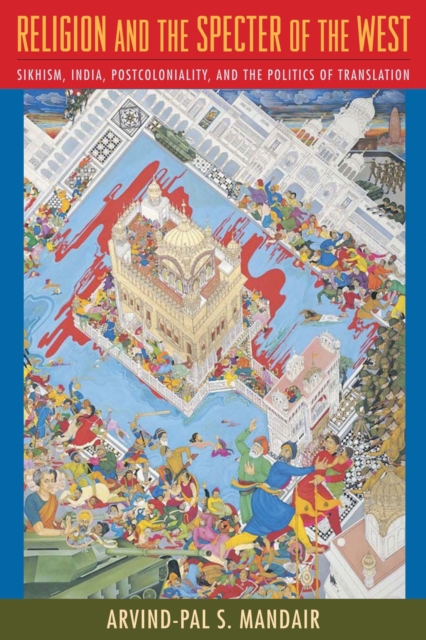
Arguing that intellectual movements, such as deconstruction, postsecular theory, and political theology, have different implications for cultures and societies that live with the debilitating effects of past imperialisms, Arvind Mandair unsettles the politics of knowledge construction in which the category of "e;religion"e; continues to be central.
In his latest book, William Egginton laments the current debate over religion in America, in which religious fundamentalists have set the tone of political discourse-no one can get elected without advertising a personal relation to God, for example-and prominent atheists treat religious belief as the root of all evil.
Die Beziehungsgeschichte von Christen und Muslimen war im Mittelalter und in der Frühen Neuzeit äußerst vielschichtig, woraus sich besondere Anforderungen für das historische Lernen ergeben.
In this award winning, four-session small group Bible study (DVD/digital video sold separately), Carl Medearis, an international expert in the field of Arab-American and Muslim-Christian relations, provides background info on Islam and tools for sharing Christ with their Muslim neighbors.
The first intellectual history of interreligious dialogue, a relatively new and significant dimension of human religiosity In recent decades, organizations committed to interreligious or interfaith dialogue have proliferated, both in the Western and non'Western worlds.
While a rational consciousness grasps many truths, Gananath Obeyesekere believes an even richer knowledge is possible through a bold confrontation with the stuff of visions and dreams.
The Power of Religion in the Public Sphere represents a rare opportunity to experience a diverse group of preeminent philosophers confronting one pervasive contemporary concern: what role does or should religion play in our public lives?
Wendy Doniger's foundational study is both modern in its engagement with a diverse range of religions and refreshingly classic in its transhistorical, cross-cultural approach.
The Sathya Sai global civil religious movement incorporates Hindu and Muslim practices, Buddhist, Christian, and Zoroastrian influences, and "e;New Age"e;-style rituals and beliefs.
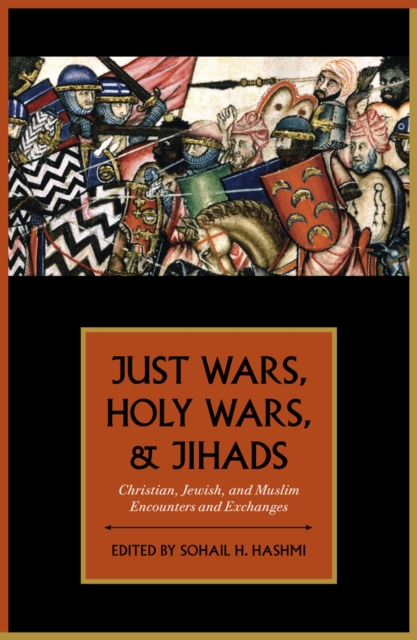
Surveying the period from the rise of Islam in the early seventh century to the present day, Just Wars, Holy Wars, and Jihads is the first book to investigate in depth the historical interaction among Jewish, Christian, and Muslim ideas about when the use of force is justified.
Jews have sometimes been reluctant to claim Jesus as one of their own; Christians have often been reluctant to acknowledge the degree to which Jesus' message and mission were at home amidst, and shaped by, the Judaism(s) of the Second Temple Period.
Jews have sometimes been reluctant to claim Jesus as one of their own; Christians have often been reluctant to acknowledge the degree to which Jesus' message and mission were at home amidst, and shaped by, the Judaism(s) of the Second Temple Period.
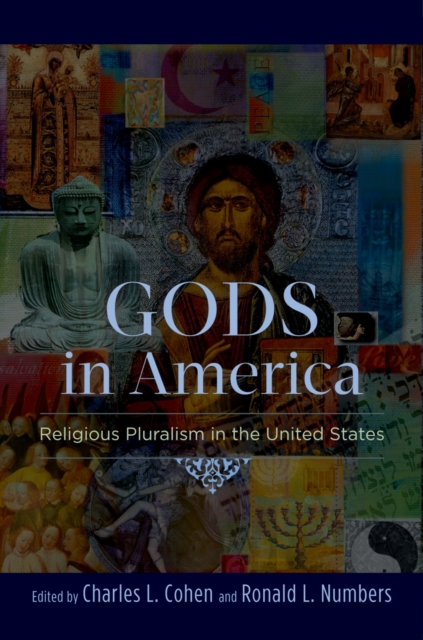
Religious pluralism has characterized America almost from its seventeenth-century inception, but the past half century or so has witnessed wholesale changes in the religious landscape, including a proliferation of new spiritualities, the emergence of widespread adherence to 'Asian' traditions, and an evangelical Christian resurgence.