This collection of seven essays offers wide-ranging and in-depth studies of locations sacred to Muslims, of the histories of these sites (real or imagined), and of the ways in which Muslims and members of other religions have interacted peaceably in sacred times and spaces.
Surveying the period from the rise of Islam in the early seventh century to the present day, Just Wars, Holy Wars, and Jihads is the first book to investigate in depth the historical interaction among Jewish, Christian, and Muslim ideas about when the use of force is justified.
The authors argue that resorting to rules and categories cannot adequately address the pervasive problems of ambiguity, difference, and boundaries - that is to say, the challenge of pluralism in our world.
In On Religious Diversity Robert McKim distinguishes and examines a number of possible responses to the knowledge of diverse religious traditions that is available to all of us today.
New challenges that emerged in the postwar era have given rise to ongoing debate about the place of religion in public life, in the United States and in other established democracies, and this debate has dramatically reshaped the way scholars, policymakers, and religious leaders think about political theology.
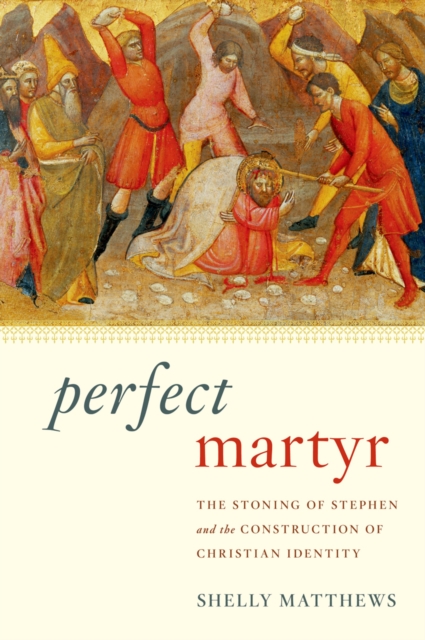
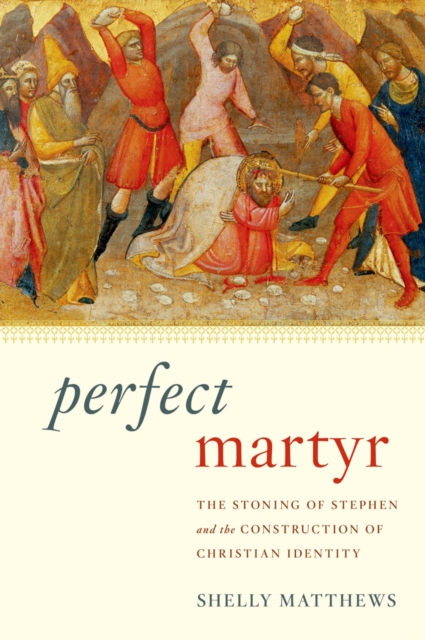
Recent studies have examined martyrdom as a means of constructing Christian identity, but until now none has focused on Stephen, the first Christian martyr.
Peter Slade examines Mission Mississippi's model of racial reconciliation (which stresses one-on-one, individual friendships among religious people of different races) and considers whether it can effectively address the issue of social justice.
Recent studies have examined martyrdom as a means of constructing Christian identity, but until now none has focused on Stephen, the first Christian martyr.
In On Religious Diversity Robert McKim distinguishes and examines a number of possible responses to the knowledge of diverse religious traditions that is available to all of us today.
New challenges that emerged in the postwar era have given rise to ongoing debate about the place of religion in public life, in the United States and in other established democracies, and this debate has dramatically reshaped the way scholars, policymakers, and religious leaders think about political theology.
Peter Slade examines Mission Mississippi's model of racial reconciliation (which stresses one-on-one, individual friendships among religious people of different races) and considers whether it can effectively address the issue of social justice.
To the dismay of religious leaders, study after study has shown a steady decline in affiliation and identification with traditional religions in America.
To the dismay of religious leaders, study after study has shown a steady decline in affiliation and identification with traditional religions in America.
For more than a century, no US adversary or coalition of adversaries - not Nazi Germany, Imperial Japan, or the Soviet Union - has ever reached sixty percent of US GDP.
For more than a century, no US adversary or coalition of adversaries - not Nazi Germany, Imperial Japan, or the Soviet Union - has ever reached sixty percent of US GDP.
Many studies written about the Jewish-Christian relationship are primarily historical overviews that focus on the Jewish background of Christianity, the separation of Christianity from Judaism, or the medieval disputations between the two faiths.
Since its inception, Islam and its civilization have been in continuous relationships with other religions, cultures, and civilizations, including not only different forms of Christianity and Judaism inside and outside the Middle East, Zoroastrianism and Manicheism, Hinduism and even Buddhism, but also tribal religions in West and East Africa, in South Russia and in Central Asia, including Tibet.