This collection of essays and thoughts covers such areas as basic Christian thought, which includes traditional family morality and a great concern for alleviating poverty and promoting social justice, political thought comparing the need for a system which includes both socialist and capitalist elements, and the need for values in our society, which has come to emphasize money, power, and greed as philosophical goals and values, though they are not.
There is no universally accepted definition of moral damages, but the concept is usually understood in the context of torts that cause psychological harm to a person or a person's rights that are difficult to quantify.
Incidental Psychotherapy within Christian Relationships points out the close similarity between the loving connections of Christians and therapeutic relationships between psychotherapists and clients.
The Continuing Legacy of Simone Weil analyzes the core work of Simone Weil and her views on the nature of the human condition, humanity's relationship with God, and the objective state of our world.
In a culture firmly grounded in scientific thought, it has become common to think of "e;God"e; as the label we use for natural law, the creative, organizational forces in the universe, rather than as a great, omniscient Being.
In today's world, we are witnessing both the spread of a hopeful secular humanism and the persistence of cultural traditions that mindlessly glorify humans and are paving the path to environmental collapse.
There has been a recent revival of interest in reading Kierkegaard as an ontologist, as a thinker who engages with questions about the kinds of entity or process that constitute ultimate reality.
Since the 2008 financial crisis, the neoliberal ideas that arguably caused the damage have been triumphant in presenting themselves as the only possible solution for it.
Since the 2008 financial crisis, the neoliberal ideas that arguably caused the damage have been triumphant in presenting themselves as the only possible solution for it.
There has been a recent revival of interest in reading Kierkegaard as an ontologist, as a thinker who engages with questions about the kinds of entity or process that constitute ultimate reality.
Born in Eastern Europe, educated in the West under the guidance of Martin Heidegger and the phenomenological tradition, and forced to flee during the Holocaust because of their Jewish identity, it should come as no surprise that Emmanuel Levinas and Hannah Arendt's ideas intersect in an important way.
The Origins of Ethical Thought: A Comparative Study Between Hellenism and Hebraism is the first text to analyze both Greek and Hebrew ethical thought based on a comprehensive and ideological interpretation of the two systems on their own and in relation to one another.
Ethics, Literature, and Theory: An Introductory Reader brings together the work of contemporary scholars, teachers, and writers into lively discussion on the moral role of literature and the relationship between aesthetics, art, and ethics.
Ethics, Literature, and Theory: An Introductory Reader brings together the work of contemporary scholars, teachers, and writers into lively discussion on the moral role of literature and the relationship between aesthetics, art, and ethics.
The issues may change with the passing of the years, but the categories of concern change very little: sexuality and the sexes; medical decision-making; justice for the poor, the powerless, the underclass; reproductive decision-making; moral decision-making in business; and personal moral choices.
Mutual understanding between the faithful of the world's great religions is no longer a luxury; all over the world, religions are challenged to find common ground in the cause of peace and justice, and in the face of war and exploitation.
How should we approach the psychological study of religion, and how relevant is classical psychoanalysis, identified with the writings of Sigmund Freud, to the understanding of religion?
The Origins of Ethical Thought: A Comparative Study Between Hellenism and Hebraism is the first text to analyze both Greek and Hebrew ethical thought based on a comprehensive and ideological interpretation of the two systems on their own and in relation to one another.
In these essays on the dialogue between science and Christian faith, Barbara Brown Taylor describes her journey as a preacher learning what the insights of quantum physics, the new biology, and chaos theory can teach a person of faith.
This book aims to put modern continental philosophy, specifically the sub-fields of phenomenology, existentialism, hermeneutics, deconstruction, critical theory and genealogy, into conversation with the field of contemporary theology.
Once a prophet of critical, "e;other"e; thought, Heidegger has now for many become the epitome of the unthinkable, in the light of the Black Notebooks controversy.
It has been 25 years since Dominique Janicaud derisively proclaimed the "e;theological turn"e; in French phenomenology due to the return of God to philosophy through the influence of "e;religious"e; thinkers such as Levinas, Ricoeur, and Marion.
Jacques Lacan was fascinated with forms of the "e;religious"e; throughout his life, from monotheism, which shaped his account of the signifier, to modern occultism, as he was well acquainted with the writings of figures such as Oskar Goldberg and Rene Guenon.
This unique volume of original essays presents in-depth analyses of representative periods, problems, and debates within the long and rich history of Korean philosophy.
Ethics and Experience introduces students to the key topics in moral theory through provocative moral issues-just war, abortion, physician assisted suicide, the death penalty and more.
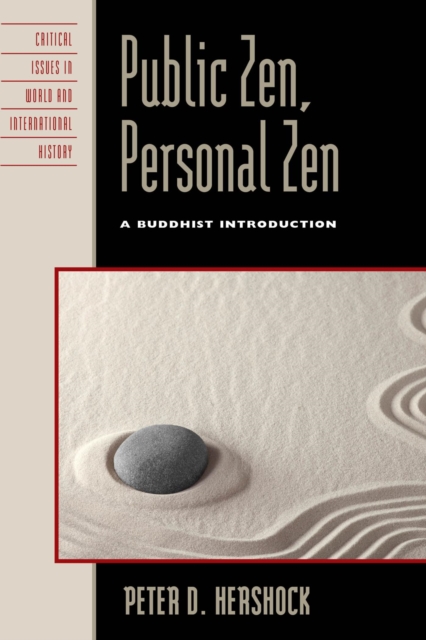
Among Buddhist traditions, Zen has been remarkably successful in garnering and sustaining interest outside the Buddhist homelands of Asia, and "e;zen"e; is now part of the global cultural lexicon.