Applying the ancient yet timeless 81 principles of Taoism to parenting, The Tao Of Parenting features instructive anecdotes from four families to demonstrate how Taoist teachings help parents raise good, healthy children.
Free-thinking Thomas Jefferson established the University of Virginia as a secular institution and stipulated that the University should not provide any instruction in religion.
Infamous for authoring two concepts since favored by government powers seeking license for ruthlessness-the utilitarian notion of privileging the greatest happiness for the most people and the panopticon-Jeremy Bentham is not commonly associated with political emancipation.
There is a constant drumbeat of commentary claiming that STEM subjects-science, technology, engineering, and math-are far more valuable in today's economy than traditional liberal arts courses such as philosophy or history.
Evangelical Gothic explores the bitter antagonism that prevailed between two defining institutions of nineteenth-century Britain: Evangelicalism and the popular novel.
Free-thinking Thomas Jefferson established the University of Virginia as a secular institution and stipulated that the University should not provide any instruction in religion.
From Zora Neale Hurston to Derek Walcott to Toni Morrison, New World black authors have written about African-derived religious traditions and spiritual practices.
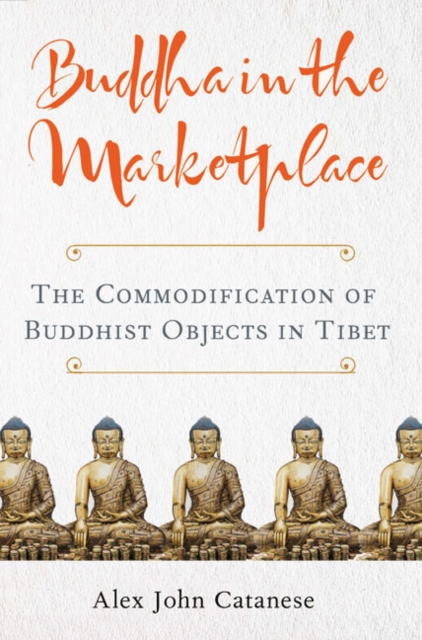
Classical Tibetan Buddhist scriptures forbid the selling of Buddhist objects, and yet there is today a thriving market for Buddhist statues, paintings, and texts.
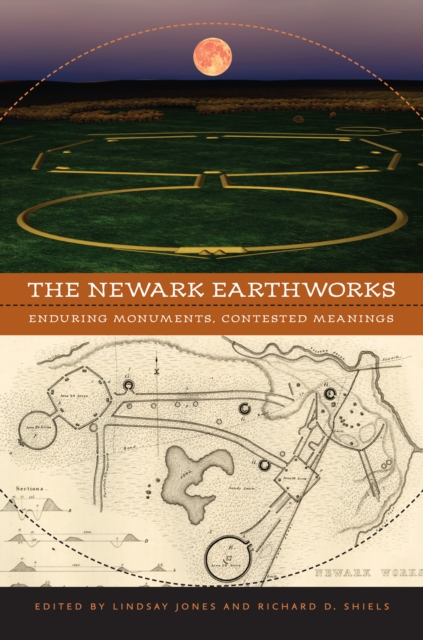
Considered a wonder of the ancient world, the Newark Earthworks-the gigantic geometrical mounds of earth built nearly two thousand years ago in the Ohio valley--have been a focal point for archaeologists and surveyors, researchers and scholars for almost two centuries.
In the first book to consider the study of world religion and world literature in concert, Zhange Ni proposes a new reading strategy that she calls "e;pagan criticism,"e; which she applies not only to late twentieth- and early twenty-first-century literary texts that engage the global resurgence of religion but also to the very concepts of religion and the secular.
Over the course of his distinguished interdisciplinary career, Giles Gunn has sustained his focus on the continuing threats to our collective sense of the human that seem to result from the link between the collision of fundamental values and the increase of systemic violence.
Originally developed by Alcoholics Anonymous, the Twelve Step program now provides life direction for the millions of people worldwide who are recovering from addiction and undergoing profound personal transformation.
"e;Christian philosophy"e; is commonly regarded as an oxymoron, philosophy being thought incompatible with the assumptions and conclusions required by religious faith.
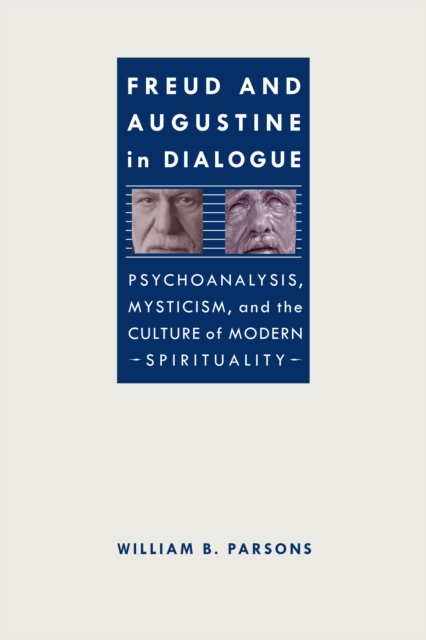
"e;It is arguably the case,"e; writes William Parsons, "e;that no two figures have had more influence on the course of Western introspective thought than Freud and Augustine.
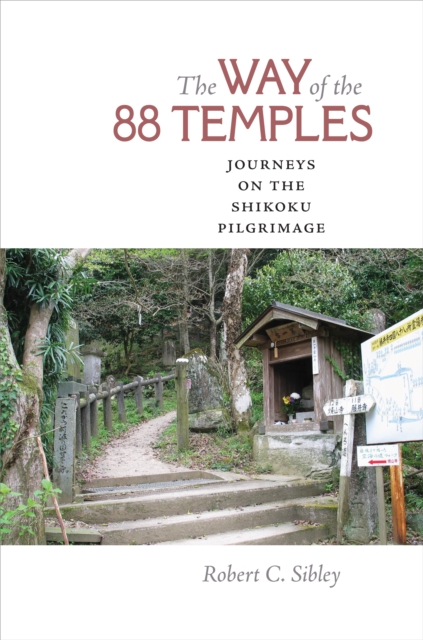
Compelled to seek something more than what modern society has to offer, Robert Sibley turned to an ancient setting for help in recovering what has been lost.
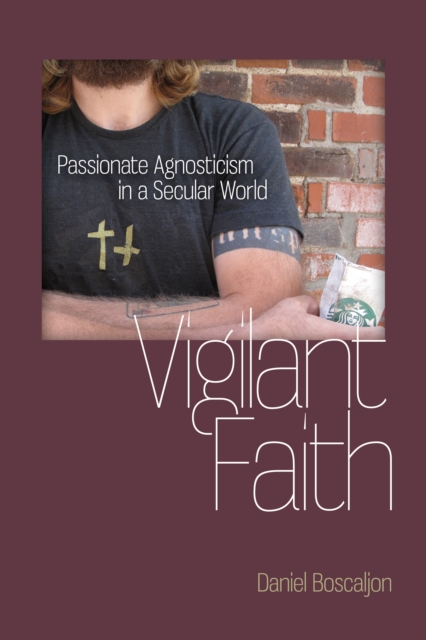
In Vigilant Faith: Passionate Agnosticism in a Secular World, Daniel Boscaljon takes up the contemporary challenges to faith by skepticism and secularism.
Within the familiar clash of religious conservatism and secular liberalism Paul Maltby finds a deeper discord: an antipathy between Christian fundamentalism and the postmodern culture of disenchantment.
Given its affinity with questions of identity, autobiography offers a way into the interior space between author and reader, especially when writers define themselves in terms of religion.
While the academic study of religion has increased almost exponentially in the past fifty years, general theories of religion have been in significant decline.
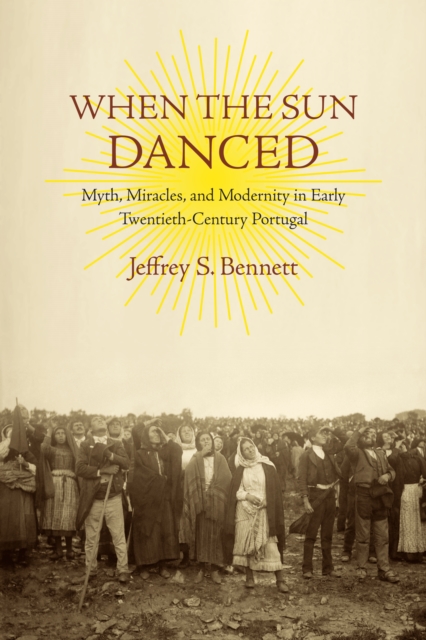
Between May and October of 1917, three young shepherds were reportedly visited six times by an apparition of the Virgin Mary near the town of Fatima in Portugal.
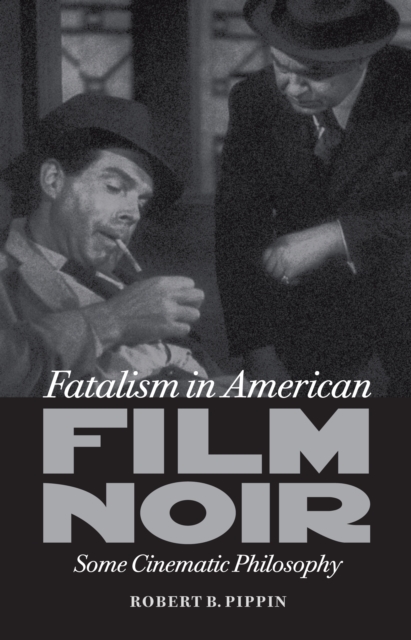
The crime melodramas of the 1940s known now as film noir shared many formal and thematic elements, from unusual camera angles and lighting to moral ambiguity and femmes fatales.
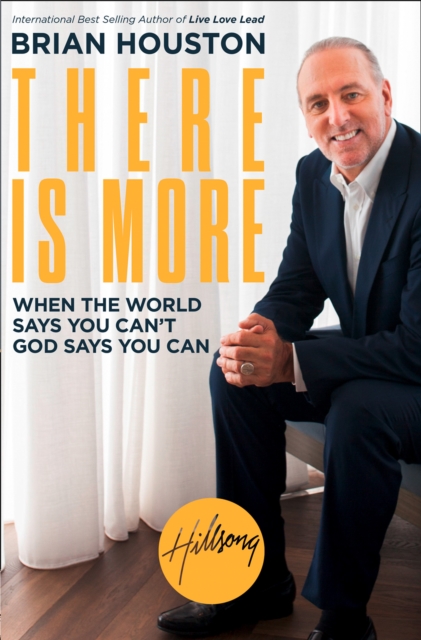
Founder and Global Senior Pastor of Hillsong Church and author of LIVE LOVE LEAD shows how, with God's power, you can believe and achieve a life that exceeds every earthly expectation.
In Vigilant Faith: Passionate Agnosticism in a Secular World, Daniel Boscaljon takes up the contemporary challenges to faith by skepticism and secularism.
"e;It is arguably the case,"e; writes William Parsons, "e;that no two figures have had more influence on the course of Western introspective thought than Freud and Augustine.
An Archaeology of Disbelief traces the origin of secular philosophy to pre-Socratic Greek philosophers who proposed a physical universe without supernatural intervention.
There is no universally accepted definition of moral damages, but the concept is usually understood in the context of torts that cause psychological harm to a person or a person's rights that are difficult to quantify.
In today's world, we are witnessing both the spread of a hopeful secular humanism and the persistence of cultural traditions that mindlessly glorify humans and are paving the path to environmental collapse.
In a culture firmly grounded in scientific thought, it has become common to think of "e;God"e; as the label we use for natural law, the creative, organizational forces in the universe, rather than as a great, omniscient Being.
In Three Mystics Walk into a Tavern, Jalal ad-Din Rumi, Moses de Leon, and Meister Eckhart-three of the greatest mystics of all time-meet in Venice for an imaginary night-long conversation that will inspire everyday individuals of the twenty-first century to find their own spirituality and realize that everyone can be a mystic.
The Continuing Legacy of Simone Weil analyzes the core work of Simone Weil and her views on the nature of the human condition, humanity's relationship with God, and the objective state of our world.
Re-Vision addresses four issues that lie at the crux of the relationship between science and religion-the origin of the cosmos and creation in Genesis; evolutionary theory and God's action in the world; genes and human freedom; and whether intelligent design is good science and/or good theology.