Hick addresses many of the major issues posing challenges to contemporary Christian belief, and offers his much-debated proposal for a Copernican revolution in our understanding of Christianity and the wider religious life of humanity.
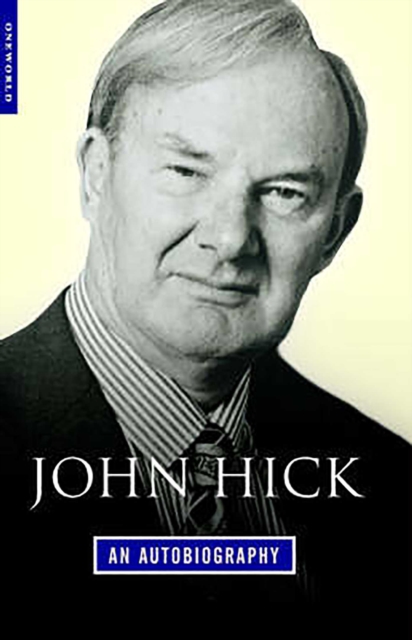
From Yorkshire schoolboy to philosopher and theologian of International renown, John Hick tells his life story in this warm and absorbing autobiography.
Available for the first time in the English language, this is a complete and annotated translation of a key work by the twelfth-century Muslim philosopher, Averroes (Ibn Rushd).
Blending scholarship with an original approach, this new introduction to Confucianism is an informative and intriguing guide to China's ancient philosophical tradition.
A brilliant and accessible rebuttal of The God Delusion from one of Christianity's most incisive thinkersIn this, his first new book since the best-selling God: A Guide for the Perplexed (Oneworld, 2002), Keith Ward turns his attention to the role - and the validity of religion over the centuries and in the world today.
From the Greek philosophers to the Postmodernist theories of Jacques Derrida and Richard Rorty, this authoritative survey encompasses over two thousand years of interaction between philosophical and religious thought.
An inspired and impassioned historical examination of humanity's search for the divineFrom Plato to Wittgenstein and religions from Judaism to the Hindu tradition, interspersed with divine influences from Classical Greece, Romantic poetry, and the occasional scene from 'Alien', ';God: A Guide for the Perplexed' charts the path of humanity's great spiritual odyssey: the search for God.
'What experience and history teaches us is that people and governments have never learned anything from history, or acted on principles deduced from it'What and how much I possess is a matter of indifference so far as rights are concerned'Education is the art of making man ethical'Without Hegel, modern thought is unthinkable - all those whose ideas have made the modern age have worked in his shadow.
Reiki: A Miraculous Journey into Holistic Healing takes the reader into an autobiographical journey of healing which anyone can embark on, and is especially meant for persons who have not been able to find answers for their health issues in traditional western medicine.
For 2000 years the Creator's language lay dormant; for all intents and purposes - a Dead Language, a by-word associated with the forlorn plight of a People without an identity.
As messengers of the Christ, it is our aim to add our portion of truth to all other portions, both ancient and modern, to other divine words of God that all mankind may be delivered from bondage forever, that mankind may know the laws of God our Father which has given us our being in the beginning that they may know the day of deliverance has come through the new dispensation and the return of Lord Jesus, The Christ now known as Sananda and his associates, known as The Princely Crowd, the Royal Assembly, The Great White Brotherhood, etc, to place before all peoples everywhere these portions of the Holy Scriptures, unadulterated, even as they have been entrusted unto us.
As messengers of the Christ, it is our aim to add our portion of truth to all other portions, both ancient and modern, to other divine words of God that all mankind may be delivered from bondage forever, that mankind may know the laws of God our Father which has given us our being in the beginning that they may know the day of deliverance has come through the new dispensation and the return of Lord Jesus, The Christ now known as Sananda and his associates, known as The Princely Crowd, the Royal Assembly, The Great White Brotherhood, etc, to place before all peoples everywhere these portions of the Holy Scriptures, unadulterated, even as they have been entrusted unto us.
As messengers of the Christ, it is our aim to add our portion of truth to all other portions, both ancient and modern, to other divine words of God that all mankind may be delivered from bondage forever, that mankind may know the laws of God our Father which has given us our being in the beginning that they may know the day of deliverance has come through the new dispensation and the return of Lord Jesus, The Christ now known as Sananda and his associates, known as The Princely Crowd, the Royal Assembly, The Great White Brotherhood, etc, to place before all peoples everywhere these portions of the Holy Scriptures, unadulterated, even as they have been entrusted unto us.
"e;108 The Story of Discovering Earth's Consciousness"e; is a nonfiction autobiographical book about how Eric Leo came to the conclusion that the planet Earth is conscious.
The problem of animal suffering is the atheistic argument that an all-knowing, all-powerful, and all-good God would not use millions of years of animal suffering, disease, and death to form a planet for human beings.
Breaking away from the centuries-long theological tradition, Dmitry Usenco offers a radically new--semiotic--reading of spirituality, proceeding on his original theory of the initial cultural unity that embraces language, technology, and religion.
The self-consciousness and human knowledge of Christ is a contemporary christological issue which seeks to understand the awareness that the God-man, Jesus Christ, possessed of himself during his life on earth.
James Friedman, a retired philosophy professor living in Houston, receives an invitation from a woman, identifying herself only as Shekhinah, who claims she was once God.