This book is about how the Holy Spirit told me to depict an abstract church in which Jesus is on a cloud passing out commune in his great mansion with many rooms.
There is no doubt that we who have answered the call to surrender our lives to God owe a huge debt of gratitude to church leaders who have, through the ages, obeyed the call to sacrifice their lives, sharing the message of the gospel, sometimes facing grave danger and even some losing their lives in the process.
The extraterrestrial presence in our universe and even that which is evident on our planet is becoming more and more of an accepted reality, as droves of evidence continues to mount in the form of government-released documents, amateur video, research, witness testimonies from citizens, the military, and more.
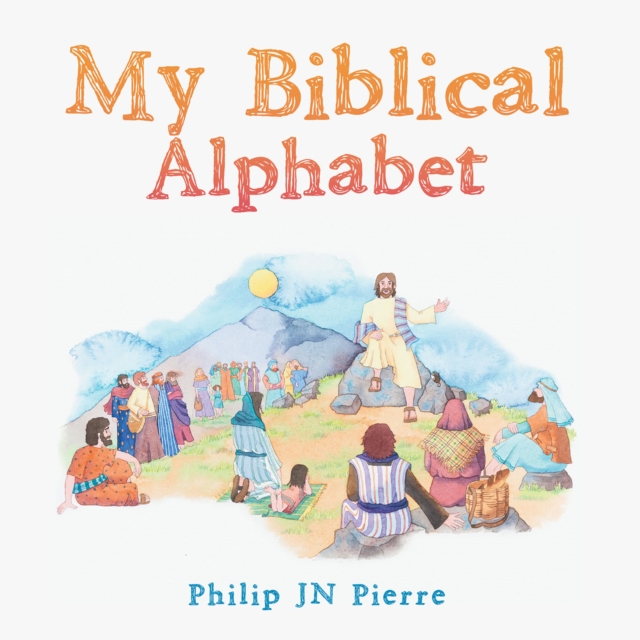
Biblical Alphabet is about finding any name or event in the Bible that begins with any letter of the alphabet and then compiling them in a way to have the twenty-six letters in the alphabet.
A fresh and more capacious reading of the Western religious tradition on nature and creation, Thinking Nature and the Nature of Thinking puts medieval Irish theologian John Scottus Eriugena (810-877) into conversation with American philosopher Ralph Waldo Emerson (1803-1882).
In this rich intellectual history of the French-Jewish philosopher Emmanuel Levinas's Talmudic lectures in Paris, Ethan Kleinberg addresses Levinas's Jewish life and its relation to his philosophical writings while making an argument for the role and importance of Levinas's Talmudic lessons.
Another Modernity is a rich study of the life and thought of Elia Benamozegh, a nineteenth-century rabbi and philosopher whose work profoundly influenced Christian-Jewish dialogue in twentieth-century Europe.
The Acts of the Apostles is a unique and crucial book that chronicles the story of God's grace flooding out to the world through the lives of the apostles in the decades immediately following Christ's ascension into heaven.
The Acts of the Apostles is a unique and crucial book that chronicles the story of God's grace flooding out to the world through the lives of the apostles in the decades immediately following Christ's ascension into heaven.
The Bible and Moral Injury offers an exploration (with case studies) of the interpretation of biblical texts, especially war-related narratives and ritual descriptions from the Old Testament, in conversation with research on the emerging notion of moral injury within psychology, military studies, philosophy, and ethics.
Following the Hebrew canon, the author offers a basic introduction, which includes critical issues such as authorship, unity, dates of composition and revision, and structure.
The Abingdon Old Testament Commentaries provide compact, critical commentaries on the books of the Old Testament for the use of theological students and pastors.
Sean Hannan offers a new interpretation of Augustine of Hippo's approach to temporality by contrasting it with contemporary accounts of time drawn from philosophy, political theology, and popular science.