For a serious book of philosophy, where better to begin to canvass various philosophical concepts and arguments than in relation to what is so familiar to every one of us -- the fact that we all have many and varied beliefs.
This book explores, in a manner that is readily accessible to those with little or no formal training in philosophy or theology, important questions concerning the rationality of belief in miracles.
This study puts the thought of Evagrius Ponticus, a fourth-century theologian, into dialogue with modern cognitive science in regard to the topic of evil, specifically moral evil.
The global world debates secularism, freedom of belief, faith-based norms, the state's arbitration of religious conflicts, and the place of the sacred in the public sphere.
With an interdisciplinary approach, Edwards utilizes literature, aesthetics, world religions, and continental philosophy as avenues into the theology of natural beauty.
As a global religion with growing numbers of expressions, Christianity calls for deepening relationships across traditions while also formulating collaborative visions.
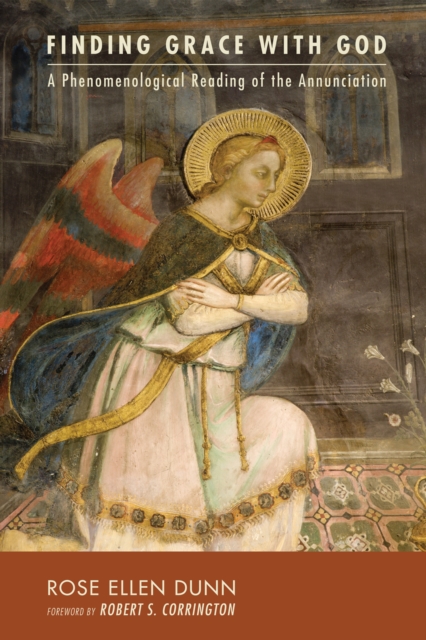
Finding Grace with God: A Phenomenological Reading of the Annunciation engages in an interweaving of phenomenology, mystical theology, and feminist philosophy to unfold a theopoetic interpretation of the narrative of the Annunciation in the Gospel of Luke.
Catherine Cornille, Boston CollegeDavid Tracy, University of Chicago Divinity SchoolWerner Jeanrond, University of GlasgowMarianne Moyaert, University of LeuvenJohn Maraldo, University of North FloridaReza Shah-Kazemi, Institute of Ismaili StudiesMalcolm David Eckel, Boston UniversityJoseph S.
Once upon a time, on grounds of both religion and common sense, people assumed that the earth was flat and that the sun literally rose and set each day.
The discussions about subject and validation in our late modernity tend to oscillate between the "e;weak"e; self of postmodernity ("e;empty"e; or "e;rhetorical"e;) and neo-Cartesian versions trying, as they do, to recover a discredited foundation.
Skepticism, Relativism, and Religious Knowledge examines the challenges of skepticism and relativism to religious knowledge after the demise of classical foundationalism.
Starting from both our originary experience of being given to ourselves and Jesus Christ's archetypal self-donation, Gift and the Unity of Being elucidates the sense in which gift is the form of being's unity, while unity itself constitutes the permanence of the gift of being.
"e;The totalitarian state clearly intends to eliminate all those forms of organic community that rival the absolute loyalty of the individual to the state.