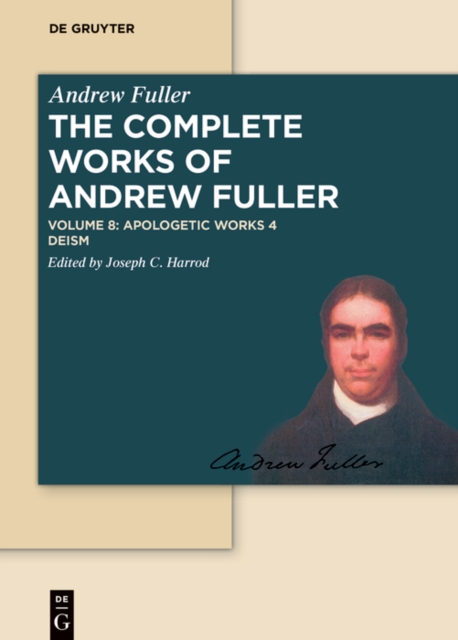
In The Gospel Its Own Witness (1799), Andrew Fuller not only engaged with Thomas Paine's attack on Christianity and on the reliability of the Bible, but also interacted with the philosophical position of a number of Enlightenment thinkers.
The book of Romans, penned by the apostle Paul and inspired by the Holy Spirit, is a two-thousand-year-old letter written to the church with the purpose of articulating God's enduring message of grace and glory.
A book of consolation and compassion, offering encouragement and hope from the PsalmsFor those who are made to endure betrayal, affliction, adversity and suffering, the Psalms can be a source of wisdom and comfort.
This book examines the translations of selected miracle stories from the Hebrew Bible, Septuagint (LXX) and the Greek New Testament into selected Ghanaian mother-tongues, considering possible shifts of meaning that occur in translating.
On Religion brings together David Hume's most penetrating reflections on belief, superstition, providence, miracles, and the limits of natural theology.
Los conceptos de Dios, la carne y el otro pertenecen sin lugar a dudas, y de manera ejemplar, al campo de la fenomenología contemporánea, pero encuentran en el Corpus de la filosofía patrística y medieval no solamente un lugar para enraizarse, sino también para renovarse.
Muhyiddin Ibn Arabi, a towering peak in its magnificent elegance, proud of its secrets, sciences and inspirations, a peak that is the greatest that the soaring imagination has reached in the fields of science, philosophy and religion, a peak whose owner has surrounded it with difficulties, hardships and exaggerations, until reaching it has become a kind of endless struggle, and the ascension has become harsh and exhausting even for the mighty of the wings.
Pontius Pilatus, eine schillernde Persönlichkeit in der frühjüdischen und frühchristlichen Literatur mit enormer Wirkung bis in die Gegenwart, ist Thema dieser Geburtstagsgabe für Martin Stowasser.
The book of 1 Corinthians was written to believers in the city of Corinth, where God sent the apostle Paul to establish a church for people who desperately needed love and truth.
An examination of MT Esther's relationship to the Joseph story, this study employs recent advances in author-oriented biblical intertextuality to address the debate concerning the religious purpose of the Scroll.
In The Varieties of Religious Experience, William James examines religion not as doctrine or institution, but as lived experience: conversion, saintliness, mysticism, prayer, melancholy, and the divided self.
This commentary offers the reader a set of letters (or letter parts) written by Cicero, Paul, and Seneca, which have been selected against the Transformational Leadership categories of 'idealised influence', 'inspirational motivation', 'intellectual stimulation', and 'individualised consideration'.