Brimming with lavish, full-color photos and graphics, the Zondervan Illustrated Bible Backgrounds Commentary walks you verse by verse through all the books of the New Testament.
Brimming with lavish, full-color photos and graphics, the Zondervan Illustrated Bible Backgrounds Commentary walks you verse by verse through all the books of the New Testament.
Brimming with lavish, full-color photos and graphics, the Zondervan Illustrated Bible Backgrounds Commentary walks you verse by verse through all the books of the New Testament.
Brimming with lavish, full-color photos and graphics, the Zondervan Illustrated Bible Backgrounds Commentary walks you verse by verse through all the books of the New Testament.
Discover: How the springs at Hierapolis help us understand why Jesus described the church at Laodicea as ';lukewarm' The background and circumstances of certificates of divorce in Judaism How Jewish dietary laws provided a powerful metaphor for God's acceptance of the Gentiles Brimming with photos and graphics, the Zondervan Illustrated Bible Backgrounds Commentary walks you verse by verse through all the books of the New Testament.
Discover: How the springs at Hierapolis help us understand why Jesus described the church at Laodicea as ';lukewarm' The background and circumstances of certificates of divorce in Judaism How Jewish dietary laws provided a powerful metaphor for God's acceptance of the Gentiles Brimming with photos and graphics, the Zondervan Illustrated Bible Backgrounds Commentary walks you verse by verse through all the books of the New Testament.
This unique book is an exploration of Christianity alongside Jewish guides who are well-studied in and sympathetic to Christianity, but who remain "e;near Christianity.
Grounded in carefully selected Scripture, Believe, KJV is a unique spiritual growth experience that takes you on a journey to think, act, and be more like Jesus.
The NIV Once A Day Bible for Women combines helpful summary information before each reading with application questions after each reading to deliver the most satisfying daily reading plan ever.
Believing Philosophy introduces Christians to philosophy and the tools it provides believers, helping them understand, articulate, and defend their faith in an age of unbelief.
An accessible introduction to Christian philosophical theologyPhilosophical or analytic theology seeks to employ philosophical tools while studying topics in Christian theology and examining the logical consistency or intelligibility of some of the key doctrines of the Christian faith.
Professor Tudor Parfitt, a real-life British Indiana Jones, has made the biggest discovery of the last 3,000 years - the secret location of the fabled Ark of the Covenant.
An intimate, philosophic quest for eternity, amidst the disenchantments and disappointments of our time"e;In this deceptively quiet and self-effacing book, Anthony Kronman makes an audacious argument: the most important things in our lives make sense only if we believe the world is divine.
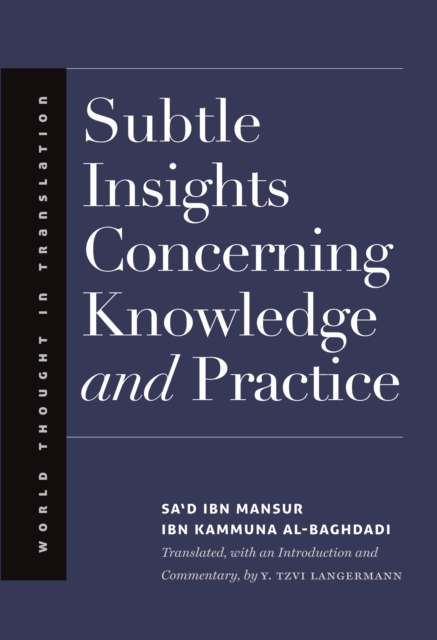
Surprisingly modern essays on the unity of all monotheistic regimens by a medieval philosopher Written in the mid-thirteenth century for the newly appointed governor of Isfahan, this compact treatise and philosophical guidebook includes a wide-ranging and accessible set of essays on ethics, psychology, political philosophy, and the unity of God.