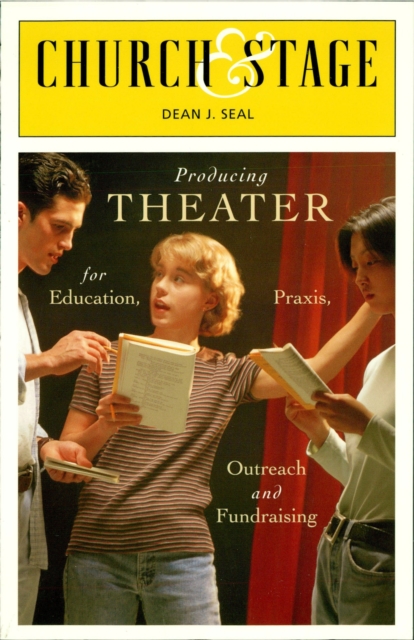
Church and Stage is a guide for people in churches who want to employ theater in ministry, and for theater people who want to create opportunities to work in churches.
In this thoughtful and timely book, Bishop Alexander explores his journey through the theological, scriptural, and pastoral aspects of the questions surrounding homosexuality and the Christian faith.
Although Mary is a preeminent figure in Christianity and one of the most celebrated women in history, to many Christians she seems distant and unapproachable, a porcelain perfection of abstract motherhood that is irrelevant to their everyday existence.
Many Americans wish to believe that the United States, founded in religious tolerance, has gradually and naturally established a secular public sphere that is equally tolerant of all religions--or none.
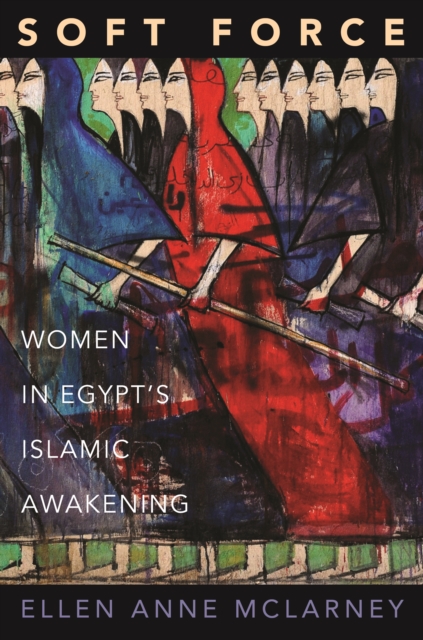
The unheralded contribution of women to Egypt's Islamist movement-and how they talk about women's rights in Islamic termsIn the decades leading up to the Arab Spring in 2011, when Hosni Mubarak's authoritarian regime was swept from power in Egypt, Muslim women took a leading role in developing a robust Islamist presence in the country's public sphere.
Margaret Bullitt-Jonas not only takes us to the foot of the cross of Jesus, she invites us to consider the breadth of Christ's healing, saving love for us, for those we love, and for the whole creation.
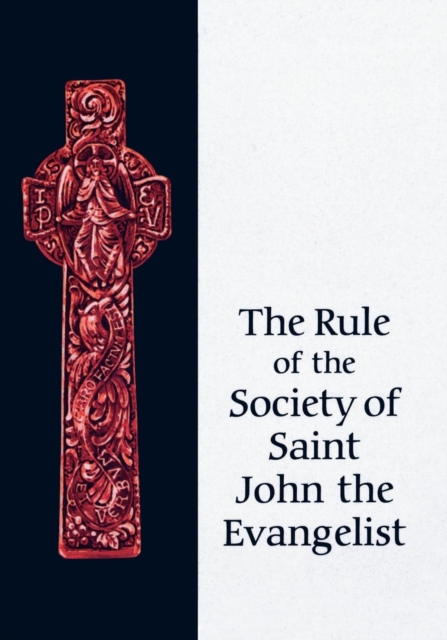
Christians of all denominations are looking today to the ancient discipline of a rule of life to strengthen their sense of living in Christ and participating in a wider community.
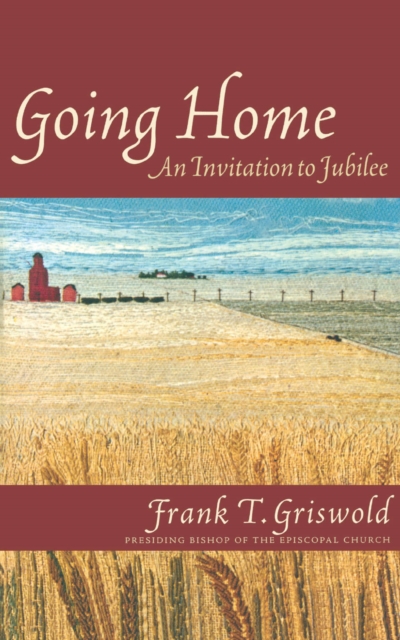
"e;The concept of jubilee has its roots,"e; notes Nancy Roth in her foreword, "e;in the idea of sabbath-a time of 're-creation, reordering, and release.
Organized by subject, this is a collection of teachings and quotations from the Talmud, the Bible, rabbinical commentaries, and ancient and modern religious and secular writings.
While the Arab Uprisings presented new opportunities for the empowerment of women, the sidelining of women remains a constant risk in the post-revolutionist MENA countries.
This volume argues that theistic philosophy should be seen not as an "e;armchair"e; enterprise but rather as a critical endeavor to bring philosophy of religion into close contact with emerging sciences of religion.
The book considers some of the solutions proposed by Muslim activists and thinkers in their attempts to renew (tajdid) their ways of life and thought in accord with the demands of the age in which they lived.
Providing an expansive view of the making and meaning of African American conservatism, this volume examines the phenomenon in four spheres: the political realm, the academic world, the black church, and grass-roots activism movements.
This book examines the manner in which the Haram al-Sharif/Temple Mount has been appropriated by both Palestinians and Israelis as a nationalist symbol legitimizing respective claims to the land.
This book examines the unintended consequences of top-down reforms in Iran, analysing how the Iranian reformist governments (1997-2005) sought to utilise gradual reforms to control independent activism, and how citizens responded to such a disciplinary action.
This book addresses the discourses, agendas and actions of Muslim faith-based organizations and activists to empower Muslim communities in contemporary sub-Saharan Africa.
Situated within the wider post-secular turn in politics and international relations, this volume focuses not on religion per se, but rather explicitly on theology.
This book brings together theories of world society with poststructuralist and postcolonial work on modern subjectivity to understand the universalising and particularising processes of globalisation.
This volume examines the role and function of religious-based organizations in strengthening associational life in a representative sample of West European countries: newly democratized and long-established democracies, societies with and without a dominant religious tradition, and welfare states with different levels and types of state-provided social services.
This book discusses the threats and challenges facing the Persian Gulf and the future security in the region, providing an overview of the major regional and extra-regional actors in Gulf security.
Why the pursuit of state recognition by seemingly marginal religious groups in Egypt and elsewhere is a devotional practiceOver the past decade alone, religious communities around the world have demanded state recognition, exemption, accommodation, or protection.
Seit dem Übergang zur Demokratie in Tunesien scheint der Konflikt zwischen der islamistischen Ennahda und den nichtislamistischen Parteien das Parteiensystem zu strukturieren, dennoch besteht Uneinigkeit über den Konfliktgegenstand.
This book poses a radical challenge to the legend of Socrates bequeathed by Plato and echoed by scholars through the ages: that Socrates was an innocent sage convicted and sentenced to death by the democratic mob, for merely questioning the political and religious ideas of his time.
This book shows how an encounter with everyday nationhood in the northern United Arab Emirates can make us revisit the classics of sociology as continuous analytical world-views.
This book uses original research and interviews to consider the views of contemporary members of the Orange Order in Canada, including their sense of political and societal purpose, awareness of the decline of influence, views on their present circumstances, and hopes for the future of Orangeism in Canada.
Populisten wie Donald Trump, Viktor Orbán oder Jair Bolsonaro verändern die Weltpolitik und stellen etablierte institutionelle Verfahrensweisen in Frage.
This edited volume explores the Israeli-Turkish relations in the 2000s from a multi-dimensional perspective providing a comparative analysis on the subjects of politics, ideology, civil society, identity, energy, and economic relations.