This book consists of two lectures delivered by the author at Trinity College, Dublin: the first deals with Aprahat, the Persian sage, and the second with Bardaisan and the Acts of Judas Thomas.
This volume, intended for general readers, covers the history and characteristics of the Maronite Church from its earliest times to the end of the nineteenth century.
Ghattas Maqdisi Elias, "e;Malphono Denho,"e; was perhaps the greatest Syriac poet of the twentieth century and a major figure in the Syriac literary revival which took place then.
This volume presents a summary catechism in Arabic for young students and includes a number of prayers and an overview of Christian beliefs, duties, and means of sanctification.
This volume contains the Syriac version, with English translation and copious literary and historical notes, of Eusebius's small book on the martyrs of Palestine, edited from a Syriac manuscript dated to 411.
This book provides Islamic psychology practitioners a framework on integrating evidence-based approaches of spiritual interventions based on Islamic jurisprudence (Shari'ah with therapy).
Khayyath, Chaldean archbishop of Amid, here explores the literary testimonies of writers in Syriac and Arabic from the Church of the East on the question of the primacy of the Roman pontiff.
This short volume, originally printed at the Dominican Press in Mosul, is an Arabic collection of 173 canons and served as a convenient guide for Catholic priests in Mosul and the surrounding areas.
This volume contains the Syriac text of one of Dionysius bar Salibi's polemical writings, that against the Jews, based on a manuscript now located at the Harvard Semitic Museum.
Israel and the Rise of the Global Domain: Interpreting Jewish Existence offers the first comprehensive theoretical framework for understanding Jewish existence through the lens of spatial paradigms within the global epoch, drawing upon innovative interpretive methods across political science, philosophy, and mysticism.
A foundational collection of texts for the study of eastern (and western) liturgy, Assemani's Codex Liturgicus Ecclesiae Universae, in twelve volumes, contains texts in Latin, Greek, Coptic, Arabic, and Syriac; the non-Latin texts have translations into that language.
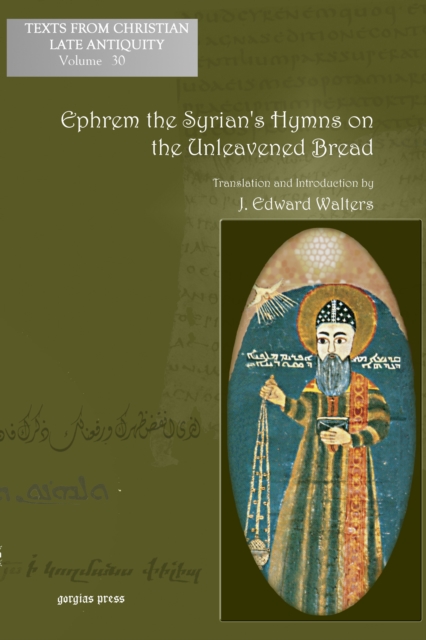
In this set of homilies Ephrem (306-373) invites the reader into a world of symbolic interpretation filled with imagination brimming beneath the surface of word-plays, alliteration, and typological comparisons.
Joseph Hubeika (1878-1944) here presents the Syriac text and Arabic translation of a long work on the priesthood attributed to Yuhanon Maron, but in fact from the hand of John of Dara.
The Monumenta Syriaca set contains a variety of Syriac texts, including biographical fragments on Roman popes, several exegetical texts, and homilies, by authors such as Ephrem, Jacob of Sarug, John of Dalyatha, Isaac of Nineveh, and others.
The present volume contains an annotated Latin translation of the collection of saints' lives and fragments of the Ecclesiastical History of John of Ephesus, prefaced by a lengthly list of emendations to the Syriac text.
This reprint of Sukenik's article "e;The Earliest Records of Christianity"e; is presented as the first volume of Gorgias Press's Analecta Gorgiana series with a new introduction by George Anton Kiraz.
This volume presents the text of one of the most important historical works of the Syriac tradition: the world history of Gregory Bar Hebraeus, which attempts to provide a history of the world from Adam until Bar Hebraeus' own lifetime.
In the present volume, Sebastian Brock provides an introduction and overview of the unique themes and features of spirituality in the Syriac tradition and includes excerpts from various texts throughout the Syriac tradition that exhibit these features.