This volume attempts to put the clergy in the context of the issues and debates of the nineteenth century, treating the social history of the clergy, the repeated attempts to reform it, and the impact of these reforms on the structure and outlook of rank-and file parish clergy.
This volume is a critical exploration of cross-cultural Bible film reception presented through an analysis of the responses of UK and South African audiences to The Lumo Project: The Gospel of Mark (2014) and Son of Man (2006).
This volume is a critical exploration of cross-cultural Bible film reception presented through an analysis of the responses of UK and South African audiences to The Lumo Project: The Gospel of Mark (2014) and Son of Man (2006).
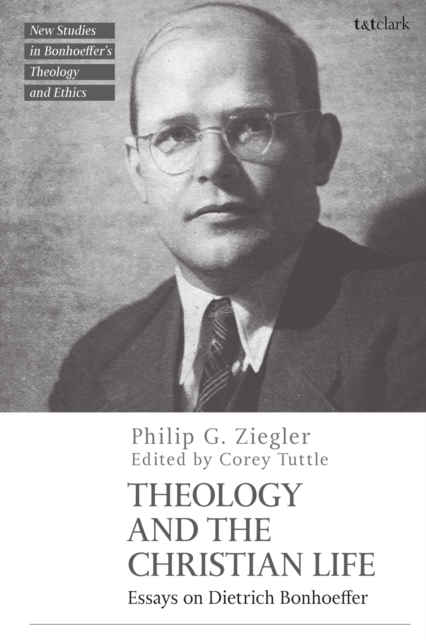
Written by a diverse and global group of scholars with expertise in Bonhoeffer's theology and ethics, this volume demonstrates and interrogates Bonhoeffer's focus on and contribution to the ethics of everyday life.
Across seven weeks, readers will walk through one of the most practical and transformative books of the New Testament, discovering that spiritual growth isn't about striving harder but allowing God's Word to shape every part of your life.
Calvin's eucharistic doctrine has been approached in the past from the standpoint of his polemic with the Lutherans and the Zwinglians, but Father McDonnell believes that Calvin's primary position was determined by his rejection of Roman Catholicism.
This book provides a comprehensive collective biography of the parish priests in one diocese--their origins, education, and careers: their relationship with their parishioners; and the process by which they were politicized prior to 1789.
Ambitiously undertaking to develop a strategy for making the study of religion "e;scientific,"e; Ninian Smart tackles a set of interrelated issues that bear importantly on the status of religion as an academic discipline.
Extracted from Pacifism in the United States, this work focuses on the significant contribution of the Quakers to the history of pacifism in the United States.
O for a Heart to Praise My God: Hymns of Charles Wesley and Scriptural Liturgies-202 Charles Wesley hymns, sixteen prayers, selected psalter, and selected liturgies and rituals.
The author examines the logical structure of religious inquiry and discourse and the various meanings of religious utterances, and then develops principles of judgment and types of argument by which claims can be supported or challenged.
Most commentators imagine contemporary China to be monolithic, atheistic, and materialist, and wholly divorced from its earlier customs, but Kenneth Dean combines evidence from historical texts and extensive fieldwork to reveal an entirely different picture.
Church leaders today face an urgent challenge: how to connect with a diverse world that is increasingly distant and disconnected from our existing forms of church.
In a post-truth world that celebrates relativism, diversity, and change, the Bible's core message is revolutionary: "e;Hear, O Israel: The Lord our God, the Lord is one"e; (Deut.
In a post-truth world that celebrates relativism, diversity, and change, the Bible's core message is revolutionary: "e;Hear, O Israel: The Lord our God, the Lord is one"e; (Deut.
The author discusses the role of French Catholicism in the internal and foreign affairs of modern France, with a detailed examination of French Catholic groups and their effect on temporal life.
The author examines the role played by Syrian Christians in accelerating the forces of change in Muslim society at two junctures: the formative phase of Islamic civilization and the Ottoman collapse.
Offering a series of studies on key aspects of the Bonhoeffer's theology, this book emphasizes the biblical texture and dogmatic depth of his work and its continuing legacy.
In Part I of Christianity and History, the author asks whether the committed Christian should be more conscious than the uncommitted of some meaning in history.
Under three successive Islamic dynasties--the Fatimids, the Ayyubids, and the Mamluks--the Egyptian Office of the Head of the Jews (also known as the Nagid) became the most powerful representative of medieval Jewish autonomy in the Islamic world.