Asim Roy argues that Islam in Bengal was not a corruption of the "e;real"e; Middle Eastern Islam, as nineteenth-century reformers claimed, but a valid historical religion developed in an area totally different from the Middle East.
Anthropologist David Jordan and Daniel Overmyer, a historian of religions, present a joint analysis of the most important group of sectarian religious societies in contemporary Taiwan: those that engage in automatic writing seances, or worship by means of the phoenix"e; writing implement.
Moving beyond earlier explanations of why the Protestant church opposed the Weimar Republic, David Diephouse emphasizes the social role of the church rather than its direct political activity.
Claudia Brodsky skillfully combines close readings of narrative works by Goethe, Austen, Balzac, Stendhal, Melville, and Proust with a detailed analysis of the relation between Kant's critical epistemology and narrative theory.
When Philip Sidney defends poetry by defending the methods used by poets and lawyers alike, he relies on the traditional association between fiction and legal procedure--an association that begins with Aristotle.
The two studies, "e;Indivisible Magnitudes,"e; and "e;Aristotle and Epicurus on Voluntary Action,"e; explain two doctrines in the philosophy of Epicurus, first by a detailed examination of the ancient Greek and Latin texts which describe them, and second by showing how earlier Greek philosophy gave rise to the problems Epicurus tackled.
Philosophers have often bluntly said, and more often tacitly assumed that careful and reasonable men will confine themselves to two very rigid ways of talking.
The contributors to this volume range over 2,000 years of history as they show how Confucian values spread throughout the region in premodern times and how these values were transformed in an age of modernization.
This book offers a comprehensive synthesis of research on the ethics, epistemology, governance, and policies related to artificial intelligence (AI) and its adjacent technologies.
This book offers a comprehensive synthesis of research on the ethics, epistemology, governance, and policies related to artificial intelligence (AI) and its adjacent technologies.
This edited anthology critically engages with the intersection of feminism, politics, and popular culture, with an emphasis on how shifts in cultural discourse have shaped the perception, understanding, and practice of feminist thought in contemporary society.
This monograph tackles Marshall McLuhan's relationship with Jacques Maritain and Étienne Gilson and, thanks to unpublished letters, essays and interviews, accredits a hypothesis that, until now, has found little support in the academic community.
In her study of medieval Chinese lay practices and beliefs, Valerie Hansen argues that social and economic developments underlay religious changes in the Southern Song.
Building on concepts developed in his previously published New Theory of Beauty, Guy Sircello constructs a bold and provocative theory of love in which the objects of love are the qualities that "e;bear"e; beauty and the pleasure of all love is "e;erotic,"e; without being "e;sexual.
This book confronts one of the defining challenges of super-aged societies: the surging number of older adults living alone in Japan, the global leader in population aging.
Text as Revelation analyses the shift of revelatory experiences from oral to written that is described in ancient Jewish literature, including rabbinic texts.
This book develops a pluralistic political theory that reinterprets John Rawls’s proviso as a framework of justification capable of sustaining legitimacy amid deep reasonable pluralism and the rise of artificial intelligence.
The book of Psalms contains many types of prayers-from praise, to pleas, to thanksgiving-that give voice to the joys, complexities, and challenges of the life of faith.
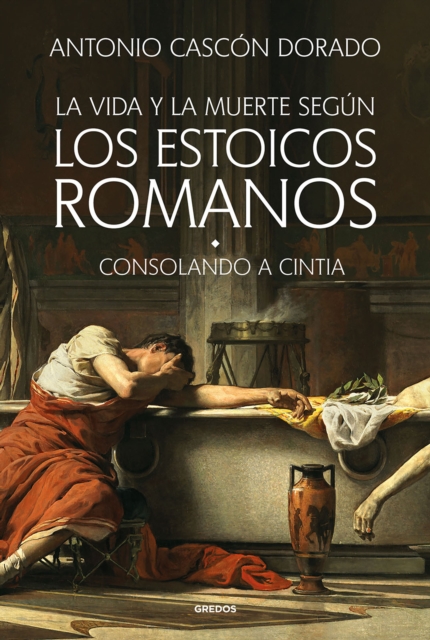
CÓMO ENTENDER HOY UNA FILOSOFÍA MILENARIA, JUSTA, COMPRENSIVA Y ALENTADORATomando como punto de partida el género latino de la consolatio, Antonio Cascón Dorado nos propone acercarnos al estoicismo romano y, en concreto, a la forma de afrontar la muerte y la pérdida de un ser querido.