This publication presents information about VAT/GST and excise duty rates in OECD member countries as well as information about indirect tax topics such as international aspects of VAT development and application of VAT to small and medium-size enterprises.
This 2009 edition of OECD's periodic survey of Iceland's economy examines the impact of the financial crisis and makes recommendation on how it should be managed.
This 2009 edition of OECD's periodic survey of Belgium explores how Belgium should cope with the economic crisis and includes chapters on securing fiscal sustainability, improving fiscal federalism, reforming the tax system, and promoting competition.
The French economy has not escaped the severe recession gripping all developed countries, but it should be less deep than elsewhere due to powerful automatic stabilisers.
This 2009 edition of OECD's periodic survey of Slovenia's economy includes chapters discussing restoring a sustainable growth path within the Monetary Union, restoring public finances on a sustainable path and improving efficiency, improving the functioning of the labour market, and enhancing the business environment to foster productivity growth.
This edition of OECD's periodic survey of the Euro Area economy finds a slowing economy, receding inflationary pressures and financial market turmoil The survey focuses of key challenges being faced including financial market stability, fiscal policy, and financial integration, innovation and the monetary policy transmission mechanism.
This Investment Policy Review of China 2008 reviews Chinese government efforts to encourage responsible business conduct against the backdrop of recent regulatory changes and China's increasing outward investment.
This publication highlights key outcomes of the work of the MENA-OECD Investment Programme from 2005-2007, including reforms achieved to date in investment policies and promotion, corporate governance, financial-sector development, and tax policies.
Data on government sector receipts, and on taxes in particular, are basic inputs to most structural economic descriptions and economic analyses and are increasingly used in international comparisons.
This joint OECD and World Bank review gives a brief overview of post-secondary education in Chile and describes its development over the past twenty years.
The 2009 edition of this publication provides comprehensive data on the volume, origin and types of aid and other resource flows to around 150 developing countries for the period 2003-2007.
This comprehensive review of Turkey's health care system shows that health status has improved rapidly in Turkey in recent decades, partly as a result of higher health spending.
The 2005 Paris Declaration on Aid Effectiveness defines the principles and commitments by which donors and developing countries intend to ensure that aid is as effective as possible in contributing to the Millennium Development Goals and other internationally agreed development objectives.
In a world which is already characterised by significant international migration of health workers, OECD countries face a challenge in responding to the growing demand for doctors and nurses over the next 20 years.
Governments in many OECD countries, as well as in a number of countries outside the OECD area, actively promote the production and use of alternative transport fuels made from agricultural commodities.
Too many workers leave the labour market permanently due to health problems, and yet too many people with a disabling condition are denied the opportunity to work.
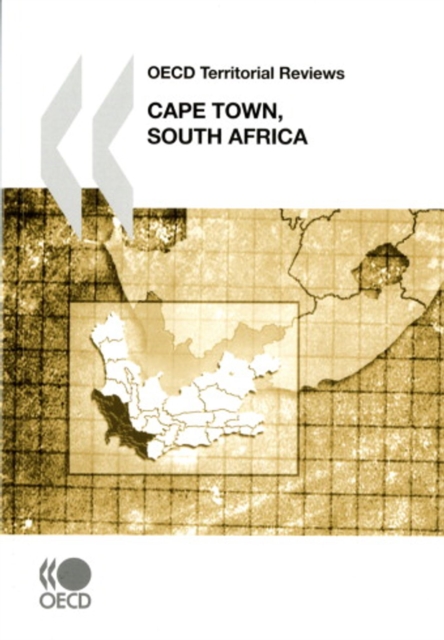
The Cape Town city-region, which is the second-largest area in South Africa (4 million inhabitants), reflects the national challenge of creating new economic opportunities while correcting past inequities.
Although Poland has managed to maintain high growth levels since the mid-1990s, with the second-best performance in the OECD in 2006-07, territorial disparities are persistent and rising, especially between large urban areas and rural ones.
Improving the performance of youth on the labour market is a crucial challenge in many OECD countries and first experiences on the labour market have a profound influence on later working life.
This edition of OECD's periodic review of Turkey's environmental policy finds that Turkey has achieved consolidation of environmental progress and its environmental legislation is increasingly incorporating the EU environmental aquis.
A comprehensive review of the Dutch tertiary education system, covering governance, resourcing, access and equity, research and innovation, connections with the labour market, quality assurance and enhancement and the international dimension.
Reducing the time for registering a company from weeks and months to under one hour is a concrete result of a unique and ambitious initiative in Portugal to make the public sector more efficient and effective.
This 2008 edition of OECD's periodic survey of the United States economy examines key economic challenges the US will face in the coming years including the financial crisis and health care reform.
To match the global demand and supply of innovation, businesses increasingly internationalise their innovation activities while opening their innovation process by collaborating with external partners (e.
Poland has been catching up with the rest of the OECD more quickly in the past two years, but the short-term outlook is clouded by strong excess demand pressures and rising inflation.
This new biennial publication presents the latest available information on 26 major current trends in education, grouped in 9 broad themes (ageing, global challenges, the new economic landscape, work and jobs, the learning society, ICT, citizenship and the state, social connections and values, and sustainable affluence).
This book provides a thorough international investigation of tertiary education policy across its many facets - governance, funding, quality assurance, equity, research and innovation, academic career, links to the labour market and internationalisation.
Countries today face numerous environmental policy challenges, such as climate change, air and water pollution, natural-resource management, natural disasters and environment-related hazards.
This 2008 edition of OECD's periodic survey of Sweden's economy addresses key economic challenges being faced in Sweden including the current economic crisis and fiscal policy, tax reform, education and easing impediments to youth employment, and the next phase of privatisation.
This publication explores the success of major innovation and entrepreneurship clusters in OECD countries, the challenges they now face in sustaining their positions and the lessons for other places seeking to build successful clusters.
This 2008 edition of OECD's periodic survey of Luxembourg's economy focuses on key challenges being faced including whether the financial sector can continue being the main growth engine, adapting fiscal policies to slower tax revenues, enhancing efficiency in health care, and increasing student abilities by giving schools more autonomy.
Taxing Wages provides unique information on income tax paid by workers and social security contributions levied on employees and their employers in OECD countries.
The competition to stage major global events - such as OIympic Games, EXPOs, cultural festivals, and political summits - is more intense than ever before.
Faced with high population density, close proximity of urban areas and urban-rural linkages, rural areas in the Netherlands have witnessed a gradual disappearance of characteristically rural landscapes and a deterioration of biodiversity.