Why have South-East Asian countries like Malaysia, Indonesia and Vietnam been so successful in reducing levels of absolute poverty, while in African countries like Kenya, Nigeria and Tanzania, despite recent economic growth, most people are still almost as poor as they were half a century ago?
'It is my thesis that this general production of life, or subsistence production - mainly performed through the non-wage labour of women and other non-wage labourers as slaves, contract workers and peasants in the colonies - constitutes the perennial basis upon which "e;capitalist productive labour"e; can be built up and exploited.
'It is my thesis that this general production of life, or subsistence production - mainly performed through the non-wage labour of women and other non-wage labourers as slaves, contract workers and peasants in the colonies - constitutes the perennial basis upon which "e;capitalist productive labour"e; can be built up and exploited.
The Democratic Republic of Congo has the natural resources the world needs it is crucial to satisfying our craving for the latest high-tech gadgets; the Inga Dam could light up all of Africa; while Congo's farmers could feed a billion people.
The Democratic Republic of Congo has the natural resources the world needs it is crucial to satisfying our craving for the latest high-tech gadgets; the Inga Dam could light up all of Africa; while Congo's farmers could feed a billion people.
When viewed from the perspective of those who suffer the consequences of repressive approaches to public security, it is often difficult to distinguish state agents from criminals.
When viewed from the perspective of those who suffer the consequences of repressive approaches to public security, it is often difficult to distinguish state agents from criminals.
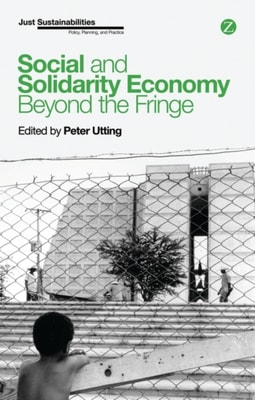
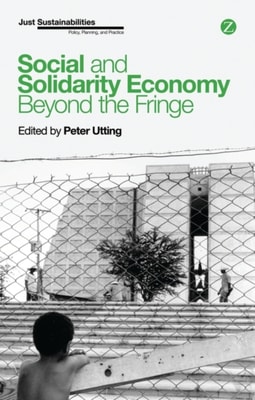
As economic crises, growing inequality and climate change prompt a global debate on the meaning and trajectory of development, increasing attention is focusing on 'social and solidarity economy' as a distinctive approach to sustainable and rights-based development.
As economic crises, growing inequality and climate change prompt a global debate on the meaning and trajectory of development, increasing attention is focusing on 'social and solidarity economy' as a distinctive approach to sustainable and rights-based development.
In the global North the commoditization of creativity and knowledge under the banner of a creative economy is being posed as the post-industrial answer to dependency on labour and natural resources.
In the global North the commoditization of creativity and knowledge under the banner of a creative economy is being posed as the post-industrial answer to dependency on labour and natural resources.
At a time when the gigantic transnationals have a huge impact on human health, the environment, working conditions and the economic prospects of nations, this book explores whether it is sufficient to continue to rely on industry self-regulation alone.
At a time when the gigantic transnationals have a huge impact on human health, the environment, working conditions and the economic prospects of nations, this book explores whether it is sufficient to continue to rely on industry self-regulation alone.
Post-war democratization has been identified as a crucial mechanism to build peace in war-ridden societies, supposedly allowing belligerents to compete through ballots rather than bullets.
Post-war democratization has been identified as a crucial mechanism to build peace in war-ridden societies, supposedly allowing belligerents to compete through ballots rather than bullets.
The Third Assessment Report of the Intergovernmental Panel on Climate Change (IPCC) has presented strong evidence that human-induced climate change is occurring and that all countries of the world will be affected and need to adapt to impacts.
Drawing on ethnographic fieldwork within the World Bank and a Ugandan ministry, this book critically examines how the new aid architecture recasts aid relations as a partnership.
In recent years, scholars in the fields of refugee studies and forced migration have extended their areas of interest and research into the phenomenon of displacement, human response to it, and ways to intervene to assist those affected, increasingly focusing on the emotional and social impact of displacement on refugees and their adjustment to the traumatic experiences.
By adopting ideas like development, members of a Papua New Guinean community find themselves continuously negotiating what can be expected of a relative or a community member.
The Bedouin in the Negev region have undergone a remarkable change of life style in the course of the 20th century: within a few generations they changed from being nomads to an almost sedentary and highly educated population.
Whereas most of the literature on migration focuses on individuals and their families, this book studies the organizations created by immigrants to protect themselves in their receiving states.
Of the estimated 12 million refugees in the world, more than 7 million have been confined to camps, effectively "e;warehoused,"e; in some cases, for 10 years or more.
Based on eighteen months of field research conducted in exile carpet factories, settlement camps, monasteries, and schools in the Kathmandu Valley of Nepal, as well as in Dharamsala, India and Lhasa, Tibet, this book offers an important contribution to the debate on the impact of international assistance on migrant communities.
Based on fieldwork largely collected during the CPA interim period by Sudanese and European researchers, this volume sheds light on the dynamics of change and the relationship between microscale and macroscale processes which took place in Sudan between the 1980s and the independence of South Sudan in 2011.
Like many other indigenous groups, the Huaorani of eastern Ecuador are facing many challenges as they attempt to confront the globalization of capitalism in the 21st century.
In an age of heightened awareness of the threat that western industrialized societies pose to the environment, hunters and gatherers attract particularly strong interest because they occupy the ecological niches that are constantly eroded.
Examines the increasing significance of the volunteer and volunteerism in African societies, and their societal impact within precarious economies in a period of massive unemployment and faltering trajectories of social mobility.
The focus of this book is the processes through which industries and regions grow and decline in capitalist economies via an investigation of the trajectory of change in the North East of England.