As the global population continues to boom, particularly in the developing countries, it has become necessary to find ways to handle this increase through various policy tools that address population growth and urbanization problems.
Understanding Development offers a comprehensive introduction to the multidimensional and evolving nature of international development in the contemporary world.
This book sets out to unravel and explain the puzzle of the global rise of China: how, in just forty years, China has been quickly transformed from a poor, backward third-world country to one of the world s core economic powerhouses.
This one-of-a-kind book fills a gap in the literature by providing readers with a systematic approach to monitoring and evaluation (M&E) training for programs and projects.
Le concept d’autonomie stratégique, par la diversité des thèmes qu’il englobe, prend aujourd’hui une importance inédite dans les relations internationales.
Marketing Strategy for the Arts, Third Edition, is targeted at students in higher education who plan on working in a creative industry or a cultural organization.
Ullah, Chin, and Hassan provide a comprehensive examination of the transformative impact of the COVID-19 pandemic on Southeast Asia, examining its effects on the region's economy, social dynamics, mobility patterns and religious practices.
The Political Economy of Transnational Power and Production: Mexico's Metamorphosis 1982-2022 How and why Mexico's socioeconomic structure was transformed through plutocratic preferences, US corporate strategies, and ideology-all powering transnational processes of neoliberalization-are issues examined in this comprehensive, carefully documented publication covering four crucial decades of metamorphosis.
This book captures an epochal juncture of two of the world's most transformative processes: the People's Republic of China's rapidly expanding sphere of influence across the global south and the disintegration of the Amazonian, Cerrado, and Andean biomes.
Hotter and dryer than most parts of the world, the Middle East could soon see climate change exacerbate food and water shortages, aggravate social inequalities, and drive displacement and political destabilization.
In the late twentieth and early twenty-first centuries, Brazil improved the health and well-being of its populace more than any other large democracy in the world.
Human rights are politically fraught in Turkey, provoking suspicion and scrutiny among government workers for their anti-establishment left-wing connotations.
Looking beneath the surface of seemingly ordinary social interactions, The Moral Power of Money investigates the forces of power and morality at play, particularly among the poor.
This book describes how those individuals who are often most marginalised in postcolonial societies draw on age-old, non-western knowledge systems to adapt to the hardships characteristic of unequal societies in transformation.
This book helps readers understand the concepts of marketed and marketable surplus, as well as the role of the government and marketing agencies, including those in the private sector, in improving market efficiency.
The Routledge Handbook of Natural Resource Governance in Africa provides a comprehensive analysis of African natural resource governance, stretching across the continent, and encompassing water, land, extractive resources, and mining.
Sustainable Urbanisation in the Caribbean critically examines the socio-geographic context of island states, prioritising the nuanced experiences of Caribbean island states and territories that are largely considered small island developing states (SIDS), against the backdrop of the UN Sustainable Development Goals (SDGs).
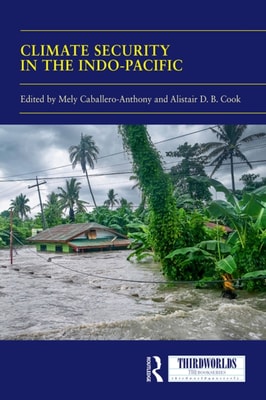
This book explores the intersection of climate change and security in the Indo-Pacific, from the South China Sea disputes to national and regional security practices in India, Japan and Southeast Asia, highlighting the vulnerability of countries facing extreme weather, sea-level rise, and geopolitical tensions.
This volume focuses on how, why, under what conditions, and with what effects people move across space in relation to mining, asking how a focus on spatial mobility can aid scholars and policymakers in understanding the complex relation between mining and social change.
The book offers a theoretical and practical analysis of the contemporary approach to art, culture and innovation, with special emphasis on the relationship between culture, innovation and the economy, in the context of green transition, as an indispensable sustainability factor.
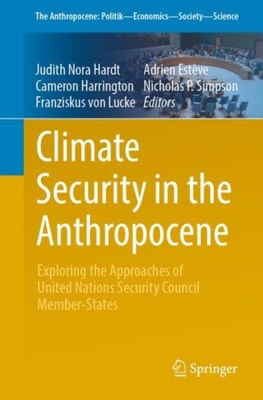
The speed and scale of climate change presents unique and potentially monumental security implications for individuals, future generations, international institutions and states.