This book explores the transformation in the healthcare system in Turkey since 2003, which has been portrayed as a benchmark for building universal healthcare systems in emerging market economies.
In this book, practitioners and students discover perspectives on landscape, place, heritage, memory, emotions and geopolitics intertwined in evolving citizenship and democratization debates.
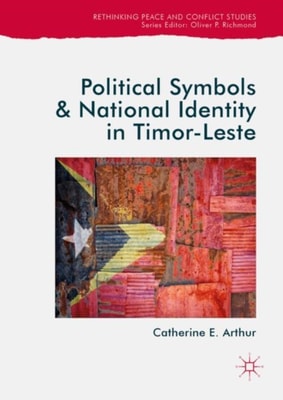
This book explores how national identity has been negotiated and (re)imagined through the political symbols that embody it in post-conflict Timor-Leste.
Britain faces huge challenges: inequality, public services under constant pressure, climate change - and in the long term, the impacts of automation and artificial intelligence.
This book examines the gender dimensions of large-scale mining in the oil industry and how oil exploitation has produced long-term economic, political, social and environmental risks and benefits in developing countries.
This book analyzes motivation, investments, and influence of the Russian Federation and Russian companies in the European oil sector, specifically, the Southeastern Europe.
This book provides an examination of e-Government frameworks and maturity stages in governments around the world, including an overview of the legal frameworks that have supported them.
This book is concerned with the role that communication - understood as including both the factual and fictional mass media as well as the performative and visual arts - can play in post-civil war peacebuilding.
Today, it has become strikingly obvious that companies no longer operate in an environment where only risk return and volatility describe the business environment.
The book argues that in order to better understand the undercurrents of the Niger Delta conflict, it is imperative to analyse the dynamics of choice in terms of the distinct courses of action taken by the Ogoni and Ijaw.
This book brings together academic and activist work on community media, feminist, decolonial, and Indigenous perspectives to digital activism, including Free and Open Communication in Latin America.
This book contributes an analysis of UK-based non-governmental organisations engaged in transnational lesbian, gay, bisexual, and trans (LGBT) activism, within a broader recognition of the complexities that British colonial legacies perpetuate in contemporary international relations.
This book examines the migration of women as gendered subjects to and from Turkey, using feminist research practices to explore a range of diverse experiences of migrant women as refugees, asylum seekers, undocumented or documented migrants.
This book explores the historical, current and future prospects of women's entrepreneurial activities in the former Yugoslavia, a region that is currently in a process of transition from socialism to a free-market economy.
This book addresses, for the first time, the question of how development NGOs attempt to 'listen' to communities in linguistically diverse environments.
This book explores the interconnections between world politics and non-human nature to overcome the anthropocentric boundaries that characterize the field of international relations.
This book uses mathematics of uncertainty to examine how well countries are achieving the 17 Sustainable Development Goals (SDGs) set by the members of the United Nations, with a focus on climate change, human trafficking and modern slavery.
This book brings together diverse contributions exploring the integration of gender equality in current national energy policies and international energy frameworks across the Global South and North.
"e;A very valuable and much needed book on a central element in the processes of social change: the construction and reconstruction of social norms as they move between global and local levels.
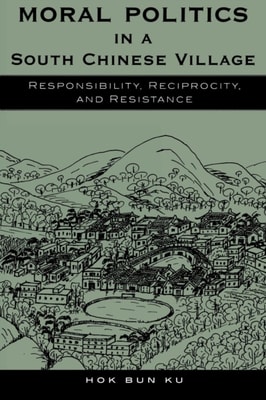
Exploring sensitive issues often hidden to outsiders, this engaging study traces the transformation and economic development of a south China village during the first tumultuous decade of reform.
This book explores how and why Mexico s approach to the 2030 Agenda for Sustainable Development and Sustainable Development Goals (SDG) implementation with the Lopez Obrador administration is unsustainable and non-transformative, overshadowed by his vision of Mexico s Fourth Transformation .
Through a unique range of theoretical and practical case studies, this collection considers the relationship between the arts (understood as the visual arts, crafts, theatre, dance, and literature) and development, creating both a bridge between them that is rarely explored and filling in concrete ways the content of the "e;culture"e; part of the equation "e;culture and development"e;.
This book examines the radical changes in social and political landscape of the Upper Guinea Coast region over the past 30 years as a result of civil wars, post-war interventions by international, humanitarian agencies and peacekeeping missions, as well as a regional public health crisis (Ebola epidemic).
This book provides a comprehensive analysis of the implementation, functioning, and impact of the Bolivarian Alliance for the Peoples of Our America (ALBA), cornerstone of Venezuelan foreign policy and standard-bearer of "e;postneoliberal"e; regionalism during the "e;Left Turn"e; in Latin America and the Caribbean (1998-2016).
This book investigates theoretically and empirically whether and (if so) how state weakness influences the way in which national civil societies constitute themselves, using Bangladesh and the Philippines as case studies.
This book presents research, analysis, and reflections on the major issues of Guatemalan development and democracy: the role of the military, the involvement of Mayan communities in national development, the possible emergence of more inclusive political institutions and the roles of international forces and agencies in Guatemalan social change.
A case study of why Third World countries are still poor, the premise of this book is that while some progress has been made in transforming the political economy of Ecuador, certain behaviors, beliefs and attitudes have kept the country from developing in ways that otherwise would have been possible.
A revealing look at the common causes of failures in randomized control experiments during field reseach-and how to avoid themAll across the social sciences, from development economics to political science departments, researchers are going into the field to collect data and learn about the world.
This unique work by the Centre for Conflict Resolution (CCR), Cape Town, South Africa, tracks the progress Africa has made in achieving the United Nations' Millennium Development Goals (MDGs) since 2000.